
General News
Benue Leads The Way in State Policing: A Model For Nigeria


By Felix Umande, Makurdi
Benue State is taking a bold step towards enhancing its security framework with the implementation of the State Policing programme according to Hon. Dr. Joseph Terwase Har, Special Adviser to the State Governor on Security and Internal Affairs. Har revealed that the state is leading the way in Nigeria, with 5,000 personnel already trained and equipped to serve as first responders in every council ward.
In an interview, Dr. Har emphasized that conventional security agencies, such as the military, police, and paramilitary, cannot be everywhere, which is why the state is empowering local communities to take charge of their security. “These people are in every council ward, so they are going to be first responders in every place, to raise flags for the conventional security,” he said. “They are there to respond to issues before the conventional security, and their presence is to support the conventional security,” he said
He told journalists that the recent extension of training, which is being snchored by The Kukah Center, is a continuous system, with 300 personnel trained in the first batch.
Dr. Har explained that the trained personnel will undergo refresher courses to ensure they remain effective in their roles. “Overall, we have 5,000 trained personnel on ground, so in security we have what is called refreshers, so after these ones we are going to have more other training on a continuous basis,” he said.
The State Policing programme is a significant step towards addressing the security challenges facing Benue State, and it is expected to serve as a model for other states in Nigeria.
The program is designed to complement the efforts of conventional security agencies, providing an additional layer of security and support to local communities.
Dr. Har’s statement has been welcomed by many, who see it as a bold and necessary step towards addressing the security challenges facing the state.
The programme is a testament to the state’s commitment to addressing the security challenges facing its citizens, and it is expected to add another positive layer of security impact on the lives of the people of Benue State.






By Seyi Balogun, Lagos
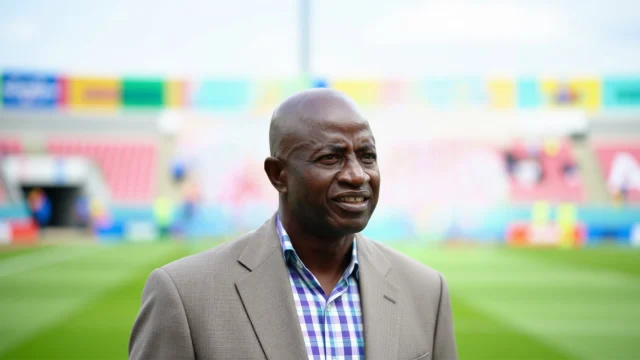
With no clear knowledge of the assailants or their motive, former Super Eagles captain and renowned sports administrator, Segun Odegbami, has been reportedly attacked and macheted in his Abeokuta, Ogun State, house.
The incident reportedly occurred in the early hours of Friday when three armed men stormed his residence in Ibara GRA, Abeokuta.
Odegbami, popularly known as Mathematical, is also the proprietor of Eagles 7 Sports Radio 103.7 FM, reportedly sustained injuries from matchet cuts.
Sources said the attackers first descended on his domestic staff and driver before proceeding to his bedroom.
Odegbami, 74, was said to have resisted the assailants when they stormed his room, leading to a fierce struggle.
“The incident is unfortunate. We heard that the armed men struck in the early hours of today (Friday) and first overpowered the domestic staff. They asked for Chief Segun Odegbami, but his staff denied that he was at home.
“But the generator was running at the time. So, the armed men believed he must be at home and subjected the staff to severe beatings. They immediately found their way to Odegbami’s bedroom and attacked him there.
“Not willing to succumb easily, Odegbami also resisted his attackers, who quickly fled the scene, leaving him bleeding heavily,” a resident was quoted as saying.
According to the resident, the victim was rushed to an undisclosed hospital, where he received medical treatment.
The Police Public Relations Officer, DSP Oluseyi Babaseyi, confirmed the incident.
“Police immediately ordered a thorough investigation into the circumstances surrounding it, with intensive efforts ongoing to identify and apprehend those responsible,” he said.
Babaseyi also confirmed that Odegbami had been discharged from the hospital.
“We can also confirm that Chief Segun Odegbami has been discharged from the hospital,” he said.
Odegbami has been a thorn in the flesh of bad, corrupt, saboteurs called soccer administrators in Nigerian.
His campaigns against them and support for Nigeria’s football gave rise to the shake up in the NFF after consulting FIFA for its support..
By Seyi Balogun, Lagos
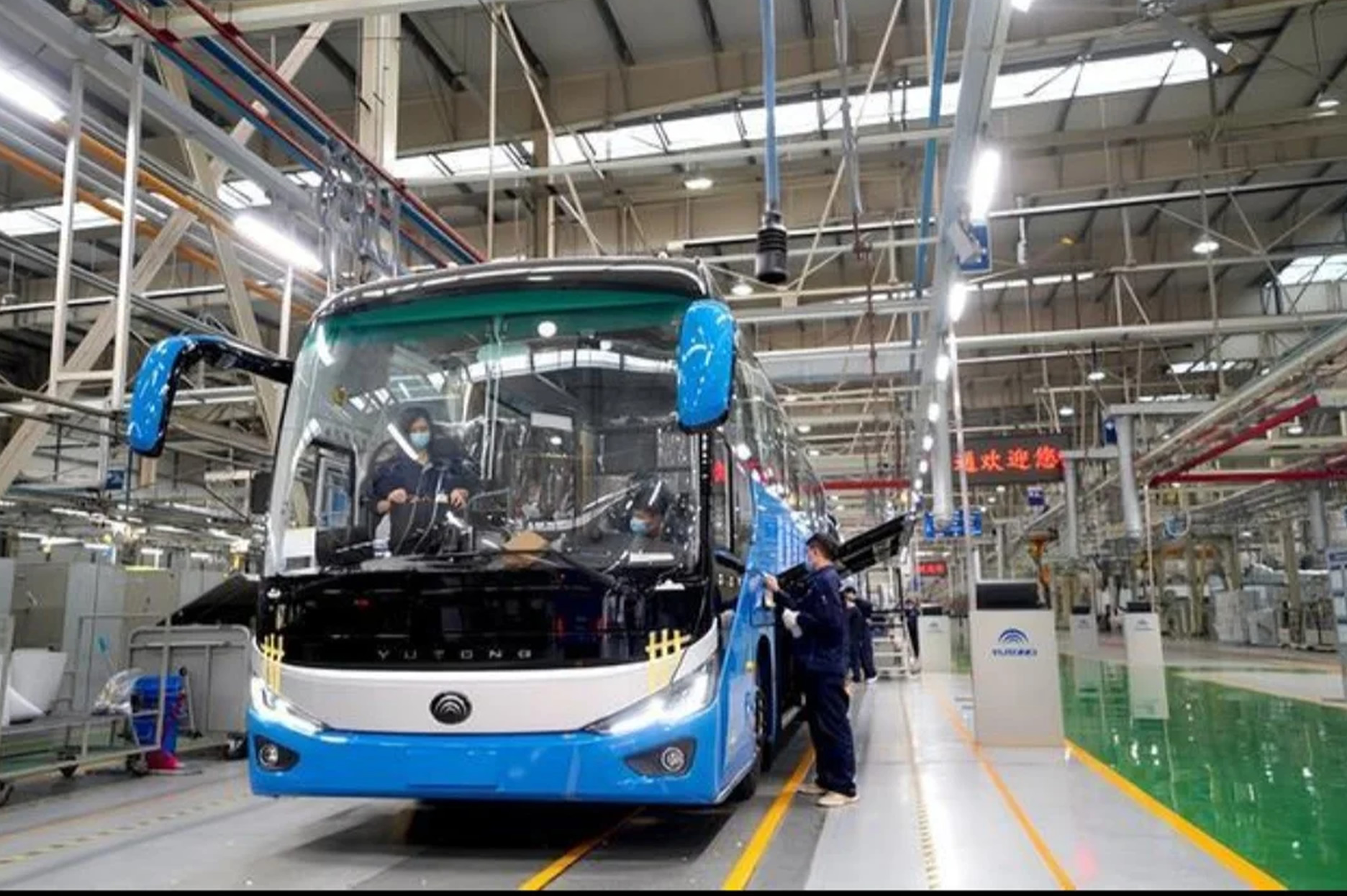
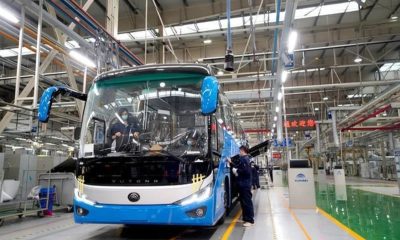
To introduce compressed natural gas-powered buses and establish a local assembly plant, to reduce transportation costs, the Federal Government is into an agreement with China’s Yutong Bus Company and Nigerian partner YP Automobile.
The agreement, signed in Lagos on Thursday through the Presidential Initiative on Compressed Natural Gas and Electric Vehicles (Pi-CNG & EV), includes to assemble CNG buses in Nigeria, while Leyland Nigeria based in Ibadan, is to host the new assembly investment.
The project is expected to create jobs in vehicle assembly, maintenance and the supply chain, while giving Nigerian workers access to technical skills and technology used in commercial vehicle manufacturing.
The partnership is intended to develop local capacity to assemble the vehicles, although details of the plant’s investment value, construction schedule and production commencement date were not disclosed at the signing.
But the Executive Chairman of Pi-CNG & EV, Ismaeel Ahmed, said the agreement was designed to combine the deployment of CNG buses with local industrial development.
“Not only are we now bringing in the buses, in huge numbers, but they are going to set up an assembly plant so that our people will get jobs and we’ll have the transfer of technology to be able to do it ourselves and within country,” he said.
Ahmed said the partnership involved YP Automobile and Yutong, one of China’s leading bus manufacturers.
He said Nigeria had about 210 trillion cubic feet of proven natural gas reserves, arguing that the country could use the resource to reduce its reliance on petrol in the transportation sector.
Africa’s most populous nation has been promoting compressed natural gas as an alternative fuel following the removal of petrol subsidies, which increased the cost of transportation for households and businesses in 2023. The government has consequently pursued the deployment of CNG-powered vehicles as a way of lowering the expenses of transport operators and easing the pressure on commuters.
Through the National Affordable CNG Transit Programme, the government is seeking to expand access to cheaper public transportation using natural gas and electric vehicles.
Chief Operating Officer of YP Automobile, Panagiotis Marris, said the partnership brought together Nigerian investors and Yutong, which he said is the world’s largest bus producer.
He said the arrangement could help rebuild Nigeria’s automotive manufacturing capacity and restore its technical expertise.
“It’s a milestone in a sense that we’re reviving the Nigerian manufacturing auto industry, and we’ll create the know-how that we missed over the last 20 years,” Marris said.
He added that high transportation costs remained an obstacle to economic development, while the adoption of CNG-powered buses could also help reduce the environmental impact of public transportation.
Yutong Bus Company Account Manager, Damian Li, said the manufacturer had delivered more than 1,400 buses to Nigeria and understood the country’s transport market and operating requirements.
He added the company planned to work with its Nigerian partners on the local assembly of 1,000 CNG buses, with the project expected to gradually increase domestic production capacity.
“We plan to cooperate with the local partners and to start local bus assembly project of the thousand CNG buses,” Li said.
Chairman of Leyland Nigeria, Yemi Idowu, said the company would host the proposed assembly investment, adding that the project would create employment opportunities beyond the factory.
He said the production and maintenance of the buses would require mechanics, workshop assistants, sub-assembly partners and supply chain operators.
According to him, each bus could remain in operation for more than 15 years, creating sustained demand for servicing, repairs and technical support throughout its working life.
“There’s going to be a lot of transfer of technology, new technology in bus manufacturing and maintenance,” Idowu said.
He added that Yutong would manage the plant’s operations under an original equipment manufacturer arrangement involving Nigerian partners, with its personnel participating in the operation.
Beyond the buses and assembly facility, the agreement also includes a digital payment component aimed at ensuring that commuters benefit from reduction in transportation costs.
Chief Executive Officer of Touch and Pay Technologies Limited, Olamide Afolabi, said the company would provide electronic payment infrastructure, revenue assurance and accountability systems to support the programme.
He explained that the technology would enable transport authorities to monitor fares, track payments and assess whether savings from the use of cheaper CNG fuel were being passed on to passengers.
“We are providing the technology, we are providing the revenue assurance, we are providing accountability to z zensure that it works, so that the reduced cost of energy because of CNG is felt by anybody, is felt by the general public,” Afolabi said.
He said the payment system would give regulators greater oversight of transport fares and help commuters experience the benefits of the government’s investment in alternative-energy transportation.
By Son Tertsea, Abuja
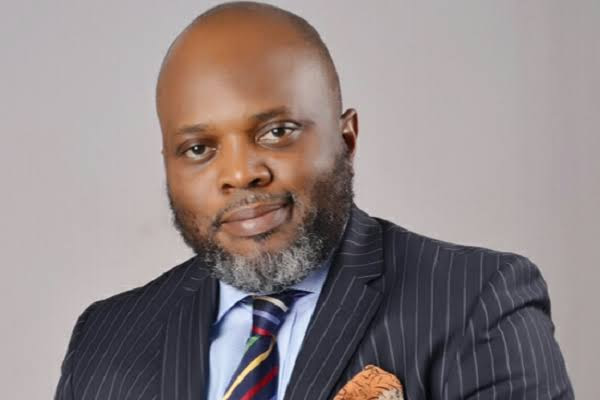
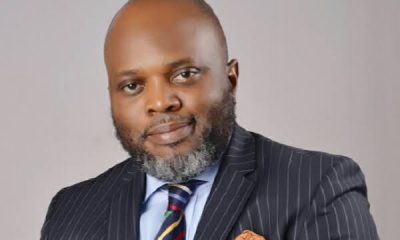
A warning has been issued that distributing cash to Nigerians without addressing underlying economic challenges will not provide a sustainable solution to poverty, according to the Special Adviser to President Bola Tinubu on Economic Affairs, Tope Fasua,
Giving priority to economic stability, productivity, investment and job creation rather than depending excessively on cash handouts must be adopted by the Federal Government to address the country’s economic difficulties, Fasua said.
He held this position on Thursday in Abuja at the 2026 National Growth and Development Forum with the theme: “The Nigeria We Want: The Economy, Your Money, Our Future,” organised by Moneyline with Nancy on African Independent Television, AIT.
“If we only focus on sharing money, we’ll probably be digging a deeper hole from where we came from,” he warned.
The presidential adviser acknowledged the hardship confronting Nigerians but maintained that sustainable improvements in living standards required a stable macroeconomic environment.
“If you don’t build a strong macro, you can’t go anywhere with the micro,” Fasua said.
He added, “People cannot hear anything if they are hungry.”
Fasua recalled the previous administration’s reliance on Ways and Means financing, which he estimated at between N30tn and N35tn, arguing that excessive monetary financing was not a sustainable economic strategy.
However, he acknowledged that the COVID-19 pandemic had complicated economic management under the previous administration.
Defending the Tinubu administration’s reforms, Fasua alleged that petrol subsidies previously cost Nigeria approximately $15bn annually, with substantial benefits accruing to powerful interests in the petroleum industry.
He also argued that exchange-rate reforms had reduced opportunities for arbitrage and improved access to foreign exchange for manufacturers and individuals.
According to him, the most difficult period of the reforms occurred between late 2023 and 2024, while subsequent developments indicated improving economic conditions.
“I think that the worst is over,” he declared.
Fasua cited Nigeria’s 4.43 per cent economic growth in the second quarter of 2026, moderating inflation and improvements in external reserves as evidence of progress.
Nevertheless, he acknowledged that poverty remained a major challenge requiring sustained attention.
He urged Nigerians to embrace entrepreneurship, arguing that the country’s infrastructure, agricultural, manufacturing, healthcare and technology challenges also presented opportunities for business development.
“Nigeria is not short of opportunity. We are sometimes short of the confidence, information, imagination, and determination to develop Nigeria,” he said.
The presidential adviser also stressed financial literacy, savings, investment and responsible borrowing, warning against spending beyond one’s income.
“A stronger Naira must be earned through a stronger economy. It cannot be legislated into existence,” he added.
His remark comes amid the Federal Government’s expansion of cash assistance programmes, with the World Bank reporting that N658.9bn had been disbursed to 10.46 million poor and vulnerable households as of September 2026.
Recently, the government also announced a N50,000 relief payment for selected vulnerable households under the National Emergency Relief and Stabilisation Intervention, generating widespread interest in payment alerts and eligibility.
Also speaking, the President of the Nigerian Economic Society, Dr Baba Musa, warned that improvements in macroeconomic indicators had yet to translate into adequate welfare gains for millions of Nigerians.
“Macroeconomic stability is necessary, but it is not yet shared prosperity. A stable exchange rate is not yet a full dinner table. Stability is the foundation; it is not the building,” Musa said.
He cited World Bank estimates indicating that about 63 per cent of Nigerians lived below the poverty line in 2025, while calling for agricultural productivity, affordable credit, job creation and stronger social protection.
Musa also urged political leaders to maintain fiscal discipline and policy continuity ahead of the 2027 elections.
Similarly, the President of Capital Market Academics of Nigeria, Prof. Uche Uwaleke, said economic reforms should be judged by their impact on employment, purchasing power and poverty reduction rather than macroeconomic indicators alone.
“The success of any economic reform must be measured not merely by improvements in GDP growth, foreign exchange stability, government revenue or external reserves, but by its capacity to create jobs, improve purchasing power, reduce poverty, expand opportunities and enhance the overall quality of life of citizens,” he said.
Uwaleke noted that the Nigerian capital market had recorded year-to-date returns exceeding 60 per cent, but stressed the need to make investment opportunities accessible to ordinary Nigerians through financial education, affordable products and stronger investor protection.
The Managing Director of the Bank of Agriculture, Ayodeji Sotinrin, also advocated productive financing rather than repeated distribution of free agricultural inputs.
He disclosed that the bank was implementing financing programmes covering smallholder farmers, mechanisation, improved seeds, irrigation and agricultural value chains.
“It’s not by giving them handouts because they’re on social media. It’s not by sharing free fertiliser. Give them tools to fish, and you teach them how to fish rather than you hand out fish to them,” he said.
Sotinrin explained that the bank was pursuing partnerships with cooperatives, financial institutions and state governments to provide sustainable agricultural financing.
Earlier, the Executive Producer of Moneyline with Nancy and the convener of the event, Nancy Iloh-Nnaji, said the forum was designed to bridge the gap between economic policymaking and public understanding.
“A policy is announced, a reform is introduced, but the people expected to benefit from it do not always understand what it means for them or how to take advantage of it,” she said.
She called for greater public awareness of development finance opportunities, financial literacy and investment risks, while warning Nigerians against fraudulent investment schemes and online impersonation.


ABU DSS student wins N1m prize at essay competition
Spread the loveA student of Demonstration Secondary School, Ahmadu Bello University, Adejoh Joshua Unekwu, has clinched a second position at...

Football Legend, Segun Odegbami, Attacked in Abeokuta, Escapes Death
Spread the loveBy Seyi Balogun, Lagos With no clear knowledge of the assailants or their motive, former Super Eagles captain...

FG, Chinese Firm Agree to Produce CNG Buses in Ibadan
Spread the loveBy Seyi Balogun, Lagos To introduce compressed natural gas-powered buses and establish a local assembly plant, to reduce...

JAMB UTME Free for Candidates with Disabilities, Fee Refund at Exam Centres
Spread the loveBy Isa Abdul, Abuja Special examination support has been established for candidates with disabilities, by the Joint Admissions...

Sharing Money is Digging Hole for Eco Woes, Can’t End Poverty – Fasua
Spread the loveBy Son Tertsea, Abuja A warning has been issued that distributing cash to Nigerians without addressing underlying economic...

“I conceded defeat to Buhari, a statesman that loved God, Nigeria.’ –Jonathan
Spread the loveBy Isa Abdul, Abuja The reason for conceding defeat to the late President Muhammadu Buhari in the 2015...

Secrets Behind Flamingos’ World Cup Win – Busari:
Spread the loveAfter guiding Nigeria’s Flamingos to a historic FIFA U-17 Women’s World Cup triumph, head coach Akeem Busari speaks...


Failure to Secure NNPCL GMD Job: EFCC Arraigns Woman Over N1.1 bn Fraud
Spread the loveBy Isa Abdul, Abuja One Halimat Adenike Tejuosho was Wednesday arraigned before a High Court of the Federal...

Let’s Honor All Pioneer Paramount Rulers Across Tiv and Idoma Lands.
Spread the loveBy Peters Ichull Today, the Tiv nation and the entire Benue family pause in solemn reflection to mark...

NKST Synod Says: “Alia Is A Talk-And-Do Governor”, Deserves Re-election in 2027
Spread the loveBy Felix Umande The NKST Synod has declared its support for the re-election of Benue State Governor, Rev....