
Health
Selfcare advocacy: 25 states disseminated, only 3 states domesticated…..as experts calls for collaboration


By Wumi Tewwogbade, Abuja
Expert in Self-Care Advocacy Network (N-SAN), on Wednesday, revealed that welfare advocacy have been disseminated in 25 states but only 3 states (Lagos, Kaduna and Borno states) have domesticated it.
Joy Anugwa, self care desk, Federal Ministry of Health and Social Welfare, (FMoH&SW) stated this at the hybrid meeting of N-SAN, organized by White Ribbon Alliance in collaboration with FMoH&SW in Abuja.
Among stakeholders at the event included media practitioners, health sector experts, key government officials, development partners, and civil society organisations.
They renewed their call for stronger collaboration to scale up self-care interventions in Nigeria
The Director of Health Promotion, Federal Ministry of Health and Social Welfare, Mr. John Uruakpa, described the meeting as a critical step towards institutionalising self-care across all levels of governance, with particular focus on states and grassroots communities.
He said self-care had become indispensable to safeguarding the health and well-being of Nigerians, especially vulnerable populations.
“Self-care interventions are crucial for the health and well-being of any nation. This network is not optional; it is essential to Nigeria’s health system,” he said, while welcoming participants and wishing them a Happy New Year.
He explained that N-SAN was established to harmonise advocacy messages, clarify roles, identify priority actions and strengthen collaboration among stakeholders in line with the National Self-Care Guidelines and the Demand Generation Strategy for Self-Care.
Uruakpa stressed that self-care must move beyond policy discussions at the national level to practical implementation in communities.
“Self-care is about communities, and communities are at the grassroots. We must build a formidable structure, especially with the media, to take this message to the people,” he said, commending partners such as the White Ribbon Alliance for their continued support.
The major partner , Executive Director of the White Ribbon Alliance Nigeria (WRAN), Chief Tonte Ibraye, said the meeting was aimed at generating innovative ideas to drive impactful advocacy and ensure self-care is prioritised within Nigeria’s healthcare system.
“As civil society, we are partnering with government, especially the Federal Ministry of Health, to ensure our advocacy is evidence-based,” Ibraye said. “Beyond strengthening the health system, we must empower women, girls and communities to take charge of their health.”
He urged participants to remain engaged throughout the meeting and contribute ideas that would translate advocacy into demand generation, noting that self-care reduces the burden on health facilities and cuts costs for both government and citizens, particularly amid security challenges.
Mr. Lawrence Anyanwu, Coordinator at the Technical Support Unit, said self-care education empowers citizens to take responsibility for their well-being while complementing the formal health system.
He noted that the integration of self-care into national health programming, in collaboration with the Federal Ministry of Health, is strengthening preventive healthcare and improving access to essential services.
“I am happy that more people are identifying with the advocacy effort and the promotion of awareness,” Anyanwu said, calling for the revival and active use of advocacy tools developed in previous years.
He appealed for regular engagement and sustained outreach to states and communities, stressing that meaningful impact can only be achieved by reaching people where they live.
Also speaking, the Programmes, Advocacy and Communication Manager of WRAN, Miss Omolade Ogunlela, said the organisation had remained committed to self-care advocacy since the development of Nigeria’s National Self-Care Guidelines.
“For self-care to achieve its full impact, it must go beyond the Ministry of Health and implementing partners,” she said. “We need all hands on deck media, civil society, women’s groups and professional associations. This meeting is a family dialogue to push self-care forward.”
She recalled lessons from the COVID-19 pandemic, noting that the importance of self-care becomes even more evident during health emergencies.
Representing the United Nations Population Fund (UNFPA), Dr. Ummulkhulthum Bajoga conveyed the agency’s commitment to advancing self-care as a pathway to improved reproductive and maternal health.
“One way to achieve a world where every pregnancy is wanted and every young person fulfils their potential is through self-care,” she said, adding that the meeting was timely amid shrinking donor funding and the need for increased domestic resource mobilisation.
The Society for Family Health (SFH), through Ms. Jennifer Adebanjo, described N-SAN as a major milestone in Nigeria’s health journey.
“Self-care has come a long way in Nigeria despite early resistance. Standing together as a network makes us stronger and ensures sustainability across generations,” she said.
From the digital rights perspective, Mr. Maxwell Ahunanyah of the Digicivic Initiative highlighted the growing reliance on online health information and the dangers of misinformation.
“We are supporting self-care by promoting digital literacy and protecting people’s rights online and offline, especially when they seek health information,” he said, disclosing a recent MoU with the National Data Protection Commission.
The media, represented by the Treasurer of the Association of Nigeria Health Journalists (ANHEJ) Ms Yesenu Sasetu, pledged to deploy solution-focused reporting to advance self-care awareness nationwide.
“Journalists have a responsibility not just to report facts, but to advocate for public health solutions,” she said. “We are here to learn how to tell compelling stories that promote self-care and healthier communities.”
Participants agreed that sustained collaboration and grassroots engagement remain key to embedding self-care as a cornerstone of Nigeria’s healthcare system.
By Isa Abdul, Abuja
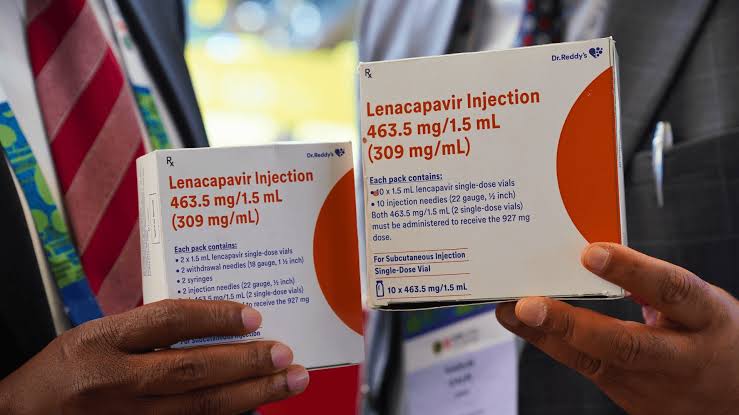
The first generic version of lenacapavir, a twice-yearly injection used to prevent HIV infection, has been given tentative approval by the U.S. Food and Drug Administration (FDA), in a major development for global HIV prevention.
The generic drug which has been developed by India’s Dr Reddy’s Laboratories, and is expected to cost about $40 per person annually, will be made available across 120 low- and middle-income countries, including Nigeria.
The injection has demonstrated near-total effectiveness in clinical trials, offering an alternative to daily HIV prevention pills. The approval is expected to accelerate access to affordable prevention options, although local regulatory processes, funding and distribution remain key to its rollout.
By Michael Lim
The Nigeria Centre for Disease Control (NCDC) has disclosed that the two suspected Ebola cases reported in Yola, Adamawa State, have tested negative following two rounds of laboratory testing.
The Agency noted in a statement that it is working with the Adamawa State Government to investigate the cases, which were isolated and tested.
The NCDC clarified that the index case previously confirmed in the Federal Capital Territory remains the only confirmed Ebola case reported in Nigeria.
It urged Nigerians to remain calm and rely on official government and public health channels for accurate information.
The Agency further advised anyone experiencing symptoms such as fever, severe weakness, headache, muscle pain, vomiting, diarrhoea or unexplained bleeding, particularly after possible exposure, to seek immediate medical attention and provide healthcare workers with relevant travel and contact history.
By Michael Lim
Two individuals have been isolated by health authorities following suspicion that they may be infected by Ebola disease in Nigeria’s North-East region as they are being subjected to investigations and lab tests.
An update on the disease situation by the Nigeria Centre for Disease Control and Prevention (NCDC), said contact identification and listing were ongoing, while samples from the suspected cases were being subjected to laboratory testing.
It clarified that the classification of the individuals as suspected cases did not mean they had tested positive for Ebola, noting that confirmation would depend on laboratory results.
The public was advised to maintain proper hand hygiene, practise enhanced sanitation and follow preventive guidance issued by public health authorities.
The update added that further information would be provided as verified details become available.



PERSPECTIVE: Tiv Leaders Must Hear This: While Akwa Ibom Asked For A Future, Tiv Leaders Fight Over A Man
Spread the loveBy Edward Tion I watched the presidential campaign in Akwa Ibom today with a bleeding heart. Not because...


Pursue Unity, Peace, Play Active Role in Nigerian Politics, Deputy Speaker, Kalu Urges Igbo Elites, Leaders
Spread the loveBy Saint Mugaga Deputy Speaker of the House of Representatives, Rt. Hon. Benjamin Kalu has called on Igbo...


2027: Amupitan Seeks Royal Support, Partnership to Discharge Mandate Peacefully, Effectively
Spread the loveBy Isa Abdul The National Chairman of the Independent National Electoral Commission (INEC), Professor Joash Amupitan, has said...


Place 7-Year Ban On Establishment Of New Tertiary Institutions– Edu Minister Begs NASS
Spread the loveBy Son Tertsea, Abuja The Federal government has appealed to the National Assembly to halt the passage of...

Gov Sule to Security Agencies: Fish Out Sponsors of VP Shettima’s Attackers in Lafia
Spread the loveSDP: attackers APC members against Wadada’s candidacy By Isa Abdul, Abuja Prominent personalities in the state planned and...


Wike’s Entry, Allocation of UniAbuja Land a Breach of Court Order– ASUU
Spread the loveBy Nick Ibe, Abuja The Federal Capital Territory Administration’s (FCTA) allocation of some hectares of land belonging to...


Alleged 4 Herbal Concoction Consumers Die in Benue
Spread the loveBy Vincent Tyosuugh After consuming a suspected poisonous herbal concoction allegedly sold to residents of Oju Local Government...


BENUE APC Split Deepens As SGF, Stakeholders Shun Alia Campaign Flag-off, Disown Campaign List
Spread the loveBy Felix Umande The crisis rocking the Benue State chapter of the All Progressives Congress (APC) deepened on...


Defence Minister Invites Cybersecurity, Drone, DefenceTech Experts for Collaboration with DICN
Spread the loveBy Nick Ibe, Abuja Minister of Defence, General Christopher Musa (rtd) has called on Nigerians with expertise in...


Wike’s Rainbow Coalition Faces Storm Over Alleged Split Voting: VP Shettima, SDP, Ondo APC Reject Coalition
Spread the loveBy Son Tertsea, Abuja Nyesom Wike’s Rainbow Coalition has been identified as a split voting device according to...