
Opinion
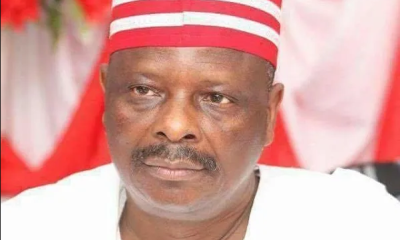
Why Kwankwaso was singled out in proposed US Religious Freedom Bill. –Farooq Kperogi

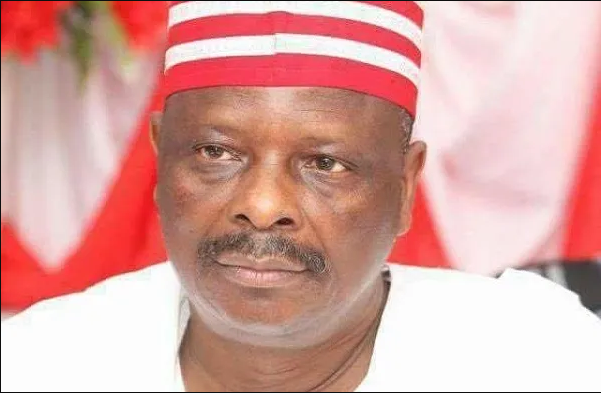
A proposed United States legislation seeking to sanction alleged violators of religious freedom in Nigeria has triggered debate following the inclusion of former Kano State governor and presidential candidate, Rabiu Musa Kwankwaso.
The bill, titled Nigeria Religious Freedom and Accountability Act of 2026, was recently introduced in the US House of Representatives by Republican lawmakers. It proposes visa restrictions and possible asset freezes against individuals accused of enabling or tolerating religious persecution in Nigeria. Kwankwaso’s name features prominently among those referenced, a move that has drawn scrutiny from analysts and commentators.
In an article analysing the development, Nigerian-American professor and media scholar Farooq Kperogi argued that Kwankwaso’s inclusion is inconsistent with his historical record on religious issues, particularly during his tenure as governor of Kano State.
According to Kperogi, Kwankwaso was initially reluctant to introduce Sharia law in Kano in 2000, resisting sustained pressure from clerics and sections of the public. Contemporary accounts from that period indicate that the Sharia bill was not sponsored by the state government but emerged as a private legislative initiative, placing Kwankwaso in a politically precarious position.
Kperogi recalled that the former governor faced intense public hostility, at times withdrawing from public engagements for security reasons, while his deputy, Abdullahi Ganduje, frequently stood in for him and was reportedly attacked on one occasion by angry crowds.
When Sharia was eventually launched, Kwankwaso publicly urged restraint, warning against vigilantism and intimidation of non-Muslims, and emphasising that only the state had the authority to enforce the law. His subsequent implementation of Sharia was widely viewed as cautious, a stance that reportedly strained his relationship with influential clerics and contributed to his loss in the 2003 governorship election.
Despite this history, US Congressman Riley Moore accused Kwankwaso of complicity in the killing of Christians, citing Kano’s Sharia legislation. The accusation followed Kwankwaso’s public criticism of the US government’s designation of Nigeria as a Country of Particular Concern over religious freedom violations.
Kwankwaso had argued that the designation oversimplified Nigeria’s complex security challenges and risked worsening interreligious tensions, advocating cooperation rather than confrontation. Moore responded sharply on social media, alleging that Kwankwaso signed laws prescribing death for blasphemy, a claim Kperogi described as lacking historical and political context.
Kwankwaso did not respond to the allegation.
Kperogi noted that the bill remains at an early legislative stage and faces significant procedural hurdles before it can become law. He also pointed out that many Nigeria-focused bills introduced in the US Congress fail to advance beyond committee stages.
Beyond Washington, Kperogi suggested the controversy could have political implications in Nigeria. He argued that being singled out by US lawmakers may inadvertently strengthen Kwankwaso’s political profile among northern Muslim constituencies, potentially positioning him as a symbolic figure of resistance to perceived external pressure.
The development continues to generate reactions in political and diplomatic circles as debates persist over the intersection of international advocacy, domestic politics, and religious freedom in Nigeria.
Prof P. I. Ukase
Once again, our children aspiring to gain admission into universities for the 2026/2027 academic session are compelled to endure the painful process of registering for the UTME conducted by the Joint Admissions and Matriculation Board across designated centres nationwide.
The challenge of registration has become a recurring decimal since the adoption of selected CBT centres. Year after year, candidates struggle through congestion, delays, and frustration, with little evidence that the system is adjusting to rising demand.
With the increasing quest for tertiary education, the number of candidates seeking university admission has grown geometrically. It is therefore troubling that JAMB has been unable to unbundle and simplify the process to reflect this reality.
The inadequacy of registration centres—especially in rural and semi-urban areas—worsens the situation. Many candidates travel long distances just to find an available centre. Others queue for hours, sometimes days, under the scorching sun to complete a process that should ordinarily take minutes.
Why must Nigerians constantly suffer for everything they seek to do? NIN registration, BVN enrolment, voter registration—now UTME registration. Basic administrative processes in Nigeria often resemble endurance tests.
In this age of ICT, why is it so difficult to make these processes seamless and less herculean? Is it impossible for candidates to register securely using their Android phones? What then is the purpose of widespread digital devices if they cannot be effectively deployed for simple public services?
It took innovative platforms like Moniepoint and OPay to demystify conventional banking by making e-banking easy and user-friendly. Nigerians can now open accounts, transfer funds, and conduct transactions in real time without the endless complaints of “network challenges.” These platforms are faster, smoother, and more efficient. That is what Nigerians desire—real-time service delivery.
Ironically, I took JAMB in the 1990s when the process was manually driven, yet we were never subjected to the level of stress candidates experience today. One would expect technological advancement to reduce hardship, not multiply it.
In my view, JAMB appears to be biting more than it can chew. With nearly 200 universities in the country, why must admission remain excessively centralised? Is it truly the best practice for all candidates to sit for a single matriculation examination? Why should a candidate not be free to sit for entrance examinations organised by individual universities and keep trying within the same academic cycle until admission is secured?
Why must a candidate who has passed UTME but was denied admission be compelled to register and pay again for another UTME the following year? Is that fair or efficient?
University admission should be liberalised. It makes little sense in the 21st century for a candidate to sit for WAEC or NECO, then UTME, and still be required to take Post-UTME examinations—each with its financial implications.
Beyond registration, similar bottlenecks affect the admission process itself. With JAMB as the sole admitting authority and with astronomical candidate numbers, admissions are often delayed due to technical and administrative glitches. The cancellation and rescheduling of examinations in parts of the country last year underscore the strain on the system.
If JAMB insists on managing the entire tertiary admission framework—a model I consider unhealthy—it must drastically improve its delivery capacity. It must upgrade infrastructure, expand digital access, decentralise operations where necessary, and eliminate the excruciating pains candidates currently endure.
Information and communication technology has made life easier across sectors. JAMB must leverage modern technology to ensure seamless registration, efficient change-of-course processes, and real-time release of admissions.
Our children deserve efficiency, dignity, and a system that works.

By Saint Mugaga, Abuja
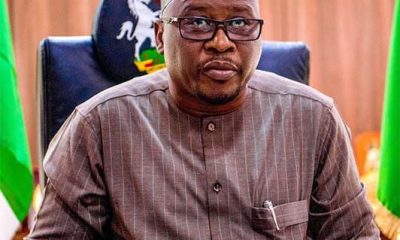
Former chairman of the House of Representatives Committee on Army and representative of the North East on the board of the Niger Delta Development Commission (NDDC), Hon. Abdulrazak Namdas has said the All Progressives Congress (APC) needs Governor Ahmad Fintiri to establish its hold on the state and region.
Namdas, in a statement on Friday cautioned those working against the planned alleged defection of the governor from the Peoples Democratic Party (PDP) to the APC to stop ‘grandstanding.’
“I have read with dismay the interviews, articles, and Facebook posts by some of our party members in Adamawa State criticising the alleged defection of Governor Ahmadu Umaru Fintiri from the Peoples Democratic Party (PDP) to the All Progressives Congress (APC), emphasising their intention to resist it.
“Firstly, I want to state categorically that the APC is undoubtedly the largest and strongest opposition political party in Adamawa State. In fact, if it were not for the behavior of some of our members in past elections, who allegedly engaged in anti-party activities, the APC would not have lost those elections, nor would it have failed to secure the governorship. We would have been the ruling party.
“As it stands, if we—stakeholders, party leaders, and supporters across the state—set aside our differences and interests and unite with a common purpose to deliver the APC in 2027, we will surely achieve this by God’s grace.
“However, considering the strength of the ruling PDP in the state, led by Governor Ahmadu Umaru Fintiri, the emergence of the African Democratic Congress (ADC) under former Vice President His Excellency Atiku Abubakar, and the defection of several notable former members—such as former Governor Bindow Jibrilla, Senator Aisha Dahiru Binani, Senator Ishiaku Abbo, and Sadiq Ibrahim Dasin—from the APC to the ADC, it is clear that we undoubtedly need Governor Ahmadu Umaru Fintiri in our fold”, he stated.
According to Namdas, “If Fintiri is indeed joining the APC as alleged, he will bring along his deputy, 24 commissioners, 3 senators, 5 members of the House of Representatives, 16 state legislators, 21 local government chairmen, 226 councillors, special advisers, assistants, party executives, and other stakeholders.
“However, some are questioning the value he will add by joining the APC. I believe we should instead ask those raising false alarms what value they have actually contributed to the APC.
“I understand that some political operatives may lose influence if Fintiri ultimately joins the APC, which is why they are encouraging some of our members to prevent him from doing so.
“As governor, Fintiri has transformed Adamawa State to such an extent that both President Muhammadu Buhari and President Bola Ahmed Tinubu have recognized his outstanding performance in infrastructure development.
President Bola Ahmed Tinubu has agreed to visit Yola on Monday, February 16, 2026, to commission additional projects at the invitation of Governor Ahmadu Fintiri.
“As an appointee of the President, a former two-term member of the House of Representatives, and a gubernatorial aspirant in the 2023 election, I would like the governor to join the APC because I recognize the value he will bring, even if others do not.
“Our state party executives, together with their local government and ward counterparts, have done their best to guide the party to its current position, even without a sitting governor.
“However, I believe they will achieve even greater success if the party includes a sitting governor. Mallam Nuhu Ribadu, the party leader in the state, has performed exceptionally well. His primary focus as party leader is to ensure that President Tinubu wins the 2027 election.
“Therefore, he is committed to doing whatever it takes, within the bounds of the law, to achieve this goal. In light of this, we should join our party leader in welcoming Governor Ahmadu Umaru Fintiri to the APC”, he submitted.
Opinion
The Court of Appeal Judgement and Separation of Powers: Senator Natasha Akpoti-Uduaghan and The Clerk of The National Assembly of The Federal Republic of Nigeria & 3 ORS
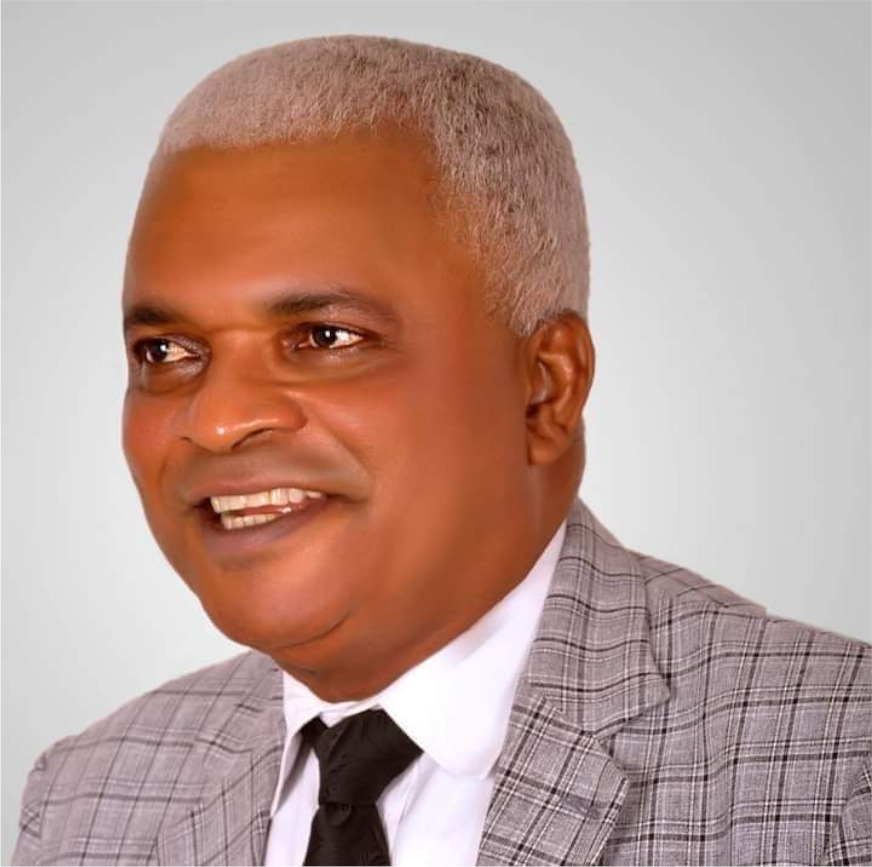
By Rt. Hon Eseme Eyiboh mnipr
The judgment of the Court of Appeal delivered on Monday, February 9, 2026, represents a consequential affirmation of the constitutional principles that sustain Nigeria’s democratic order and the orderly functioning of its institutions.
By upholding the disciplinary actions of the Senate as lawful and procedurally sound, the Court has robustly reinforced the doctrine of separation of powers, a cornerstone of our constitutional democracy. The ruling confirms with unmistakable clarity that the authority of the Senate to regulate its internal proceedings and discipline its members is firmly rooted in the Constitution and its Standing Orders. This authority is neither incidental nor ornamental; it is an essential responsibility entrusted to the legislature to preserve order, decorum, and institutional integrity in the discharge of its duties on behalf of the Nigerian people.
The Court of Appeal has further enriched our constitutional jurisprudence by clearly delineating the proper limits of judicial intervention in the internal affairs of a co-ordinate arm of government. While reaffirming the judiciary’s vital role as guardian of fundamental rights, the judgment recognises that the legislature must retain the autonomy necessary to enforce its rules and maintain discipline, provided it acts within the province of the law. This equilibrium is indispensable to effective governance and democratic stability.
The circumstances that gave rise to this litigation are regrettable. Parliamentary democracy rests on respect for established rules, collective responsibility, and due deference to the authority of the Chair. Persistent refusal to comply with lawful directives of the Presiding Officer—including the reallocation of seating arrangements within the chamber—as well as failure to appear before the statutory Committee on Ethics, Privileges and Public Petitions, runs counter to the ethos of parliamentary conduct. Such actions risk undermining institutional authority and distracting from the Senate’s higher obligations of legislation, oversight, and representation in the national interest.
While the Court of Appeal set aside the contempt proceedings and the associated fine on procedural grounds, it is significant that the core findings affirming the Senate’s disciplinary powers and the validity of its actions remain undisturbed. This distinction reinforces both the primacy of due process and the legitimacy of institutional self-regulation under the Constitution.
As the Senate moves forward, it remains steadfast in its constitutional mandate to foster robust debate, exercise rigorous oversight, and enact legislation that advances the peace, order, and good government of the Federal Republic of Nigeria. In keeping with the spirit of reconciliation and institutional maturity that must guide democratic leadership, the Senate looks ahead with restraint, goodwill, and an abiding commitment to collective purpose rather than past grievance.
In this spirit, the Senator concerned, who has since resumed legislative duties, is expected to continue her duties with renewed adherence to parliamentary rules, mutual respect, and the shared responsibilities that bind all members of the National Assembly.
The strength of our democracy ultimately lies in the strength of its institutions, each operating responsibly within its recognised constitutional remit. The judgment of the Court of Appeal fortifies that foundation and renews the resolve to build a disciplined, stable, and forward-looking legislature in service of the Nigerian people.
The facts have spoken for themselves
God bless the Federal Republic of Nigeria.
Rt. Hon. Eseme Eyiboh, MNIPR
Special Adviser, Media/Publicity and Official Spokesperson
to the President of the Senate


MACBAN denies links to criminality, expresses shock over proposed US sanctions
Spread the loveThe Miyetti Allah Cattle Breeders Association of Nigeria has expressed surprise over the proposed sanctions against the association...

Must Nigerians Be Made to Suffee For Everything?
Spread the loveProf P. I. Ukase Once again, our children aspiring to gain admission into universities for the 2026/2027 academic...

Why Kwankwaso was singled out in proposed US Religious Freedom Bill. –Farooq Kperogi
Spread the loveA proposed United States legislation seeking to sanction alleged violators of religious freedom in Nigeria has triggered debate...

Why We Must Welcome Governor Fintiri to APC…Hon. Namdas
Spread the loveBy Saint Mugaga, Abuja Former chairman of the House of Representatives Committee on Army and representative of the...


Fubara Dissolves State Executive Council after meeting Tinubu
Spread the loveBy Saint Mugaga Governor of Rivers State, Sir Siminalayi Fubara, has dissolved the State Executive Council, a move...


Atiku urges Nigerians to kick out APC beginning with FCT elections
Spread the loveBy Saint Mugaga Former Vice President Alhaji Atiku Abubakar has called on Nigerians to begin the process of...


All 183 abducted Kurmin Wali worshippers rescued – Kaduna Govt
Spread the loveBy Our Reporter After initial denials and foot dragging over the abduction of Christian worshippers, the Kaduna State...


Shettima leaves for Ethiopia to represent Tinubu at the 2026 African Union summit
Spread the loveBy Saint Mugaga Vice President, Senator Kashim Shettima has departed Abuja for Addis Ababa, Ethiopia, to represent President...


Tinubu appoints Yusuf new Chairman/CEO of NAHCON
Spread the loveBy Saint Mugaga President Bola Tinubu has nominated Amb. Ismail Abba Yusuf as the new Chairman/CEO of the...

Kuje/Airport and kuje/Gwagalada roads, would be commissioned by June ending Wike, assured
Spread the loveBy Wumi Tewogbade, Abuja Minister of the Federal Capital Territory, (FCT), Nyesom Wike, on Tuesday, has assured Anima...