
Oil and Gas
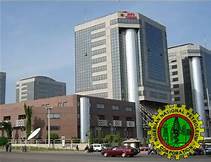
OTL: NNPC Ltd Renews Commitment to Robust Downstream Infrastructural Development

By Aliyu Musa
The NNPC Ltd has reiterated its commitment to the development and revamping
of downstream across the country to enhance collaboration and drive efficiency in the sector.
Group Chief Executive Officer, Engr. Bayo Ojulari, stated this at the opening ceremony of the 2025 OTL Africa Downstream Energy Week in Lagos on Monday.
Speaking on the conference’s theme “Energy Sustainability: Beyond Boundaries & Competition”, Ojulari said competition alone was no longer enough to drive efficiency, adding that operators must embrace collaboration, sustainability, and resilience as the new benchmarks for success.
“At NNPC, we are committed to deploying additional infrastructure across the oil
and gas value chain while revamping our existing downstream infrastructure
nationwide.
These assets will be accessible to partners seeking to store and transport products, supporting strategic alliances and collaboration in the downstream sector,” the GCEO said.
He disclosed that a cocktail of factors ranging from strategic policies and fiscal incentives to transparent and well-structured regulatory frameworks exemplified by the PIA have engendered expansion and growth in the sector requiring new skill
sets and further investments in new lines of business such as Liquefied Petroleum
Gas (LPG), Compressed Natural Gas (CNG), and mini-LNG projects.
He urged participants at the conference to discuss challenges and align on
opportunities “to redefine energy systems in ways that are both profitable and sustainable, to forge cross-sector partnerships that transcend traditional competition, and to explore innovative business models and technologies that support decarbonization while driving economic value”.
The OTL Africa Downstream Energy Week is the continent’s leading downstream and midstream energy event for international organizations, policy makers, regulators, development organisations, operators, service providers, and consumers in the downstream energy value-chain.






By Aliyu Musa
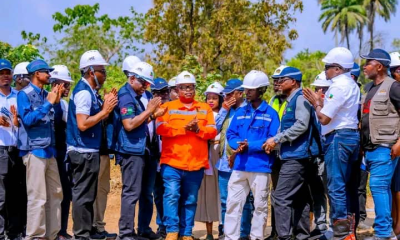
The Group Chief Executive Officer, NNPC Ltd, Engr. Bashir Bayo Ojulari, has stated that the Company is currently in talks with partners with proven track record of refining and petrochemical operations, in order to build sustainable, self-financing, and profitable solutions for its refineries.
Ojulari disclosed this while fielding questions during a fireside chat themed “Securing Nigeria’s Energy Future at NIES 2026”, at the ongoing Nigeria International Energy Summit (NIES) 2026 in Abuja, on Wednesday.
The GCEO observed that historically, the focus on refineries has largely been on financing and EPC delivery, noting that the approach has now moved towards getting the operating model right for sustainability.
“Getting refineries up and running requires three critical elements: financing, a competent EPC contractor, and world-class operational capacity. That is exactly our focus at the moment,” he noted.
The GCEO added that NNPC Ltd is now better positioned for commerciality and sustained profitability, driven by ongoing transformation agenda aimed at securing Nigeria’s energy future.
On the recent gains made in the reduction of crude oil theft and improved pipeline availability, the NNPC Ltd GCEO attributed the success to strengthened collaboration with upstream operators, noting that renewed engagement and trust have significantly proven to be a major boost for investor confidence, commercial outcomes, and productivity.
“When the current leadership of NNPC Ltd was appointed, we initiated a fundamentally different engagement model with our partners which focused on improving systems and processes for win-win outcomes in production acceleration and contracting,” Ojulari said.
“There was also the decisive intervention by the Federal Government to mitigate security challenges in the Niger Delta through a structured surveillance framework, including the deployment of AI-enabled solutions and security personnel. This has helped stabilise operations, ensure production consistency, and deepen collaboration with host communities through targeted Corporate Social Responsibility (CSR) initiatives that address fundamental social issues,” the GCEO noted.
On the recently-launched NNPC Ltd Gas Master Plan 2026, Ojulari explained that the Company is firmly focused on delivering in-country value through gas utilisation initiatives, describing the plan as a customer-driven strategy designed to stimulate market growth and shared prosperity.
According to him, the Plan is closely aligned with the Federal Government’s Decade of Gas Initiative, which positions gas as a pillar of economic growth, industrialisation, and energy transition.
On leadership and governance, Ojulari commended President Bola Ahmed Tinubu, GCFR, for the unprecedented inclusion of industry experts on the NNPC Ltd Board and Senior Management Team, describing it as a strategic move that strengthens commercial discipline and global competitiveness.
He added that the blend of internal expertise, international experience, and a highly skilled workforce positions NNPC Ltd as a commercially viable and performance-driven national energy company that will be the pride of all its stakeholders.
Oil and Gas
NNPC Ltd Unveils Gas Master Plan 2.0…Milestone Represents Nigeria’s Dev’t Aspirations, Says Ekpo

By Aliyu Musa
As part of ongoing efforts to reposition Nigeria’s gas sector as the engine room of national industrialisation, energy security, and sustainable economic growth, the Nigerian National Petroleum Company Limited (NNPC Ltd) has officially unveiled its Gas Master Plan (GMP) 2026, tagged NGMP 2026.
The unveiling, held at the NNPC Towers in Abuja on Friday, 30th Jan, 2026 marks a strategic inflection point in Nigeria’s energy transition journey, underscoring government’s resolve to translate the nation’s vast gas endowment into tangible economic value, infrastructure expansion, and global competitiveness, in alignment with its long-term development aspirations.
Speaking at the event, the Honourable Minister of State for Petroleum Resources (Gas), Rt. Hon. Ekperikpe Ekpo, described the Gas Master Plan as a deliberate pivot from policy articulation to disciplined execution, anchored on commercial viability and integrated sector-wide coordination.
“Today’s launch is not merely the unveiling of a document; it represents a deliberate shift towards a more integrated, commercially driven, and execution-focused gas sector, aligned with Nigeria’s development aspirations. Nigeria is fundamentally a gas Nation. With one of the largest proven gas reserves in Africa, our challenge has never been potential, but translation: translating resources into reliable supply, infrastructure into value, and policy into measurable outcomes for our economy and our people. The Gas Master Plan speaks directly to this challenge.”
Hon. Ekpo further noted that the Plan’s strong focus on supply reliability, infrastructure expansion, domestic and export market flexibility, and strategic partnerships aligns seamlessly with the Federal Government’s Decade of Gas Initiative, positioning natural gas as the backbone of Nigeria’s energy security, industrialisation, and just energy transition.
In his address, the Group Chief Executive Officer, NNPC Ltd, Engr. Bashir Bayo Ojulari, described the NNPC Gas Master Plan 2026 as a bold, effective execution-anchored roadmap designed to unlock Nigeria’s immense gas potential and elevate the country into a globally competitive gas hub.
Ojulari noted that with about 210 trillion cubic feet (Tcf) of proven gas reserves and an upside potential of up to 600 Tcf, Nigeria possesses one of the most consequential hydrocarbon basins in the world; one reinforced by the Petroleum Industry Act (PIA) and the Federal Government’s gas-centric energy transition agenda.
“The Plan is structured not just to deliver – but to exceed- the Presidential mandate of increasing national gas production to 10 billion cubic feet per day by 2027 and 12 billion cubic feet per day by 2030, while catalysing over 60 billion dollars in new investments across the oil and gas value chain by 2030.”
He explained that the Plan prioritises cost optimisation, operational excellence, and systematic advancement of resources from 3P to bankable 2P reserves, while strengthening gas supply to power generation, CNG, LPG, Mini-LNG, and critical industrial off-takers.
Reaffirming his personal commitment as Chief Sponsor of the initiative, the NNPC Ltd GCEO stressed that the Company has adopted a more collaborative, investor-centric approach in shaping the NGMP 2026, with strong alignment to industry stakeholders, partners, and investors.
In a goodwill message at the occasion, the Chairman of the Independent Petroleum Producers’ Group (IPPG) and CEO of Aradel Holdings, Mr. Adegbite Falade, said: “This is giving a shot in the arm to the economy which will bridge the gap between intent and reality. Gas thrives on value chain, from upstream to offtakers. As IPPG members, we reiterate our commitment and support to this initiative.”
Also lending his voice to the initiative, the Chairman of the Oil Producers Trade Section (OPTS) and MD of TotalEnergies Upstream Companies in Nigeria, Matthieu Bouyer, thanked the NNPC Ltd for the ambition behind the NNPC GMP, stressing that his organisation supports the core operating principles of the Plan.
The Gas Master Plan 2026 is expected to serve as the definitive framework for coordinated gas sector development, execution discipline, and value creation over the next decade.
The Gas Master Plan 2026 is an offshoot of the Nigerian Gas Master Plan (NGMP) 2008, which is a strategic framework aimed at maximizing the economic benefits from the country’s abundant gas resources. Another significant dimension to the NGMP 2026 is the utmost attention to full alignment with the Nigerian Decade of Gas Programme.

By Aliyu Musa
The Commission Chief Executive of the Nigerian Upstream Petroleum Regulatory Commission (NUPRC), Mrs. Oritsemeyiwa Eyesan, has unveiled a bold and transformative vision for Nigeria’s upstream oil and gas sector, promising improved efficiency, stronger collaboration and faster regulatory outcomes.
This was disclosed in a statement signed by NUPRC’S Head, Media and Strategic Communication, Eniola Akinkuotu on Wednesday in Abuja.
She disclosed that the strategy had already begun to yield results, citing the recent reactivation of a long shut-in asset, which she described as “turning on the light” in the upstream sector.
Eyesan said her agenda for the sector rests on three strategic pillars: production optimisation and revenue expansion; regulatory predictability and speed; and safe, governed and sustainable operations.
She noted that the vision aligns squarely with President Bola Ahmed Tinubu’s Renewed Hope Agenda and the Federal Government’s ambitious plan to raise crude oil production to 2 million barrels per day by 2027 and 3 million barrels per day by 2030.
The NUPRC boss unveiled the agenda at a high-level stakeholder meeting held in Lagos on Wednesday, which drew key industry players, including members of the Oil Producers Trade Section (OPTS), the Independent Petroleum Producers Group (IPPG), emerging operators and other major stakeholders in the oil and gas industry.
Eyesan said the Commission would prioritise production growth and revenue expansion by recovering shut-in volumes with economic value, arresting production decline, reducing losses and accelerating time-to-first oil without imposing additional regulatory burdens or transaction costs on operators.
On regulatory reforms, the CCE said predictability and speed would be achieved by running regulation like a service, enforcing rules transparently and taking quick, time-bound decisions.
She stressed that the Commission under her leadership would be judged strictly by measurable outcomes.
She said: “Going forward, the Commission will be measured on the following key success metrics Faster, predictable regulatory approvals, higher, more secure and sustainable production, credible licensing and disciplined acreage performance, world-class HSE (Health, Safety and Environment) and process safety outcomes, trusted measurement, transparency, governance and data integrity.”
To enhance regulatory efficiency, Eyesan announced that the NUPRC would publish Service Level Agreements (SLAs) for all major regulatory approvals, while production timelines would be shortened through proactive engagement and mutual agreement on approval schedules.
“Stakeholders are encouraged to submit their projects for consideration. For matured opportunities, please submit your request latest end of Q1, 2026. This would provide a simplified and holistic framework that creates obligations for both operators and the Commission.”
The NUPRC boss further revealed plans to launch a fully digital workflow for permitting, reporting and data submissions, noting that the Commission would collaborate with industry players to identify capacity gaps and deploy targeted interventions to boost regulatory efficiency.
According to her, the NUPRC’s internal transformation programme, anchored by a Project Management Office, is already underway. “I will provide more details on this in the coming days,” she assured.
In a move aimed at strengthening engagement and accountability, Eyesan announced the creation of a monthly “CCE Operators Leadership Forum,” bringing together all operators including the NNPC alongside OPTS, IPPG and emerging players.
She explained that the forum would focus on approval timelines, production restoration, infrastructure integrity, gas monetisation and development, enabling the Commission to identify and eliminate systemic bottlenecks.
The NUPRC boss also emphasised the need for accurate hydrocarbon accounting, stressing the importance of tracking every barrel produced and swiftly resolving discrepancies or losses.
On host community relations, she disclosed that the Commission would soon engage host community leaders to reaffirm commitment to the Host Community Development Trust (HCDT) framework under the Petroleum Industry Act (PIA).
She further announced a major compliance drive to ensure full adherence to the PIA within 12 months, monitored by a dedicated team reporting directly to her office.
“The commission going forward will issue quarterly progress reports. Let therefore bring all high impact shut in fields for approval.
“On the Commission’s part, a 90-day program to fast track approvals for near-ready FDPs, well interventions, rig mobilisation and other quick-win opportunities have commenced.”



MACBAN denies links to criminality, expresses shock over proposed US sanctions
Spread the loveThe Miyetti Allah Cattle Breeders Association of Nigeria has expressed surprise over the proposed sanctions against the association...


Must Nigerians Be Made to Suffee For Everything?
Spread the loveProf P. I. Ukase Once again, our children aspiring to gain admission into universities for the 2026/2027 academic...

Why Kwankwaso was singled out in proposed US Religious Freedom Bill. –Farooq Kperogi
Spread the loveA proposed United States legislation seeking to sanction alleged violators of religious freedom in Nigeria has triggered debate...


Why We Must Welcome Governor Fintiri to APC…Hon. Namdas
Spread the loveBy Saint Mugaga, Abuja Former chairman of the House of Representatives Committee on Army and representative of the...


Fubara Dissolves State Executive Council after meeting Tinubu
Spread the loveBy Saint Mugaga Governor of Rivers State, Sir Siminalayi Fubara, has dissolved the State Executive Council, a move...


Atiku urges Nigerians to kick out APC beginning with FCT elections
Spread the loveBy Saint Mugaga Former Vice President Alhaji Atiku Abubakar has called on Nigerians to begin the process of...


All 183 abducted Kurmin Wali worshippers rescued – Kaduna Govt
Spread the loveBy Our Reporter After initial denials and foot dragging over the abduction of Christian worshippers, the Kaduna State...


Shettima leaves for Ethiopia to represent Tinubu at the 2026 African Union summit
Spread the loveBy Saint Mugaga Vice President, Senator Kashim Shettima has departed Abuja for Addis Ababa, Ethiopia, to represent President...


Tinubu appoints Yusuf new Chairman/CEO of NAHCON
Spread the loveBy Saint Mugaga President Bola Tinubu has nominated Amb. Ismail Abba Yusuf as the new Chairman/CEO of the...

Kuje/Airport and kuje/Gwagalada roads, would be commissioned by June ending Wike, assured
Spread the loveBy Wumi Tewogbade, Abuja Minister of the Federal Capital Territory, (FCT), Nyesom Wike, on Tuesday, has assured Anima...