
General News
Hausa People Denounce Sultan’s Political Authority

In a move that has sent shockwaves through Northern Nigeria’s political and traditional establishment, the Hausawa Tsantsa Movement has launched a defiant public rejection of any religious or ethnic political directives attributed to the Sultan of Sokoto.
In a blistering statement titled “Mesa Ta Tashi,” authored by Hajiya Kaltume Alumbe Jitami, the group declared that the millions of Hausa people across the federation are “independent citizens” whose primary and sole allegiance rests with the Constitution of the Federal Republic of Nigeria, not any traditional throne.
We Are Not Subjects
A Blow to Traditional Hegemony
The declaration marks a historic fracture in the perceived monolithic political structure of the North. While the office of the Sultan—currently held by His Eminence, Sa’ad Abubakar—is traditionally revered as the spiritual peak of the region, the movement insisted his authority is strictly “moral and historical,” carrying zero executive or legislative weight in a modern democracy.
“No ethnic nationality, including the Hausawa, is legally obligated by any treaty or inherited institution to accept political rulings that fall outside the supremacy of the Nigerian Constitution,” the group asserted.
A Rebirth of Hausa Identity*
By invoking the ancient glory of city-states such as Kano, Katsina, Zaria, and Daura, the movement sought to decouple the Hausa identity from the Caliphate’s historical influence. The group argued that in contemporary Nigeria, identity is defined by citizenship under one sovereign order, rather than pre-colonial structures or inherited crowns.
The movement framed its position as a “defense of unity and equality before the law,” drawing a hard line between cultural reverence and political subordination.
Strategic Implications for 2027
Political analysts suggest this “constitutional rebellion” reflects a growing awareness that traditional institutions must remain neutral in matters of state. By publicly distancing themselves from the Sultan’s directives, the Hausawa Tsantsa Movement has signaled a major shift in how the North may navigate future elections and ethnic representation.
“The allegiance of every Hausa man and woman is pledged to the Federal Republic and its constitutional institutions,” the statement concluded, reaffirming that no throne overrides the will of the people.
Culled from 247Ureports
By Philip Nyan Abuja
The House of Representatives Ad-hoc Committee on Drugs and Illicit Trafficking on Tuesday sought a stronger collaboration with the Nigeria Customs Service (NCS) as part of efforts to curb the rising menace of illicit drugs and prohibited pharmaceuticals in the country.
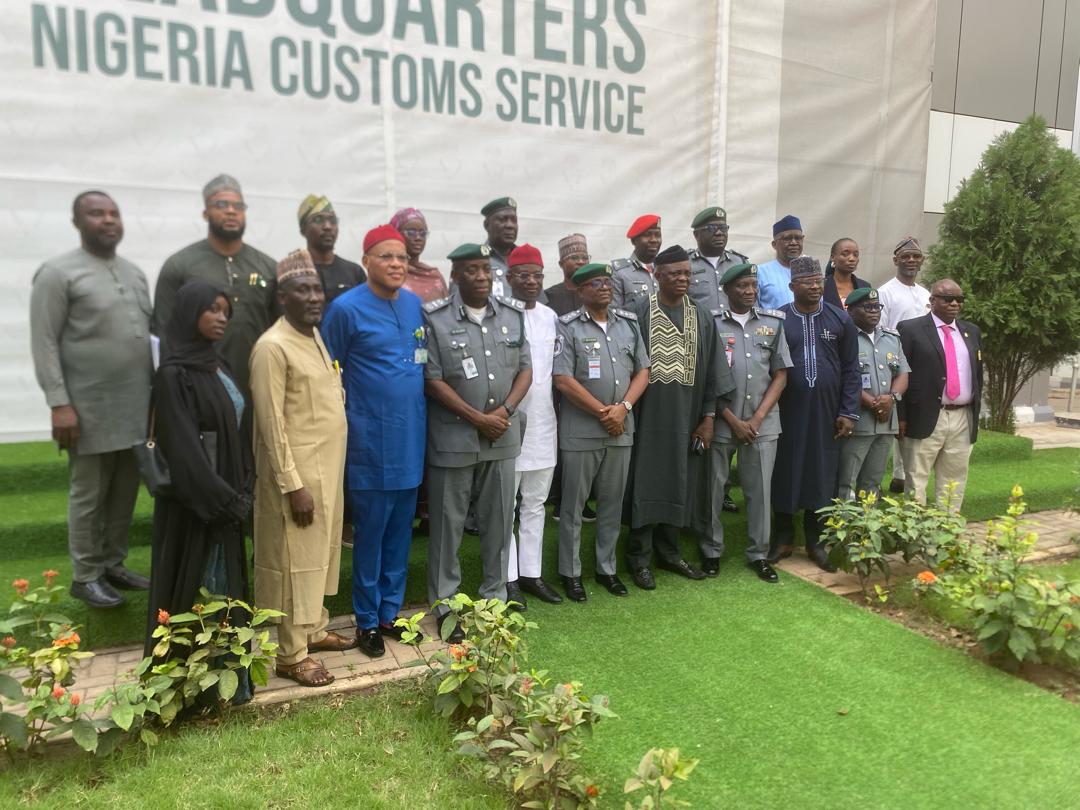
The committee, led by its Chairman, Hon. Timehin Adelegbe alongside members, paid a courtesy visit to the NCS headquarters in Abuja, stressing that the fight against drug trafficking requires coordinated legislative reforms and improved inter-agency cooperation.
Adelegbe clarified that the visit was not investigative but aimed at fostering partnership with the Nigeria Customs Service in addressing the menace of drugs.
“We are not here for investigation; we are here on a courtesy call to collaborate and move ahead together,” he said.
He noted that the committee had earlier conducted a public hearing attended by over 300 organisations, including NGOs and institutions, reflecting growing public concern over the widespread impact of illicit drugs.
“The menace affects everyone. If it doesn’t affect you directly, it affects your family. It is a national crisis that demands collective action,” he said.
The lawmaker commended Customs for its seizures but stressed that more needed to be done in harmonising operations with agencies such as the National Drug Law Enforcement Agency (NDLEA) and the National Agency for Food and Drug Administration and Control (NAFDAC).
He said the committee would review existing laws governing tobacco products, illicit cigarettes, bonded warehouses and border control operations, noting that emerging products such as vape devices were not contemplated under the current Tobacco Act.
“We must examine whether the laws are adequate. Are bonded warehouses complying with regulations? Do we have sufficient personnel at our borders? These are areas we must holistically address,” Adelegbe said.
He also disclosed plans for nationwide advocacy campaigns in Lagos, Port Harcourt and Abuja, as well as across all states, to raise awareness about the dangers of drug abuse.
Hon. Adelegbe emphasised the need for the Nigerian Customs Service to collaborate with the committee in carrying out the planned advocacy to ensure its success.
Responding, the Deputy Comptroller-General of Customs in charge of Enforcement, Investigation and Inspection, DCG Timi Bomodi, who received the committee on behalf of the Customs Comptroller-General, CG Bashir Adewale Adeniyi, reaffirmed the Service’s commitment to combating illicit trade.
Bomodi revealed that in the past year alone, Customs intercepted over 230 forty-foot containers of illegally imported pharmaceuticals, many of which exceeded approved limits set by NAFDAC and were concealed as other goods.
“It is only left to the imagination what damage over 200 containers of such substances would have caused if allowed into society,” he said.
He also cited major cocaine seizures, including 22 parcels intercepted at Seme Command and handed over to NDLEA, as well as over 1,000 kilogrammes of cocaine seized at Lagos ports, some concealed in ship hulls.
According to him, the Nigeria Customs has intensified intelligence-driven enforcement across land borders, airports and seaports, noting a clear link between illicit drugs and criminal activity.
“The activities of the Service have created a significant dent in criminal networks. As criminals evolve, we also evolve in our enforcement strategies,” he said.
Bomodi disclosed that the Service was deploying advanced scanners, establishing a special unit for drug detection and implementing specialised training for officers.
“In terms of volume, it’s really large. I don’t have the figure, but it is really huge. Again, to buttress the point that the Nigerian Customs Service is alive to its responsibilities, as a matter of fact, when you think of our activities in relation to enforcement, you see that across all our border posts, the ports, airports, and seaports, we are making serious interventions, especially in this particular area.
“We are mindful of the fact that, the impact of this trade would have not only on citizens in general, but on our youth population who are mainly prone to the use of some of these substances. And we know what it can do to that population. That is why we don’t compromise in any way whatsoever and we try to check the influx of these things, try to look at criminal networks and see how they operate”, he said.
He added that Customs has also introduced mandatory drug testing for its personnel as part of its zero-tolerance policy for drugs.
He further confirmed that Customs has signed Memoranda of Understanding with both the NDLEA and NAFDAC to strengthen inter-agency collaboration on drug control and pharmaceutical imports.
“The goals of this committee are the goals of the Nigeria Customs Service. We are willing to partner fully and provide any assistance required,” he assured.
By Our Reporter
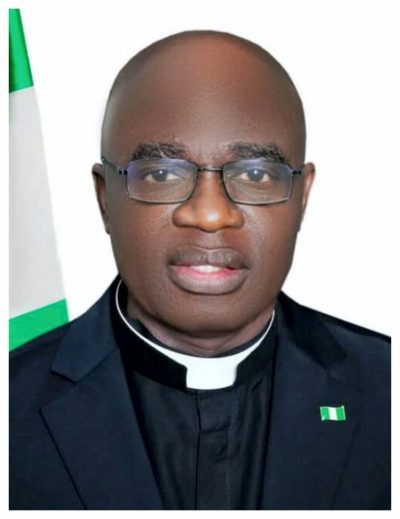
Benue state is to institutionalize community policing committees following the formal launching of the People Centred Public Safety Program, a governance approach to security that places communities at the heart of safety systems.
This initiative, points to the full and constructive engagement of citizens, who will no longer be passive recipients of protection but active partners in preventing violence and strengthening resilience.
While launching the program at the new Banquet Hall of Government House in Makurdi, Governor Hyacinth Alia, stated that the People-Centred Public Safety Project is a bold declaration of intent, a policy statement, and a decisive step toward redefining public safety emphasising that security henceforth will not be imposed but built, sustained, and owned by the people. He promised that young and old people as well as women and the internally displaced persons will all have a role to play
He hailed the courage, resilience, and innovation of the people of Guma, Katsina-Ala, and Agatu local government areas, for being a glowing reminder that security is not a gift from the government, but a collective responsibility. He added that institutionalization of community policing committees will ensure that the people of Benue move from the margins to the centre of security decision-making.
He appreciated Lawyers Alert, Open Society Foundation, security agencies, and state institutions for embracing the collaborative approach while calling on all Benue citizens to take ownership of the framework in order to protect lives, restore trust, and secure a peaceful, resilient, and prosperous future for Benue State.
Governor Alia was represented at the event by the Deputy Governor, Barr. Sam Ode.
T
General News
Christian Lady Beaten by Three Muslim Boys in Kogi State for Not Wearing Headtie During Ramadan Gets Justice.

Peace has returned to Anyigba town in Kogi State after weeks of tension following an attack on a Christian lady by three Muslim boys who beat her for not wearing a headtie during Ramadan.
Victoria David, the victim, has finally gotten justice after traditional rulers, religious leaders, and security agencies stepped in to settle the matter. Pictures from the peace meeting held between the families have now emerged, showing both parties coming together to end the crisis.
because she was not wearing a headtie during the holy month of Ramadan. The incident sparked outrage online, with many Nigerians calling for justice and expressing concern over religious intolerance in the country.
One of the attackers had even posted a video online confirming the attack and giving reasons why they did it. In the video, he claimed they had warned people not to dress anyhow during Ramadan, which led to the beating.
The peace meeting brought together all the important parties in the community. Present at the gathering were:
• HRH Shaibu Okolo, The Ogohi/Onu Anyigba
• The Chief Imam of Anyigba Central Mosque
• CAN Chairman
• DPO Anyigba
• Representatives of the Nigeria Military
• Imam Agbeji
• The boy who posted the video online confirming the attack
• The lady Victoria David and her family
• The families of the three attackers
The Royal Father, Ogohi Shaibu Okolo, took a bold step by apologizing to the victim’s family on behalf of Anyigba town and the Muslim community. His move to personally say sorry helped calm tensions and showed leadership in a difficult moment.
The Chief Imam of Anyigba also followed with a sincere apology over the actions of the attackers. He did not defend what the boys did but instead condemned it and asked for forgiveness from Victoria and her family.
During the meeting, the Imam of Agbeji presented one of the boys, likely the one who dropped the video online claiming they had warned people not to dress anyhow during Ramadan. He also gave reasons why they attacked the girl.
But at the peace meeting, the boy changed his story. He claimed it was just mere content and that they did not mean serious harm. However, he was given serious warnings and undertaking measures to ensure such behaviour does not happen again.
The security agents present at the meeting appealed for peace and urged both families to let go of any bitterness. Other stakeholders also spoke, calling for religious tolerance and peaceful coexistence in Anyigba and beyond.
In a show of maturity and grace, the victim Victoria and her family have forgiven the boys and given peace a chance. They agreed to let go of the matter and allow the community to move forward.
Their decision to forgive rather than seek revenge has been praised by many, as it helped prevent what could have turned into a serious religious crisis in the area.
We thank everyone, especially the Ogohi/Onu Anyigba and other stakeholders, for coming together to avert crisis. The quick response of traditional and religious leaders, combined with the forgiveness shown by Victoria and her family, saved the community from what could have been a major breakdown of peace.
Anyigba is known as a university town with people from different tribes and religions living together. This incident could have torn the community apart, but wisdom prevailed.
This case teaches us a few things. First, no one has the right to force their religious beliefs on others through violence. Ramadan is a time of fasting and prayer for Muslims, but it does not give anyone the permission to attack those who do not observe it in the same way.
Second, traditional institutions still matter in settling disputes. The Royal Father stepping in personally showed that our traditional rulers have a role to play in maintaining peace.
Third, forgiveness is powerful. Victoria and her family could have demanded vengeance, but they chose peace instead. Their decision allowed the community to heal quickly.
As Nigerians, we must learn to live with one another regardless of our religious differences. No faith teaches violence against those who believe differently. The peace we enjoy today is fragile and must be protected by all.
For Victoria, justice has been served not through punishment but through reconciliation. And sometimes, that is the best form of justice.


Why Labour Party lost 2023 presidential election…Senator Usman
Spread the loveBy Aliyu Musa Labour Party said it lost the 2023 presidential election because it failed to effectively utilise...


2027: Nigerians’ll vote performance, not noise – APC
Spread the loveBy Aliyu Musa The National Chairman of the All Progressives Congress (APC), Prof. Nentawe Yilwatda has declared that...

House collaborates with Customs to fight drug trafficking
Spread the loveBy Philip Nyan Abuja The House of Representatives Ad-hoc Committee on Drugs and Illicit Trafficking on Tuesday sought...

FCTA Health Mandate Secretary Offers 150 Free Insurance Slots to NUJ FCT Members
Spread the love…. As Perm Sec offers additional 50By Saint Mugaga The Mandate Secretary of the FCTA Health Services and...

Benue State Government to Institutionalize Community Policing Committees –Gov Alia
Spread the loveBy Our ReporterBenue state is to institutionalize community policing committees following the formal launching of the People Centred...


Christian Lady Beaten by Three Muslim Boys in Kogi State for Not Wearing Headtie During Ramadan Gets Justice.
Spread the lovePeace has returned to Anyigba town in Kogi State after weeks of tension following an attack on a...


Hausa People Denounce Sultan’s Political Authority
Spread the loveIn a move that has sent shockwaves through Northern Nigeria’s political and traditional establishment, the Hausawa Tsantsa Movement...

General Officer Commanding 8 Division, survives Lakurawa ambush, 5 terrorists gunned down in Kebbi
Spread the loveBy Our Reporter The General Officer Commanding 8 Division of the Nigerian Army and Commander Sector 2 of...

Prof Gundu Appeals High Court Judgment
Spread the loveBy Felix Umande, Makurdi Following what may be considered as pyrrhic victory, Prof Zacharys Anger Gundu, Vice-Chancellor of...


US lawmakers link Chinese illegal mining to terrorism funding in Nigeria
Spread the loveFive Republican lawmakers in the United States have alleged that Chinese nationals engaged in illegal mining operations in...