
Business and Economy
FG reassures of support for Made in Nigeria goods

By Saint Mugaga
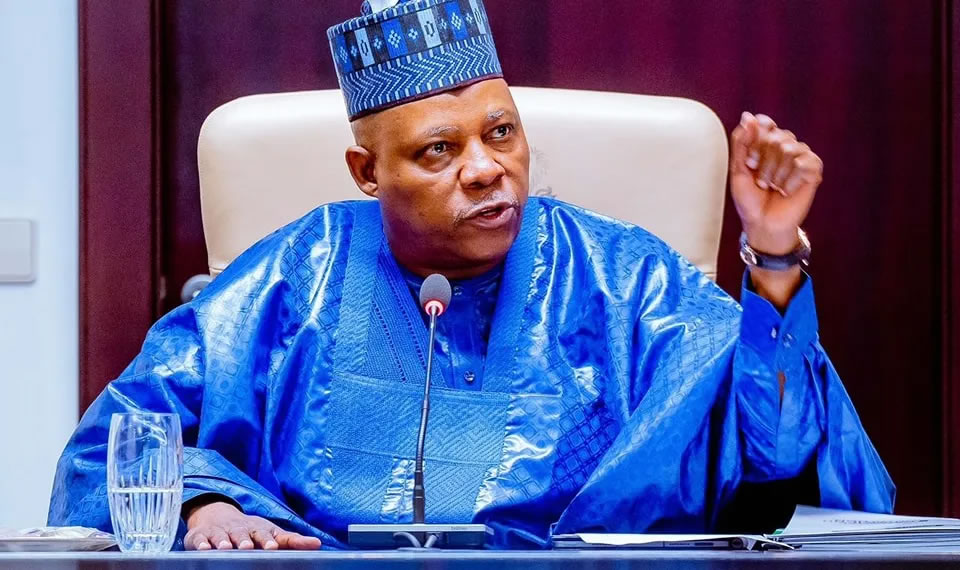
Vice President Kashim Shettima has reaffirmed the federal government’s commitment to deepening support for local production.
Shettima, represented by the Special Adviser, Special Duties, Dr. Aliyu Modibbo Umar, said this at the Made in Naija Trade Exhibition organised by the House of Representatives Committee on Commerce on Tuesday.
He said Nigeria’s economic identity and global relevance will be defined by what it creates.
The vice president said Nigeria’s future depends on the creativity, ingenuity, and enterprise of its people.
“There is nothing that advertises the pride of a nation as much as the craft, creativity and conceptions of its people,” Shettima said. “They do more than signal the capability of the people. They serve as a fertilizer of the economy. They nourish every sector and give life to dreams yet to be imagined.”
He said the gathering was more than an exhibition, it was a statement of intent.
“This is both the assurance of our readiness to make Nigerian brands appeal to the world and a promise of the government’s commitment to work with you through this journey of transformation.”
Shettima stressed that the country’s wealth does not lie in oil fields, fertile land, or mineral deposits, but in what Nigerians are able to turn those resources into.
“Our fortune is what we make of these resources, the ambition that turns potential into prosperity. It rests on the shoulders of our most valuable asset, our human capital.”
He highlighted that Nigerian brilliance has already been demonstrated in multiple sectors, from agro-processing to architecture, textiles to technology, and manufacturing to music. But he warned that creativity is not enough if Nigerians fail to support what they produce.
“It is not enough for us to produce. We must patronize what we produce. Every time we choose a product manufactured here, we are making an investment, in a Nigerian entrepreneur, an artisan, a factory worker, a young graduate building a future.”
According to him, buying Nigerian strengthens the naira, supports jobs, reduces dependence on global supply chains, and nurtures a sustainable middle class.
Shettima noted that the target goes beyond self-reliance.
“Made in Nigeria must become synonymous with quality, innovation and competitiveness on the global stage. We have the resources, we have the creativity, we have the human capital. What remains is our resolve.”
The Vice President said President Bola Ahmed Tinubu considers local creators and producers as essential partners in national renewal, describing his administration as “a dreamland for those who create.”
He outlined ongoing government efforts to make Nigeria a manufacturing and innovation hub, including interventions built to remove barriers and expand market opportunities for MSMEs and local industries.
“Our administration is committed to providing the infrastructure, stable policies and essential finance needed for our local industries to scale up, meet international standards, and proudly export Nigerian excellence to the world.”
He said the government is establishing special economic zones, expanding access to financing, reforming ports, and ensuring certification systems meet global benchmarks.
“With the world’s highest quality, we want the answer to be Nigeria,” Shettima said.
He described the Made in Naija exhibition as a symbolic declaration of confidence in Nigerian talent, and a refusal to let others define the country’s global identity.
“Nigeria is not a country waiting to be defined by others. We are determined to define ourselves. If we remain steadfast, producers and consumers, government and industry, artisans and policymakers,, we will build a Nigeria where Made in Nigeria is not a sentimental choice, but a global reference.”
Speaker of the House of Representatives, Rt. Hon. Abbas Tajudeen, reaffirmed the National Assembly’s full support for policies that prioritise Nigerian-made goods, saying the country’s future depends on local production, value addition, and reduced dependence on imports.
Abbas praised the initiative as a timely response to Nigeria’s urgent need for industrial growth and economic self-reliance.
He commended the committee’s chairman, Hon. Ahmed Munir, for conceptualising and delivering the exhibition, describing it as a practical expression of the nation’s industrial ambition.
“Their efforts represent a timely response to the national call for industrial growth and economic self-reliance,” Abbas said.
With the theme “Reshaping the Future of Commerce,” the exhibition aligns directly with Nigeria’s development objectives, the Speaker stated.
He said the country must now shift from an import-dependent economy to one built on domestic production, value creation, and inclusive growth, especially under the African Continental Free Trade Area (AfCFTA), which offers huge opportunities, but only for competitive economies.
“We must position Nigerian goods as competitive, dependable, and reasonably visible,” Abbas noted.
The Speaker also highlighted the significance of the Nigeria First Policy, launched by President Bola Ahmed Tinubu and endorsed by the National Assembly.
The policy mandates government ministries, agencies, and institutions to give priority to locally manufactured goods in all public procurement processes.
“Its goal is clear: to boost domestic industrial output, reduce over-reliance on imports, and create sustainable employment,” he said.
Abbas stressed that full compliance is expected, noting that the exhibition itself is evidence of the policy being put into practice.
Recalling his recent visit to China, the Speaker said Nigeria must learn from countries that built global competitiveness through sustained local manufacturing.
“Nigeria must follow a similar path. We need to process our raw materials, add value domestically, and confidently promote Nigeria-made goods in regional and global markets,” he said.
Weakening reliance on imports, he noted, is not only an economic choice but a national obligation.
“Strengthening local production is not just a tactic for survival. It is a duty we owe to the present and future generations,” Abbas declared.
He reaffirmed that the National Assembly has already passed and amended several pieces of legislation targeting industrial growth, ease of doing business, and support for small and medium-sized enterprises.
Still, he cautioned that increased output must not come at the expense of quality.
“Nigerian manufacturers must ensure their products meet global standards. Quality assures credibility, and consumer trust,” he said.
Abbas also urged Nigerians to embrace their civic role in economic development.
“Each time we choose locally made goods, we strengthen our economy and reinforce our identity,” he said. “These decisions are powerful expressions of economic responsibility and national solidarity.”
Chairman of the House Committee on Commerce, Hon. Ahmed Munir, Nigeria stands on the brink of an industrial and economic rebirth driven by local manufacturing, innovation, and strong legislative support.
Munir said the country must now “forge prosperity with our own hands,” transforming raw potential into globally competitive products made in Nigeria.
He noted that the focus on local content is projected to create over five million new jobs by 2030, shifting Nigerian youths from the unemployment line into factories, workshops, and innovation hubs across the country.
According to him, this shift represents not just economic growth, but the “restoration of the dignity of labour.”
Munir emphasized that substituting key imports with locally made alternatives remains central to stabilizing Nigeria’s foreign reserves.
He stated that by reducing dependency on foreign goods, the country could save up to $20 billion annually in foreign exchange, a move that aligns with the strategic priorities of President Bola Ahmed Tinubu’s administration.
The lawmaker described the non-oil sector’s expansion as “no longer aspirational, but a policy pillar,” noting that products made in Nigeria are expected to contribute an additional 5 percent to the country’s GDP within five years.
“Our vision extends beyond our borders,” he said. “Nigerian products must be ready to compete not just in Lagos, Port Harcourt, or Abuja, but in London, Beijing, and New York.”
Munir also highlighted ongoing legislative efforts under the 10th National Assembly, led by Speaker Abbas Tajudeen, including work on the domestication of the African Continental Free Trade Area (AfCFTA) agreement, which opens access to a $3.4 trillion market.
Other priority areas include establishing a national Weights and Measures Centre and strengthening regulatory frameworks that support industrial competitiveness.
He affirmed that the House remains committed to building a strong economic base “brick by Nigerian-made brick,” with the backing of policies designed to sustain growth, attract investment, and ensure long-term national prosperity.


BY Saint Mugaga
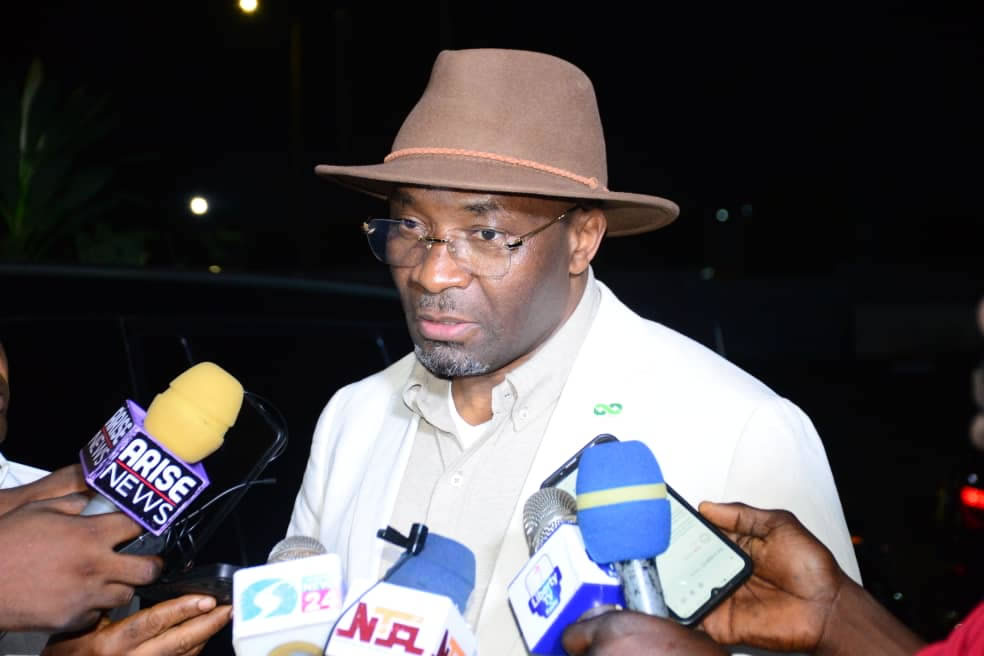
The Opposition Caucus in the House of Representatives have raised serious concerns over the alleged failure of the federal government to implement the 2025 Appropriation Act.
The caucus warned that the development could trigger calls for the removal of top finance officials.
In a statement jointly signed by the caucus leaders, Hon. Fred Agbedi (PDP, Bayelsa) and Hon. Afam Ogene (LP, Anambra),on Monday, the lawmakers announced that a strategic meeting has been scheduled for 8:00 p.m. on Tuesday to deliberate on critical national and legislative issues.
According to the statement, the meeting will focus on fiscal governance, legislative oversight, and an internal review of the performance of the minority leadership in the House.
Central to the deliberations, the caucus said, is the reported non-implementation of the 2025 budget throughout the entire fiscal year, despite the House approving all loan requests submitted by the Executive arm of government.
The lawmakers are expected to interrogate claims that funds appropriated for capital projects were not released, contrary to assurances earlier given to the National Assembly.
The caucus disclosed that it is also considering strong accountability measures, including a possible call for the removal of the Minister of Finance and the Accountant-General of the Federation.

By Saint Mugaga
The Vice President, Senator Kashim Shettima, has said the opening of Nigeria House in Davos reflected the country’s renewed seriousness, readiness, and resolve to take its place as an active participant in shaping global economic conversations.
He observed that while nations do not prosper in isolation, Nigeria’s future growth depended on deliberate, structured engagement with the global economy.
A release by his spokesman, Stanley Nkwocha, said Shettima stated this on Monday, during the formal opening of the Nigeria House at the 2026 World Economic Forum (WEF) in Davos, Switzerland.
He said Nigeria marked a historic milestone in its global economic engagement with the official opening of its House at the WEF 2026.
“This day is extraordinary in the history of our engagements at this beautiful meeting point of global political leadership, policy thinkers, and corporate enterprise. For the first time in our nation’s history, Nigeria stands at Davos with a sovereign pavilion of its own.
“Nigeria House is a response to the lapses of the past. It reflects our intention. It reflects our seriousness. Above all, it advertises both our readiness and our resolve to take a front-line seat in the discourse of the global economy, not as observers, but as participants with a clear sense of purpose and place,” he stated.
The Vice President pointed out that even though “Nigeria House may have been conceived as a whole-of-government platform, led by the Honourable Minister of Industry, Trade and Investment, with senior leadership across investment, foreign affairs, energy, infrastructure, technology, climate, and culture gathered under one roof,” the true essence of the House must come from the private sector.
“Government can open doors, create frameworks, and de-risk environments; only enterprise can animate growth, scale opportunity, and translate policy into productivity. This House will thrive to the extent that it draws life from private capital, private innovation, and private confidence,” he maintained.
Shettima explained that the dividends of the Tinubu administration’s reforms were beginning to materialize, noting that “our decision to open up to the world more deliberately comes at a turning point in our economic journey.
“The dividends of the difficult but inevitable reforms of recent years are beginning to show,” he added, recalling that in 2025, Nigeria’s economy expanded by about 3.9 per cent, the fastest pace recorded in over a decade, driven largely by a resilient non-oil economy that now accounts for roughly 96 per cent of GDP.
He continued: “Services, agriculture, finance, and technology are expanding, while non-oil revenues now make up nearly three-quarters of government collections, marking a structural shift away from oil dependence.
“Inflation, which stood above 30 per cent in late 2024, eased significantly by the end of 2025, and external buffers have improved, with foreign reserves rising above 45 billion dollars and greater stability in the foreign exchange market.”
He invited the international business community to leverage the platform created through the Nigeria House project, noting that “Nigeria is open for business, but more importantly, Nigeria is open for collaboration.”
Shettima assured that the Nigeria House would host conversations that must have to move the nation and the global community forward.
“We are here to learn from you just as much as we are here to inform you of the opportunities that await in Nigeria. Progress is not a monologue; it is a dialogue,” he further stated.
Earlier, Minister of Industry, Trade and Investment, Dr Jumoke Oduwole, applauded the support of Vice President Shettima for the realisation of the historical vision for Nigeria House, Davos, acknow
Business and Economy
Shettima urges African entrepreneurs to close ranks to fully harness continent’s huge potentials…hails Massachusetts Tech Institute’s impact on global innovation ecosystem

By Saint Mugaga
The Vice President, Senator Kashim Shettima, has urged African entrepreneurs to close ranks in order to fully harness the Massachusetts Institute of Technology continent’s huge potentials, leveraging (MIT)’s resource mobilization network and job creation opportunities.
He made the call on Wednesday when he received a delegation from Kuo Sharper Foundry Fellowship 2025-2026 led by MIT’s Executive Director for the Kuo Sharper Centre for Prosperity and Entrepreneurship, Dina Sherif, on a courtesy visit at the presidential villa.
The vice president lauded the transformative impact of the MIT on the global entrepreneurship and innovation ecosystem that has raised over $1.5 billion dollars and created over 30,000 direct jobs in 20 years.
Shettima called for unity of purpose among African professionals and entrepreneurs, saying “Africa is the new frontier and future belongs to the continent but its people must unite to transform potentials into tangible results that impact lives and livelihoods.
“Africa is blessed with enormous human and material resources but its people must fuse into one to benefit from the tremendous opportunities that abound across the continent,” he added.
He disclosed that Nigeria President Bola Tinubu was daring to leverage available opportunities to transform the entire economy, noting that “President Tinubu is not afraid of taking bold decisions that will reposition Nigeria’s economy and better the lives of the livelihoods of the people.”
Earlier in her remarks, the leader of the delegation said the delegation was at the Presidential Villa to brief the Vice President on the activities of MIT’s Kuo Sharper Centre for Prosperity and Entrepreneurship, assuring that the Centre is dedicated to “fueling the engine of entrepreneurship across the world”.
She noted that the team was in Nigeria in view of the Kuo Sharper Foundry Fellowship programme, which, according to her, has helped to entrench the spirit of entrepreneurship across the continent.
Sherif underscored the significance of collaboration among African startups, noting that Nigeria is a leading country, as evidenced in the progress recorded by startups across the continent.
She further assured of improved support for African-based startups from the centre through its various initiatives.
Also present at the meeting with the Vice President were the Director General of the National Emergency Management Agency (NEMA), Mrs. Zubaida Umar, and some fellows of the Kuo Sharper Foundry Fellowship 2025 – 2026 Session across Africa.


MACBAN denies links to criminality, expresses shock over proposed US sanctions
Spread the loveThe Miyetti Allah Cattle Breeders Association of Nigeria has expressed surprise over the proposed sanctions against the association...

Must Nigerians Be Made to Suffee For Everything?
Spread the loveProf P. I. Ukase Once again, our children aspiring to gain admission into universities for the 2026/2027 academic...

Why Kwankwaso was singled out in proposed US Religious Freedom Bill. –Farooq Kperogi
Spread the loveA proposed United States legislation seeking to sanction alleged violators of religious freedom in Nigeria has triggered debate...

Why We Must Welcome Governor Fintiri to APC…Hon. Namdas
Spread the loveBy Saint Mugaga, Abuja Former chairman of the House of Representatives Committee on Army and representative of the...


Fubara Dissolves State Executive Council after meeting Tinubu
Spread the loveBy Saint Mugaga Governor of Rivers State, Sir Siminalayi Fubara, has dissolved the State Executive Council, a move...


Atiku urges Nigerians to kick out APC beginning with FCT elections
Spread the loveBy Saint Mugaga Former Vice President Alhaji Atiku Abubakar has called on Nigerians to begin the process of...


All 183 abducted Kurmin Wali worshippers rescued – Kaduna Govt
Spread the loveBy Our Reporter After initial denials and foot dragging over the abduction of Christian worshippers, the Kaduna State...


Shettima leaves for Ethiopia to represent Tinubu at the 2026 African Union summit
Spread the loveBy Saint Mugaga Vice President, Senator Kashim Shettima has departed Abuja for Addis Ababa, Ethiopia, to represent President...


Tinubu appoints Yusuf new Chairman/CEO of NAHCON
Spread the loveBy Saint Mugaga President Bola Tinubu has nominated Amb. Ismail Abba Yusuf as the new Chairman/CEO of the...

Kuje/Airport and kuje/Gwagalada roads, would be commissioned by June ending Wike, assured
Spread the loveBy Wumi Tewogbade, Abuja Minister of the Federal Capital Territory, (FCT), Nyesom Wike, on Tuesday, has assured Anima...