
Oil and Gas
House demand details of crude oil seizures, sales from EFCC

By Saint Mugaga
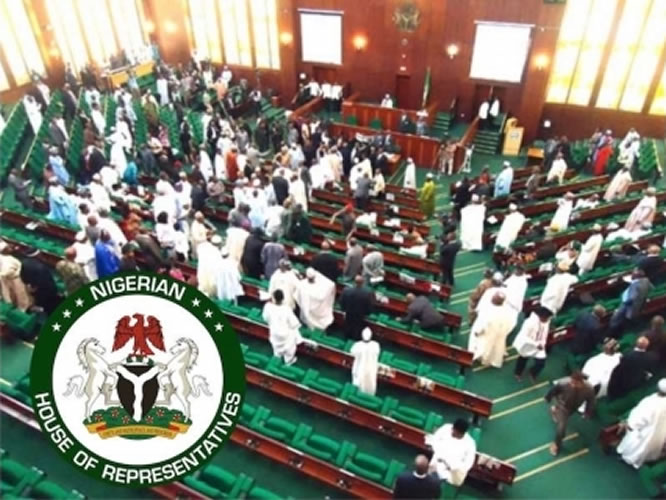
The House of Representatives’ Ad-hoc Committee on the Implementation and Oversight of the Naira-for-Crude-Oil Policy Wednesday asked the Economic and Financial Crimes Commission (EFCC) to provide comprehensive details on crude oil seizures, sales and disposal under its watch.
Chairman of the committee, Emerengwa Boniface Sunday, gave the directive during the resumption of the investigative hearing on the Naira-for-Crude-Oil policy with stakeholders in Abuja.
During the hearing, Special Adviser to the EFCC Chairman on Regulatory Compliance,
Francis Usani explained that the Commission’s submissions to the committee were limited to information on referrals made to it from 2003 to date, including crude oil seizures handled by the EFCC.
He admitted that no direct investigations had been conducted by the anti-graft agency specifically under the Naira-for-Crude policy.
He said: “The objective or the main crux of this invitation was investigations done under the Naira-for-crude policy of the Federal Republic of Nigeria that took effect, or was initiated sometime in 2024, but took effect this year.
“We have not had any direct investigation or issue involving specifically Naira for crude policy or obstructions or infractions under that particular initiative.
“But because we also received information on referrals made to the Economic and Financial Crimes Commission, we had tabulated some transactions which the EFCC had done and contained in the document forwarded to you. We did a kind of holistic submission, not necessarily restricting ourselves to transactions which I had said earlier”
.
But the committee members challenged the EFCC on the completeness of its submissions.
The lawmakers questioned why the EFCC had not proactively investigated the Naira-for-Crude transactions, stressing that the policy was meant to ease pressure on local refineries and the naira.
In response, the EFCC representative clarified that the Commission focuses on crude oil seizures, not refined products.
He, however, assured that the commission would revisit the submissions to provide full details, including the quantum of crude seized, disposal rates, end users, and whether transactions were conducted in naira or dollars.
The hearing was subsequently adjourned to December 4, 2025.
Earlier, the committee chairman reaffirmed lawmakers’ role in ensuring transparency and accountability in the implementation of the Naira-for-Crude initiative. “
He said the probe was not targeted at any individual or institution, adding that it is a constitutional oversight exercise aimed at strengthening Nigeria’s economic systems,.










–Services include electric vehicle charging, liquefied petroleum gas, CNG, others
By Nick Ibe, Abuja
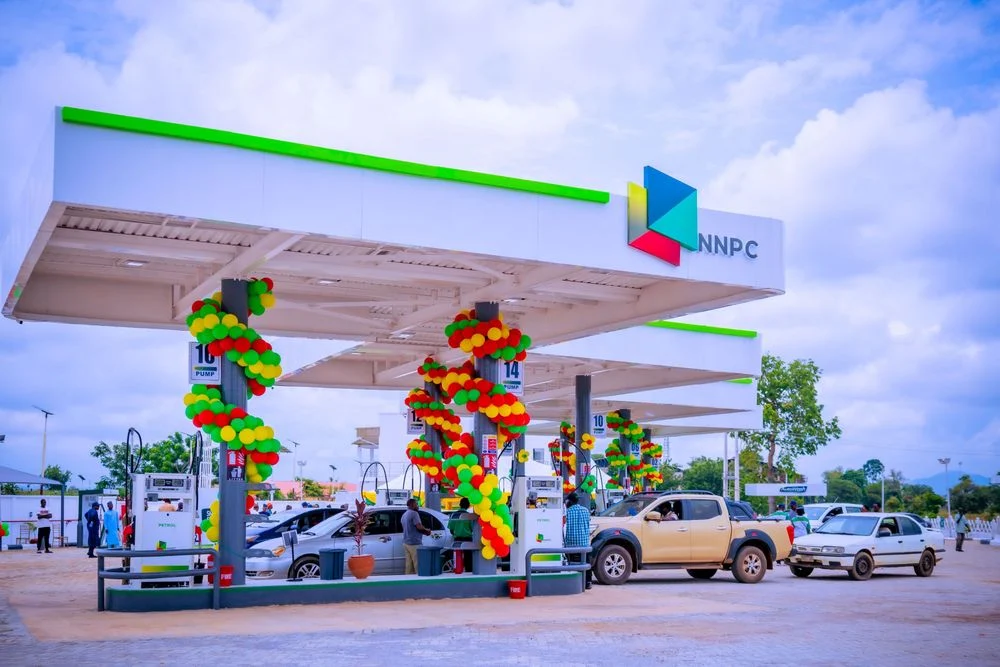
The Nigerian National Petroleum Company Limited has introduced the self-service fuel pumps at selected NNPC Retail stations, allowing motorists to dispense petrol themselves using a mobile application.
This, partly, is NNPC’s new policy to deploy between 50 and 70 smart, self-service stations across the country in the next six months.
This model is different from the old fashion pattern where attendants dispensed fuel to customers. The self-service model allows customers to select the amount of fuel they want, make payment through an app and use a code to activate the pump.
NNPC Retail shared the guide on its X handle on Friday giving motorists details of how to use the system.
The step-by-step guide on how to buy and dispense fuel yourself at participating NNPC stations:
Step 1: Motorists who want to use the self-service facility should first download the NRL Fuel App. Get the download link from the NNPC X handle.
Step 2: Open the app, tap Fuel Purchase, and select your fuel type.
Step 3: Browse the station list and choose an NNPC Retail station offering the self-service option.
Look for the green Self-Serve badge next to the station name. Tap it to select.
Step 3: After selecting the station, enter the amount you wish to spend on fuel. Review the quantity and price, then tap Pay from Wallet. The system will process the transaction based on the amount entered.
Step 4: Once the payment is successful, the app will generate a digital receipt. It contains your Order ID, your Self-Service Code, and a QR Code.
Step 5: At the pump, enter your 8-digit self-service code on the terminal and press the hash key. Once validated, pick up the nozzle and fuel up—exactly the amount you paid for.
NNPC Executive Vice President, Downstream, Mumuni Dagazau, said the new model was part of the company’s plan to transform conventional filling stations into broader energy and mobility hubs.
At the newly commissioned smart station on Bill Clinton Drive, Airport Road, Abuja, NNPC Retail Executive Director, Retail Operations and Mobility, Shettima Baba-Kukawa, said customers could complete transactions on their phones and dispense the exact amount of fuel purchased.
NNPC said the smart stations would combine conventional petrol sales with services such as electric vehicle charging, liquefied petroleum gas, compressed natural gas and other mobility services.
–Condemns Issuance of More Licences Despite Ample Local Capacity.
By Son Tertsegha
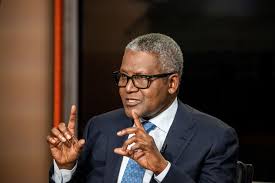
Local regulators in the oil industry have been blamed by the Aliko Dangote refinery for issuing import licences, which alleged, caused the supply of about 43% petrol in the Nigerian market in July alone. The refinery further criticised regulators for continuing to license imports, arguing that surplus fuel it cannot sell at home is being forced offshore.
The complaint, issued Wednesday by the management of Dangote Petroleum Refinery and Petrochemicals, is based on a figure the company drew from its own market data.
This is coming weeks before an initial public offering for the refinery, which has been valued at about $40 billion.
With the import volumes difficult to forecast, the company said, it is holding inventory against a market it cannot size. It has carried reserved volumes since commissioning to guarantee supply, at a cost in storage, logistics and working capital, and said that in a market absorbing large licensed imports with no visibility on what follows, “it becomes commercially unsustainable to continue holding excess inventory indefinitely.”
Fuel the domestic market leaves unsold is being shipped out. Export volumes have risen in recent months to clear surplus and avoid storage and financing charges, the refinery said, describing the shipments as an operational response rather than any retreat from Nigeria.
The company also pre-empted blame for any shortage, saying disruptions caused by excessive importation and the resulting forecasting difficulties should not be laid at its door.
That account cuts against the reading given to export data the US Energy Information Administration published this week, which showed Nigerian seaborne petroleum product shipments averaging 561,000 barrels a day in the second quarter, against 79,000 a day in 2023. Exports accounted for 350,000 barrels a day of the total. Nigeria was importing close to 400,000 barrels a day of refined products before the plant opened.
The EIA offered no explanation for the growth, and the refinery cited none of the figures, but its statement describes a producer evacuating stock rather than one advancing into Europe and Africa from strength.
Timing gives the argument commercial weight. Dangote Petroleum Refinery has applied to Nigeria’s Securities and Exchange Commission for an offering of as much as $5 billion on the Nigerian Exchange in October, after a July private placement led by Africa Finance Corporation was oversubscribed 3.7 times. Investors weighing that offer are being told the domestic market is not fully available to the asset they are buying into.
The Lekki Free Zone plant, which began operating in 2024, lifted crude distillation capacity to 700,000 barrels a day from 650,000 after completing maintenance and expansion work in February.
Dangote asked regulators for transparency on import volumes, better market coordination and policies favouring local refining, foreign exchange conservation and greater domestic capture of the returns on Nigeria’s refining investment.
The development is creating complexities capable of throwing Nigeria into the fuel uncertainties of the past when local demand depended mostly on import.
Accusations and counter accusations intensify the rift. Dangote alleges continued giving of licences for oil import is harming its refinery by creating market uncertainty. Dangote argues, it is forced to ship excess petrol to other countries because storage tanks cost the company extra money in logistics and financing.
Consequently, the refinery has challenged the regulatory authority (NMDPRA) in court, arguing that the law says imports should only happen if local supply fails.
The Regulator and Marketers’ claim their action is to break monopoly. NNPC and fuel marketers argue that stopping all imports and relying on only one refinery is risky.
They believe open import licences protect the country from price spikes and sudden fuel shortages if the Dangote plant faces issues.
— Distribution burden removed for savings to reach consumers. — Dangote
— IPMAN applauds initiative
By Isa Abdul
Free delivery of fuel to filling stations is expected to reduce distribution costs for independent petroleum marketers and create room for lower petrol prices.
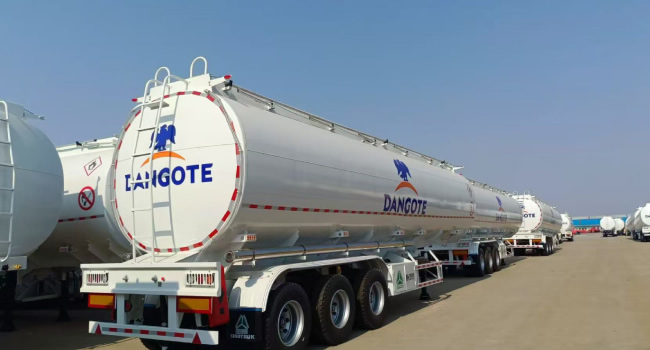
This objective explains why Dangote Petroleum Refinery and Petrochemicals has expanded its free petroleum product delivery initiative to Kano, Imo, Anambra and Nasarawa States.
The initiative, which initially covered Lagos, Ogun, Rivers, Kaduna, Abuja and Delta, is designed to take petroleum products closer to marketers and retailers while eliminating the cost of transporting products over long distances from the refinery.
By absorbing delivery costs, the refinery is removing a significant expense from the downstream distribution chain and giving marketers more room to operate at competitive prices.
Group Executive Director, Commercial Operations, Oil & Gas, WAEP and Fertiliser, Fatima Aliko Dangote, said the initiative was intended to ensure that the benefits of domestic refining translate into savings for businesses and consumers. In her words:
“The value of domestic refining must ultimately be felt beyond the refinery gate. By absorbing the cost of delivering petroleum products to our customers, we are removing a significant component of the distribution burden and creating room for those savings to flow through the value chain to consumers.
“Our goal is to make fuel distribution more efficient, reduce avoidable costs and support more competitive pump prices across Nigeria.”
The initiative has been welcomed by the Independent Petroleum Marketers Association of Nigeria (IPMAN), which said it would ease some of the financial and logistical pressures facing independent marketers.
National Publicity Secretary and Public Relations Officer of IPMAN, Chinedu Ukadike, said the initiative addresses a longstanding challenge in the petroleum products distribution chain, where marketers commit substantial funds to product purchases and may wait for days or weeks before their orders are loaded and transported. Ukadike said:
“This gesture, if sustained, will be able to alleviate the sufferings of independent marketers.
“There has been the issue of financial hold-up, whereby marketers pay for products and are not loaded for days and weeks, and they suffer unnecessary hardship bringing the product down.”
According to him, Dangote’s delivery arrangement would reduce the period marketers’ funds remain tied up, improve cash flow and allow them to deploy their capital more efficiently.
“This time around, Dangote has made it very, very easy for marketers. Marketers are jubilating, and you will see the return on investment as an independent marketer. Your money will not be tied down,” he said.
Ukadike said the initiative could also help moderate pump prices because transportation costs are ultimately reflected in the price consumers pay.
“You also have less risk, and you have petroleum products at your doorstep. Other consumers will also see that our pump price will not continue to go up. The more Dangote brings down its pump price, the more independent marketers will bring down theirs.”
The impact is expected to be particularly significant in markets located far from the refinery, where marketers traditionally incur substantial haulage, vehicle operating, insurance and other logistics costs.
Removing those expenses could improve the economics of supplying distant markets while reducing the risks associated with transporting large volumes of petroleum products over long distances.
Ukadike commended Dangote Refinery for the initiative and urged the company to extend the programme to more locations, particularly in the northern states.
He described the development as a practical demonstration of the benefits of competition and deregulation in Nigeria’s downstream petroleum sector.
“This is the beauty of deregulation and competition,” he said.
The expansion comes as Nigeria’s downstream petroleum market adjusts to rising domestic refining capacity and increased competition among suppliers.
The Dangote Petroleum Refinery, with a capacity of 700,000 barrels per day, has continued to supply refined petroleum products to the domestic market while expanding its presence in international markets.
The free delivery initiative adds a new dimension to the refinery’s role in the downstream sector by targeting not only product availability but also the cost of moving products from the refinery to end markets.
For consumers, the potential benefit is straightforward: lower distribution costs could give marketers greater room to reduce pump prices and improve the competitiveness of petroleum products across the country.



Mother Subjects Daughter to Abuse, Admits: “I made $300 from my 8-yr-old daughter’s pornographic video’
Spread the loveBy Nick Ibe The viral video on the social media involving an 8-year old girl whose ordeal was...


Lawyer Assaulted by Police: NBA Gboko Branch Secures N500 Million General and Exemplary Damages in Makurdi Court
Spread the loveBy Our Reporter In the pursuit of justice for a colleague, B. B. Iliamkondo, Esq., who was recently...


Alia Denounces Ayilamo Attack, Commiserated With Victims as DSS Arrests 3 Suspects
Spread the loveBy Felix Umande Governor Hyacinth Alia of Benue State has strongly condemned the deadly attack on Ayilamo Community...


Alia Condemns Ayilamo Attack, Commiserates With Victims, As DSS Arrests 3 Suspects
Spread the loveBy Felix Umande Governor Hyacinth Alia of Benue State has strongly condemned the deadly attack on Ayilamo Community...


FG, States, Be warned We Will Strike, Without Warning –ASUU
Spread the loveBy Nick Ibe, Abuja Without urgently resolving all the pending salary and welfare issues, by the Federal Government...
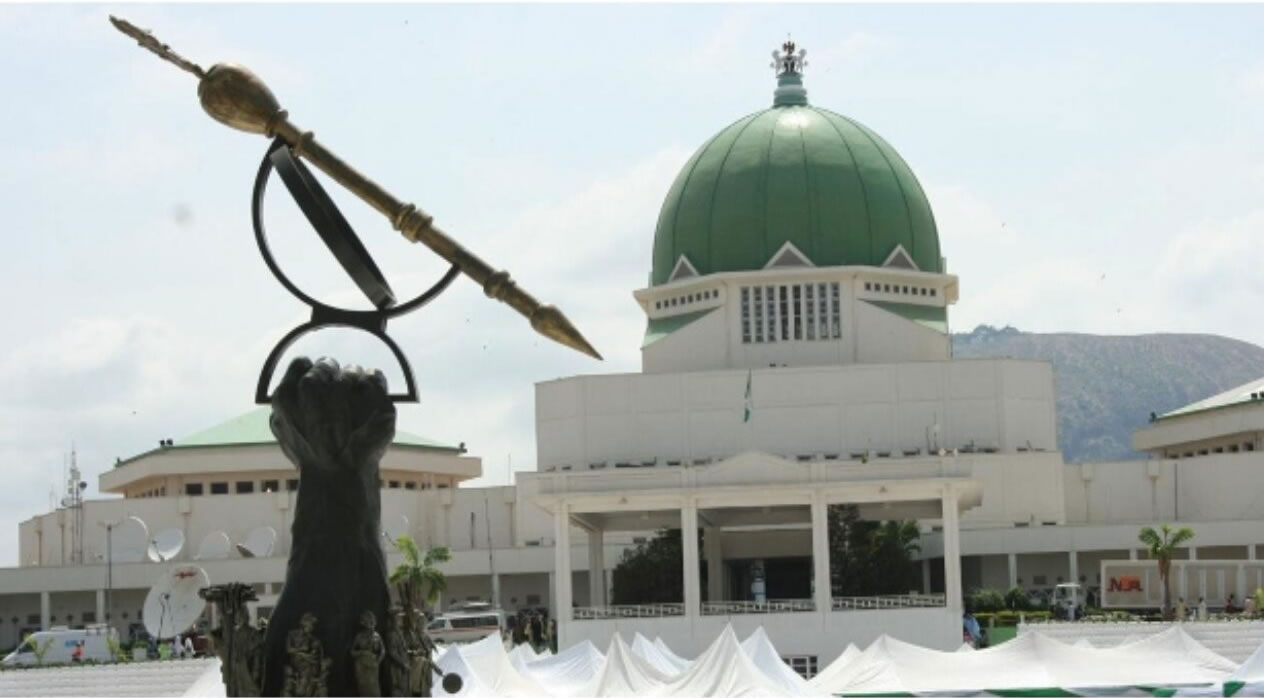
Protest Against Xenophobia: NASS Orders Boycott of South African Organised, Hosted Legislative activities
Spread the love–Calls on State Assemblies to join By Isa Abdul, Abuja In a bold move against South Africa’s xenophobic...


Why Education is Dear to Me – By Peter Obi
Spread the loveAfter returning to Abuja on 8th September 2026, following our visits to Benue and Plateau States, I travelled...


After Two Decades: FG Pays 2,700 ex-Nigeria Airways Staff N18bn
Spread the loveBy Son Tertsegha, Abuja Over two decades after the national carrier, Nigeria Airways, was liquidated, the Federal Government...


To Boost Sch Enrollment: Nasarawa Plans Mobile Courts To Arrest, Prosecute Parents Of Out Of School Children
Spread the loveBy Michael Lim, Jos As part of measures to tackle the growing number of out-of-school children in Nasarawa...


Akume to Religioud Leaders Make Peacebuilding Part OF National Security Ahead of 2027
Spread the loveBy Felix Umande The Secretary to the Government of the Federation, Senator Dr. George Akume, CON, on Wednesday...