
Education
JAMB’s New Tech for Easier Registration, Exam Fraud Check, CBT Centres’ Monitoring –Registrar


By Son Tertsea, Abuja
Ahead of the 2027 Unified Tertiary Matriculation Examination, UTME, the Joint Admissions and Matriculation Board, JAMB, is billed to bring wide-ranging technology-driven reforms such as pre-registration mobile application, stricter biometric verification and a system to automatically block candidates with wrong subject combinations.
The reforms are intended to reduce registration difficulties, prevent examination malpractice and enhance the credibility of the admission system. They are further to assist candidates with vital admission information before taking their decisions on courses and institutions.
Disclosing the plans on Saturday in Abuja, JAMB Registrar, Professor Segun Aina, stressed the proposed pre-registration application would enable prospective candidates to complete key registration procedures from the comfort of their homes before visiting accredited centres for final registration.
Aina explained this, after a five-kilometre fitness walk that was organised for the board’s staff, as part of activities to prepare them for the 2027 UTME.
The application, according to him, would allow candidates to retrieve their personal information from the National Identity Management Commission (NIMC), fill in their biodata, and select preferred subjects, courses, and institutions ahead of the actual registration.
“There are a lot of innovations that are coming up. Now we are rolling out what we are calling a pre-registration application.
“It’s a mobile application that allows you, from the comfort of your own home, to get your details from NIMC, register with your biodata, select your subjects, your courses and your institution.
“During that process, we will be giving some advanced advisory that we didn’t use to give before. For instance, when you are trying to select a course, you will see an idea of what the entry marks for that course were in the previous year,” he said.
The registrar said the application would significantly reduce the time candidates spend at registration centres, particularly during the capture of their biometric information.
Aina hinted that JAMB was equally working on a system to technically make it impossible for candidates to submit applications containing incorrect subject combinations for their chosen courses.
“We are going to make that technically impossible, which means you cannot progress with your application if the subject combination is wrong. And a lot of other innovations are coming,” he said.
On examination security, the JAMB boss said the board would strengthen biometric verification at examination centres to prevent impersonation, malpractice and other irregularities.
He explained that although the board had introduced some concessions to reduce the difficulties candidates encounter when correcting their biodata, such flexibility would be matched with stricter identity checks during the examination.
“We have given up some ground and made some concessions to reduce trauma for the candidates in terms of being able to change their biodata and things like that.
“And in exchange for that, we will be applying enhanced checks at the point of the examination to make sure that we protect the integrity of the system,” Aina stated.
In another innovation, candidates sitting for the 2027 UTME will have the opportunity to report examination questions they consider faulty through a dedicated button on the computer-based test platform.
Aina said the feature would enable candidates to flag potentially defective examination questions in real time, allowing the board to investigate such complaints and determine whether the questions were properly framed.
He, however, cautioned against the assumption that difficult questions were necessarily faulty, stressing that the proposed reporting mechanism would help JAMB obtain evidence-based feedback for assessing the quality of its examination items.
The board is also planning to introduce a post-examination rating system that will allow candidates to assess the quality of services provided by their respective Computer-Based Test (CBT) centres.
According to the registrar, the feedback mechanism is intended to strengthen accountability among private sector partners operating the centres while helping JAMB maintain high operational standards.
He acknowledged the contributions of CBT centre operators to the examination process since the board adopted computer-based testing more than a decade ago, but stressed that continued partnership would go hand in hand with strict monitoring.
The proposed rating system, he said, would give candidates a direct channel to evaluate their examination experience and provide the board with information needed to identify centres that fall short of expectations.
Aina said the innovations were part of broader efforts to improve candidates’ experience, eliminate avoidable registration errors, strengthen examination security and sustain public confidence in the nation’s tertiary education admission system.




By Michael Lim
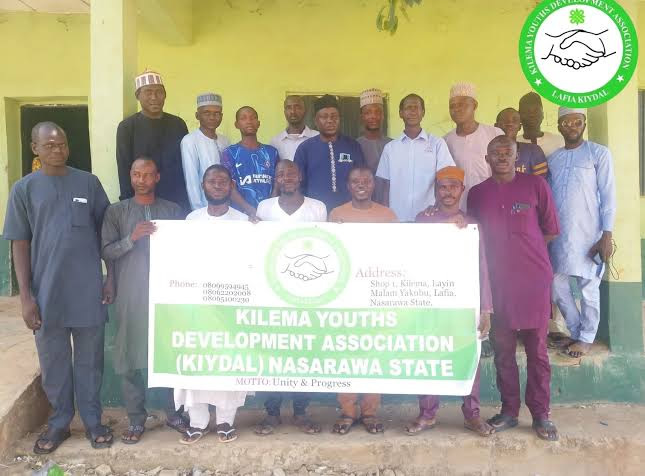
Kilema Youth Development Association Lafia, KIYDAL, Nasarawa state, has donated a school to the Kilema community to encourage the acquisition of knowledge, both in Islamic and conventional education.
The aim, according to the association, is to provide children in locality with the knowledge and skills to become responsible members of society.
In his speech at the official inauguration of the school on Wednesday in Kilema community, the Chairman of KIYDAL, Usman Abubakar Zanwa, revealed the name of the newly established institution as Kilema Islamiyya Community School.
He said the association recognised the importance of education in shaping children’s future, adding that Islam placed great emphasis on the acquisition of knowledge.
Zanwa expressed optimism that the school would help children to acquire Islamic knowledge, develop good character and imbibe values such as discipline, honesty, respect, compassion and service to humanity.
In his words: “We are conscious that establishing a school is only the beginning. The sustainability and success of the institution will depend on the collective support of the government, community leaders, parents, philanthropists and other stakeholders.
“We therefore appeal to the Governor of Nasarawa State, Abdullahi Sule, relevant government agencies, philanthropists and well-meaning individuals to support the school with teaching materials, qualified teachers, infrastructure and other necessary facilities.”
The KIYDAL chairman added that the association was established to contribute to the social, educational, economic and human development of the community as well as promoting unity, peace and responsible leadership among youths.
He added that community development required collective efforts from the government, traditional institutions, civil society organisations, religious bodies, the private sector and responsible citizens.
The association also commissioned its new office accommodation, to serve as a permanent coordination centre for its programmes and activities.
According to Zanwa, the office would provide a suitable environment for members to plan and implement projects aimed at improving the welfare of youths and the wider community.
“We see the office not simply as a physical structure, but as a symbol of commitment, organisation and continuity. It is our hope that future generations of KIYDAL members will look back at this day as a turning point in the history of the association.”
In an address at the event, the Commissioner for Electoral Operations at the Nasarawa State Independent Electoral Commission and chairman of the occasion, Muhammad Ilele Gayam, commended the youths for their commitment to community development.
Gayam, who was represented by Hassan Waziri, said the association had demonstrated dedication through initiatives aimed at alleviating the hardship of residents, particularly vulnerable members of the community.
“As stakeholders in Lafia, we must support the association because they have impacted on the lives of vulnerable individuals at all times,” he said.

By Daily Trust
The Daily Trust Foundation has awarded scholarships to 70 female students pursuing studies in medicine, dentistry, and nursing, providing vital financial support to future healthcare professionals.
This initiative reflects the Foundation’s commitment to corporate social responsibility and its dedication to improving lives through education and healthcare.
The scholarship recipients are drawn from the University of Maiduguri, Usmanu Danfodiyo University, Sokoto, and the University of Ilorin, representing various levels of academic progression in their respective programmes.
The awards are part of the Daily Trust Foundation’s broader scholarship scheme aimed at advancing girl-child education and increasing female participation in the health professions, in line with the Foundation’s stated objectives.
The intervention builds on a sustained investment in women’s education.
Over 300 female medical and nursing students have benefited from the scheme over the years, with former scholars going on to work in hospitals in Nigeria and abroad.
That record places the scholarships within a longer effort to help students turn academic ambition into professional opportunity.
Beyond the financial awards, the scholarships represent an investment in access to medical and nursing education.
Education
TETFund Commissions Publishing Centre In UNIZIK To Boost Textbook, Academic Material Production

By Nick Ibe
The Tertiary Education Trust Fund (TETFund) Friday commissioned the Academic Publishing Centre (APC) at Nnamdi Azikiwe University (UNIZIK), Awka, Anambra State, to enhance academic textbooks availability and increase publishing capacity across tertiary institutions in the South-East.
The centre’s commissioning by the Chairman of the TETFund Board of Trustees, Aminu Bello Masari places it as a regional publishing hub for higher institutions, providing them modern printing facilities and professional publishing services to address challenges associated with the production of academic textbooks and other scholarly materials.
Speaking at the commissioning ceremony, Masari, who was represented by the South-East member of the Board, Esther Ukachukwu, said the establishment of the centre reflected the Fund’s commitment to improving teaching, learning and research through targeted interventions in the tertiary education sector.
Masari explained that TETFund’s Higher Education Book Development Project was introduced to expand access to quality academic publications and strengthen indigenous publishing capacity in Nigerian universities and other tertiary institutions.
He disclosed that the Board of Trustees made a submission to the Federal Government for N2bn to commence the Higher Education Book Development Project in 2009, which was subsequently approved.
According to him, an additional N2.95bn was provided in 2019, while the Technical Advisory Group Committee was reinvigorated and inaugurated in August of the same year to strengthen the implementation of the project.
He said one of the major objectives was to establish and equip model Academic Publishing Centres in selected institutions across the six geopolitical zones and the Federal Capital Territory, with their services extended to public tertiary institutions within their respective regions.
The South-East centre, located at UNIZIK, is therefore expected to serve institutions across the zone.
Masari said education is a strategic sector that must receive priority attention, noting that TETFund would continue to introduce interventions that promote innovation, improve learning outcomes and strengthen research development.
“TETFund will continue to deliver responsive intervention programmes and will be at the forefront in promoting creative and innovative approaches to educational learning and championing new literacy-enhancing areas.”
The TETFund BoT chairman, however, charged the university and other beneficiary institutions in the South-East to ensure that the facility was properly managed, effectively utilised and sustained.
“It is the expectation of the Fund and that of the Federal Government that the beneficiaries will reciprocate this gesture by ensuring that the APC located in Nnamdi Azikiwe University, Awka, Anambra State, is put into operation, properly managed and sustained by the host and beneficiary institutions within the zone,” he said.
He also solicited the cooperation of stakeholders to ensure the successful take-off of the centre, assuring that the Fund would remain committed to transparency and accountability in the discharge of its responsibilities.
In his remarks, the Vice-Chancellor of Nnamdi Azikiwe University and Chairman of the Academic Publishing Centre Board, Prof. Bond Ugochukwu Stanley Anyaehie, said the commissioning was a significant milestone.
He expressed the university’s commitment to ensuring that the facility becomes operational and serves its intended purpose.
Speaking further, the VC expressed optimism that the UNIZIK facility would operate efficiently and effectively.
“So, on my honour, I pledge to make use of it, and try to operate the board and also get input from other universities to see how we can run it, and do all we can to protect it,” he said.
Anyaehie also thanked TETFund for locating the project at the university and appealed to the Fund to consider more interventions that would support the institution and other tertiary institutions in the region.
The commissioning ceremony also featured an inspection of the centre’s facilities, including modern printing machines and other state-of-the-art equipment installed to support academic publishing.


Tinubu Unveils Five-year Defence Plan To End 17-year Insecurity, Recruits 78,000 Soldiers
Spread the loveBy Felix Umande President Bola Tinubu is determined to end the 17-year scourge of insecurity ravaging parts of...


As Tinubu Supporters and Saboteurs Claim Arises: Benue APC Split Deepens
Spread the loveBy Felix Umande The crisis in the Benue State chapter of the All Progressives Congress has deepened, with...


Dangote Refinery IPO Nets ₦5.85 Trillion From 3.8 Million Investors
Spread the loveBy Seyi Balogun, Lagos Following the overwhelming response to Dangote Petroleum Refinery’s initial public offering (IPO), attracting share...


Dangote Sinotruk’s First Locally Assembled Electric Trucks Out in Lagos
Spread the loveBy Seyi Balogun, Lagos A new phase in Nigeria’s automotive manufacturing industry and its transition to cleaner transportation...


52 African Countries Converge on Abuja for Asset Recovery, Corruption Discourse
Spread the loveBy Son Tertsea, Abuja The first General Assembly of the African Asset Recovery Practitioners Forum (AARPF), scheduled to...


Three Travellers Kidnapped, Driver Shot by Gunmen in Benue South
Spread the loveBy Lazarus Oko Three travellers have been kidnapped and a driver shot by gunmen during an attack on...


SCD: Before Marriage, Know Your Genotype Kwara Tells Youths– Parents Tasked
Spread the loveBy Lazarus Oko As a deliberate effort to curb the prevalence of sickle cell disease, the Kwara State...


Indian Farmers Growing Food below, Generating Power Above Earn 10 Times More
Spread the loveIn India, a small but growing number of farmers are cultivating crops on their land while selling electricity...


JAMB’s New Tech for Easier Registration, Exam Fraud Check, CBT Centres’ Monitoring –Registrar
Spread the loveBy Son Tertsea, Abuja Ahead of the 2027 Unified Tertiary Matriculation Examination, UTME, the Joint Admissions and Matriculation...


Benue APC Split Deepens As Akume Group is Tagged “Saboteurs not Supporters of Tinubu”
Spread the loveBy Felix Umande The crisis in the Benue State chapter of the All Progressives Congress has deepened, with...