
Article
PERSPECTIVE: The North, politics of power without development: Towards creating a paradigm shift


By Umar Ardo
There is a paradox Northern Nigeria can no longer avoid. After six decades of producing Presidents, Heads of State, Vice-Presidents, ministers, military rulers and political kingmakers, why does the North remain, by nearly every objective measure, the poorest and least well-educated region of Nigeria? The numbers are not in dispute. The National Bureau of Statistics’ Multidimensional Poverty Index (2022) found that of Nigeria’s 133 million multidimensionally poor people, 65 per cent – some 86 million – live in the North, with state-level poverty incidence ranging from 27 per cent in Ondo to 91 per cent in Sokoto. UNESCO and UBEC estimates put Nigeria’s out-of-school population at between 18 million and 20 million, the overwhelming majority of them in the North – the largest of such population in the world! These are not the statistics of a region locked out of power. They are the statistics of a region entrenched in power but locked out of the benefits of its own power.
This is not an accusation against the North as a whole. It is a challenge to its leadership class. From Sir Abubakar Tafawa Balewa and Alhaji Shehu Shagari through the military era; from Umaru Musa Yar’Adua and Muhammadu Buhari, to Vice-Presidents Atiku Abubakar, Namadi Sambo and Kashim Shettima; from David Mark to Bukola Saraki; from Ghali Na’abba, Aminu Masari, Aminu Tambuwal, Yakubu Dogara, to Abbas Tajuddeen, Northerners have occupied the commanding heights of the Nigerian state, both executive and legislative, for a substantial part of our national history. Yet political dominance has not produced equivalent economic transformation. Muslim or Christian, the result is the same. That is the paradox the North must confront.
It would be unfair to attribute every failure of northern development to individuals, but the question must be asked: why did decades of access to the highest levers of national power fail to produce a sustained transformation of northern security, education, agriculture, industry, infrastructure and human capital? The answer is simple – the fundamental mistake has been to confuse political power with developmental power! A Northerner in Aso Rock or as Speaker is not, by itself, a development policy. Appointments, contracts and influence are no substitute for productive capacity. Political economy offers a vocabulary for this distinction: in the terms made famous by Acemoglu and Robinson in Why Nations Fail, extractive arrangements concentrate power in order to distribute spoils, while inclusive arrangements mobilise power to build capability. Northern Nigeria’s political class perfected the first without constructing the second.
The purpose of political power is not to occupy office. It is to produce outcomes. And this is true in both civil and military rules. In fact, the point becomes hardest to evade during the military era. Between 1966 and 1999, military governments exercised near-absolute authority over national resources, and northern officers held the supreme office for much of that period. Yet the era ended with the North still marked by educational backwardness, low agricultural productivity, weak industrialisation, poverty and inadequate infrastructure. Command authority was deployed to consolidate office, not to build the irrigation schemes conceived decades earlier and still underdeveloped today – Sokoto-Rima, the Chad Basin, Hadejia-Jama’are – nor the technical colleges and power infrastructure the region required. In short, the North did not lack access to power. It lacked the ingenious transformation that power was supposed to produce.
The civil democratic record raises the same question. Shehu Shagari presided over the second oil boom. Umaru Musa Yar’Adua inherited a country of enormous possibilities, though his presidency was tragically shortened by illness. Muhammadu Buhari returned to power in 2015 with an overwhelming northern mandate and extraordinary expectations. Buhari’s eight years are especially instructive. His administration implemented significant national infrastructure programmes and confronted formidable security and economic challenges. Yet by 2023 the North remained the epicentre of the country’s poverty, its educational deficits had deepened and insecurity had metastasised from insurgency in the North East into banditry across the North West and North Central. The question is therefore not whether Buhari did anything for the North. It is whether the historic opportunity of a northern presidency was converted into a historic programme of northern transformation. If I say the evidence does not support a confident yes, I am actually putting it most mildly.
Nor should the Vice-Presidents, Senate Presidents and NASS Speakers escape scrutiny. They have held the second, third and fourth highest offices in the federation. Under the Constitution, they are no ceremonial figures. They are all members of the National Council of State, National Economic Council and the Vice President even discharges executive functions at the President’s pleasure. Their offices are ultimately what the holders make of them. The relevant question is therefore not how many Northerners obtained appointments, but what strategic transformation of the North these officers championed – through the National Economic Council, the budget process or their personal political capital. How many children were returned to classrooms? How many hectares of irrigation were cultivated? How many dams were commissioned? How many railway lines were constructed? Did Rivers Niger and Benue get dredged? How many industries established? How many agricultural value chains transformed?
The answers to these questions will tell us whether Northern political leaders measured success by who controls Abuja, rather than by what Abuja produces for their people. A cycle of capturing power, distributing patronage, building loyalty and fighting to retain power can produce a powerful political class without producing a powerful economy.
Even though our leaders always have excuses, but these excuses also have their limits. Yes, colonial education policy created a deficit the First Republic could not close. The collapse of the groundnut economy and the Structural Adjustment Programme of 1986 deindustrialised the entire country. Since 2009, insurgency and banditry have devastated the entire North. These are real constraints, and they deserve serious consideration. But they do not survive examination as explanations. They applied with equal force to the South, which nonetheless built functioning commercial and industrial economies. No structural constraint prevented northern-led governments from declaring an education emergency, completing a single major irrigation scheme or building technical colleges at scale. Structural constraints explain slow progress; they do not explain its absence. And at some point, a political class that has controlled the federal government for the majority of Nigeria’s independent history cannot credibly portray itself as powerless before the federal government.
The deepest indictment against the North is that Northern power produced a prosperous northern political elite without producing a corresponding prosperous northern population. The distance between the federal patronage elite and the Almajiri child in the street is itself a political economy that demands explanation. This critique is therefore not North against South. It is the northern political class against the northern masses – and it is a question of political maturity, not regional disloyalty.
The North has land, livestock, agricultural potential, mineral resources, strategic geography, enormous markets and, above all, huge population. Its greatest unused resource, however, is human capital. Millions of northern children and young people lack the education, skills, health and productive employment needed to convert population into prosperity. A large population is not automatically an economic asset; population becomes an asset only when it becomes productive. The northern political class has consistently failed to organise the region to achieve that.
The choice before northern voters is no longer abstract; it is named. INEC’s final list of candidates, published at the end of October 2026, sets three leading tickets before the nation – and the North is the principal battleground of all three. First, the incumbent ticket. President Bola Tinubu and Vice-President Kashim Shettima seek a second term on the platform of the All Progressives Congress: a South-West/North-East, Muslim-Muslim pairing. Their record is before the electorate – the ‘Renewed Hope’ reforms of fuel-subsidy removal, foreign-exchange unification and tax reform; continued investment in rail and road infrastructure; and a recent turn toward state policing. The questions northern voters must put to this ticket are precise: after three and a half years with a son of Borno as Vice-President, what has measurably changed for the northern child in the classroom, the northern farmer in the field and the northern village in security? And what, with figures and dates, is promised for the next four years that the first term did not deliver?
Second, assuming they are able to upturn the Justice Lifu’s judgment on appeal and return on the ballot, the Atiku Abubakar–Rotimi Amaechi ticket of the African Democratic Congress: a North-East/South-South pairing balanced by religion. Atiku was Vice-President for eight years, during which the Obasanjo administration privatised scores of state enterprises and secured Nigeria’s landmark external-debt relief of 2005–2006; he now campaigns on restructuring, state policing and private-sector-led growth. Amaechi governed Rivers State for eight years and, as Minister of Transportation from 2015 to 2022, delivered the Lagos–Ibadan and Itakpe–Ajaokuta–Warri railway lines. The questions for this ticket are equally precise: when last in high office, what measurable transformation did either man deliver in the North – and why should this time be different?
Third, the Peter Obi–Rabiu Kwankwaso ticket of the Nigeria Democratic Congress: a South-East/North-West pairing, Christian-Muslim. Obi governed Anambra State for eight years on a reputation for frugality, savings and measurable gains in basic education and security; his campaign theme is moving Nigeria ‘from consumption to production’. Kwankwaso governed Kano twice, served as Minister of Defence, commands the formidable Kwankwasiyya movement and is remembered for mass school-enrolment drives and the overseas scholarship scheme that sent thousands of Kano students abroad. The questions here cut deepest: does Obi’s production agenda carry a northern chapter with named projects, states and budgets? And will Kwankwaso’s scholarship legacy be converted, at federal scale, from personal patronage into permanent institutional capacity?
The standard must apply to all: no northern vote should be delivered to any of them on the strength of identity, sentiment or incumbency. Identity is not a development policy – not for the incumbent and not for any challenger. Northern political organisations, like the LND, civic groups and professional associations are formulating a Northern Development Compact – an instrument to be signed and dated, against which every candidate can be scored publicly. It contains nine commitments, each with a quantified target and an outline costing:
One: Education. Return 10 million out-of-school northern children to the classroom on a credible path to universal basic literacy within a decade; at an estimated N65,000–N100,000 per child per year for teachers, materials and feeding, this implies N650 billion to N1 trillion annually – less than half of one per cent of GDP, and a fraction of what the region loses yearly to banditry and unproductive idleness. Two: Irrigation. Bring 1,000,000 additional hectares under irrigation within eight years by completing and expanding Sokoto-Rima, the Chad Basin, Hadejia-Jama’are, Bakalori, Dasin Dams and Zauro schemes, against Nigeria’s irrigable potential of over three million hectares; at standard development costs of US$5,000–10,000 per hectare, N8 trillion–16trillion over the period – an investment with direct returns in grain, vegetables, livestock fodder and farm employment.
Three: Livestock. Fully implement the National Livestock Transformation Plan across the 12 northernmost states – the federal design originally costed at N179 billion over eight years – with ranches, grazing corridors, veterinary services and dairy cold chains, ending the herder–farmer conflict that has destroyed more northern wealth than any single economic policy. Four: Power. Deploy 2,000 solar mini-grids and dedicated power to 50 agro-processing clusters, at an estimated US$2 billion to US$3 billion largely mobilisable from private capital under clear tariff and off-take frameworks, anchored on the northern rail spine.
Five: Technical education and youth employment. Build or rehabilitate 100 technical colleges and apprentice one million northern youths within four years – approximately N400 billion – converting the region’s youth bulge from a security risk into a skilled workforce. Six: Healthcare. Raise the Basic Health Care Provision Fund from one to two per cent of the Consolidated Revenue Fund and deploy the increment to primary healthcare centres across northern local government areas, with basic emergency obstetric care within reach of every northern community.
Seven: Security and rural protection. Recruit, train and equip 50,000 community and state-police personnel across the northern states, estimated at N250 billion over four years, so that farmers can return to their fields and markets can reopen – because no other compact item succeeds while the countryside is unsafe. Eight: Agro-industrialisation. Establish 50 agro-industrial clusters along the Kaduna–Kano and Kano–Maradi rail corridors, backed by industrial land titles, power, single-window regulation and export financing, at an estimated US$1–2 billion in blended public-private finance. Nine: Dual-carriage roads and standard gauge rail lines for both goods and passengers connecting all northern states with eight years.
In total, the Compact implies roughly N20 trillion–N30 trillion over eight years – in the order of 1.8 per cent of GDP per year. That is not a fantasy figure; it is what serious governments commit when they stop confusing the budget of government with the business of development. Every presidential candidate – incumbent or challenger – should be publicly scored against these nine commitments in open town halls to be organised by LND and other groups in all the state capitals of Northern Nigeria, and every northern vote should be earned through character, competence, due process and this credible, dated, costed programme – not conferred as an automatic gift of geography, ethnicity or sentiment.
By INEC’s revised timetable, the presidential election holds on Saturday, January 16, 2027; campaigning, which opened on August 19, 2026, closes on January 14, 2027. The candidates are known and the instrument now exists: the Compact above! The choice before northern voters is between politics as inheritance and politics as accountability. The question is no longer ‘Whose turn is it to become President?’ It is: ‘Which candidate has signed, and can be held to, the Compact?’
Let me conclude by stating that for too long, northern politics has asked: who is occupying Aso Rock? The better question is what Aso Rock has done – and will do – for the northern child who cannot read, the graduate who cannot find work, the farmer who cannot irrigate his farm, the entrepreneur without electricity, the family that lives below the poverty line and the villagers that are insecure. The real test of northern leadership is not how often the North has captured power. It is what the North has built with the power it captured. In the nine weeks before Nigerians vote, the northern electorate holds an instrument it has rarely used: the power to demand, in writing and with signatures, what decades of political dominance failed to deliver.
The North does not need another political victory that merely changes the occupant of the Presidential Villa – whether the returning incumbent, the veteran challenger or the new pairing from the South-East and Kano. It needs a political victory that changes the condition of its people. And before asking Nigerians for another mandate, every candidate should be prepared to answer one question – with the Compact signed as evidence: After all these years in power, why is the North still waiting for the development that power was supposed to bring?
Ardo PhD, resides in Abuja


By Harira Najeem
Democracy is not a loyalty test. Supporting President Tinubu does not mean surrendering the right to reject the APC governorship candidate or any other party candidate in Nasarawa State.
Therefore, Governor Abdullahi Sule’s declaration during the inauguration of the Presidential and Nasarawa State Campaign Council Advisory Committee at the Government House, Lafia, that anyone who truly loves President Bola Tinubu should also vote for Senator Ahmed Aliyu Wadada and all APC candidates in 2027 raises a fundamental question about democratic freedom: must support for one politician, automatically, translate into support for everyone wearing the same party’s colours?
Speaking during the inauguration of the Presidential and Nasarawa State Campaign Council Advisory Committee in Lafia, Sule urged APC supporters to vote for Tinubu, Wadada and all party candidates. He argued that electing an APC governor alongside APC lawmakers would make it easier to implement government programmes.
But political convenience is not a democratic commandment, and party loyalty must never take precedence over the people’s right to choose.
Tinubu is not Wadada, and Wadada is not Tinubu. They are different candidates seeking different offices, with distinct responsibilities and agenda. Voters may support Tinubu’s policies at the federal level while preferring another candidate to govern Nasarawa. They may equally support Wadada while disagreeing with Tinubu’s performance. Both choices are legitimate.
Under Nigeria’s presidential system, candidates contest distinct offices and are expected to present their own programmes, records and policy positions. This differs from the parliamentary system, where government formation and survival are more directly tied to legislative majorities and party confidence.
Even under a presidential system, cooperation between the executive and legislature matters. However, cooperation does not require every elected official to belong to the same party, nor does it justify pressuring voters to cast uniform ballots.
The argument that an APC governor needs APC lawmakers to perform effectively is, at best, incomplete. Good governance depends on competence, accountability, negotiation and a shared commitment to public welfare—not simply party membership. Expectedly, legislators must represent their constituents, scrutinise government spending and challenge policies that harm the people, regardless of party affiliation.
Indeed, a legislature that merely rubber-stamps the governor’s decisions could weaken accountability rather than strengthen governance.
Nasarawa voters have pressing concerns: insecurity, unemployment, inadequate healthcare, struggling schools, poor infrastructure and the rising cost of living. They deserve candidates who can explain how they intend to address these problems, not political leaders who reduce voting to a test of loyalty to Tinubu or the APC.
Calling on citizens to vote for candidates from one party is legitimate political campaigning. But presenting such conformity as proof of genuine love for a leader becomes troubling when it delegitimises independent choices or encourages political intimidation. Democracy thrives on persuasion, not coercion; competition, not compulsory allegiance.
The ballot belongs to the people, not the party.
If Tinubu deserves another term, his supporters should convince Nigerians through his record and promises. If Wadada deserves to govern Nasarawa, he must earn the confidence of Nasarawa voters on his own merits.
Voters must be free to support Tinubu, Wadada, both or neither. The real test of political leadership is not whether citizens vote in one party’s colour, but whether their choices deliver security, jobs, better public services and a dignified life.
In 2027, the people of Nasarawa must vote with their eyes open, their conscience clear and their future in mind—not under the pressure of political loyalty tests.
By Bulama Bukarti
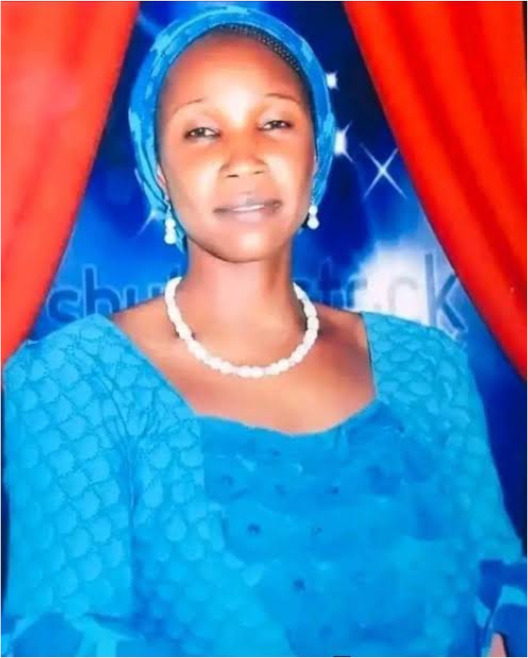
On May 5, 2026, the High Court of Borno State sitting in Maiduguri convicted Mrs Lami Samuel Dawa, a primary school teacher, and sentenced her to 14 years’ imprisonment.
On Saturday, October 31, the Christian Association of Nigeria, through its President, Archbishop Daniel Okoh, said the case raised questions about religious freedom and constitutional rights. CAN said it was particularly concerned by reports that the case arose from the conversion of an adult woman to Christianity.
Online, the story has hardened further: headlines now say a Christian woman was jailed for sharing her faith, or for converting a Muslim woman in Gwoza.
I understand why that narrative travels. Nigeria has a long, painful history of religious grievance and tension, and it seeps into almost every public issue. I also want to credit Archbishop Okoh for something many who are sharing his statement have skipped: he said plainly that the precise facts and legal basis of the conviction were still being verified. That was the right instinct. I have done that verification. I have read the full judgment and the certified record of proceedings in The State v. Lami Samuel Dawa & 5 Ors (BOHC/MG/CR/154/2025). With respect, the record tells a different story.
This is a case about a child, not a creed.
The premise of CAN’s concern is that an adult chose a new faith and was punished for it, or someone was punished for helping her. Every adult in Nigeria has that right and I would defend it without hesitation. But that is not this case.
The person at the centre of this trial is a girl. She told the court she was born in 2009, that she was 13 when she was first abducted, converted and taken to Jos, and 16 when she testified in December 2025. Her mother gave the same ages. The defence did not establish otherwise. The events happened in Maiduguri, not Gwoza. She was a minor at every stage that matters, which is why the charges were brought under the Borno State Child Protection Law.
Once that single fact is restored, the whole picture changes. The question is no longer whether an adult may change her religion. It is whether an unrelated adult may secretly take someone else’s child away from her parents. No legal system in the world, religious or secular, answers yes.
I will not name the girl. She is a child, and the online campaign has already exposed her far more than any child deserves. But her story, as the court heard it, deserves to be told plainly.
After her first disappearance and return, her mother asked a trusted neighbour, Mrs Dawa, to help re-enrol her in school. By the girl’s sworn account in court, Mrs Dawa then told her that her own parents were plotting to kill her. She asked the girl to hand over the N20,000 her mother had given her for WAEC registration. She gave her a phone and a SIM card. On the appointed day, she met the girl on Baga Road, had her change out of her school uniform in a chemist into clothes belonging to Mrs Dawa’s own daughter and put her in a car bound for Jos.
Midway, the girl testified, Mrs Dawa called her to say the search for her was intense and that she should get off at Bauchi, where a man would collect her. She stayed with him for three days until, in Mrs Dawa’s words as recounted, things had calmed down. Mrs Dawa later visited her in Jos with gifts and N15,000. Nine sets of clothes she gave the girl were tendered in court.
All the while, the girl’s mother was searching for her daughter. She told the court she sold her belongings to pay for spiritual help, and that Mrs Dawa was among those who bought them. When the mother asked about her daughter, Mrs Dawa said nothing of where the girl was. She simply told her to be patient, assuring her that the girl would return.
This was not merely the girl’s word. Mrs Dawa’s own statement to investigators, Exhibit B, admitted in evidence without objection from her counsel, acknowledged giving the SIM card, visiting the girl in Jos and not telling the family where she was. In the witness box, the court found, her defence dwelt on her good relationship with the family rather than answering the specific allegations.
If this were a religious witch-hunt, it was a remarkably poor one. Six people were charged. Three of the five who stood trial, all Christians, walked free.
The court acquitted Binta Mamman Sasuwa and Esther Simon, who received the girl in 2022, because nothing showed they knew she had been taken from her parents. It acquitted Mrs Dawa’s own husband, Amos Suleiman. It threw out the conspiracy count against everyone.
A court bent on punishing Christianity does not carefully separate the guilty from the innocent along the lines of proof. This one did.
Mrs Dawa was convicted under the Borno State Penal Code Law 2023 and the Borno State Child Protection Law 2021. Both apply to every resident of the state, whatever their faith. The sentences attach to three counts: enticing a child away from her parents, removing her from lawful custody, and depriving her of schooling. None of them punishes anyone for being a Christian, for worshipping or for sharing their faith.
The court’s reasoning on religion turned on a principle found in the federal Child’s Rights Act and mirrored in Borno’s own law: a child has freedom of thought, conscience and religion, exercised with the guidance of her parents or guardians. That principle protects Christian children in Muslim neighbourhoods exactly as it protects Muslim children in Christian ones. What it forbids is an unrelated adult secretly overriding a family and spiriting a minor hundreds of kilometres away.
One more fact has been lost in the noise. The girl’s mother was born a Christian, and her grandmother and other relatives remain Christians to this day. This is not the story of a Muslim family persecuting a Christian daughter. It is the story of a mother who, for more than a year, did not know whether her child was alive.
Swap the labels and the answer is obvious. Had a Muslim teacher spirited her Christian neighbour’s 15-year-old to an Islamiyya in Kano behind her parents’ backs, CAN would rightly condemn it, and I would stand with them. What is a crime against a Christian child is a crime against a Muslim child.
Much of the outrage centres on the 14-year term, so the arithmetic matters. Mrs Dawa was convicted on three counts and sentenced to 14, 14 and 10 years respectively. The court had the discretion to order those terms to run consecutively, one after the other. Had it done so, she would be facing 38 years in prison.
It did not. After she pleaded for leniency in her allocutus, the court ordered all three sentences to run concurrently. She will serve 14 years in total, no more than the longest single term. Of the options open to it, the court chose the lighter one.
That is why I am troubled by the abuse now being directed at the trial judge, Hon. Justice A. B. Kumalia, much of it from people who have not read a line of the judgment. Judges cannot step into the arena to defend themselves; convention rightly keeps them silent. It therefore falls to the rest of us to set the record straight. On this record, His Lordship weighed the evidence carefully, acquitted wherever the proof fell short and tempered the sentence with restraint. That deserves commendation, not insult.
None of this means the judgment is beyond criticism. Lawyers may reasonably debate aspects of the court’s reasoning. An appeal has now been filed and the Christian Lawyers Fellowship of Nigeria, which defended Mrs Dawa at the trial, will rightly press every point it can. That is how it should be. I welcome CAN’s commitment to letting the judicial process run its course, and I would defend Mrs Dawa’s right of appeal as firmly as I defend the basis of her conviction.
What is not legitimate is to recast a carefully argued criminal judgment, one that acquitted most of the Christian defendants, as a sectarian assault. Doing so inflames a region that has paid in blood for exactly this kind of mistrust. It also teaches Nigerians that courts are to be trusted only when they rule for our side.
I appeal respectfully to the leadership of CAN, and to everyone sharing this story, to read the judgment before amplifying claims about it. Keep the girl’s identity out of it. Let the appellate process take its course. And let us hold one standard for every child in Nigeria, whatever their faith: no adult, however well-meaning they believe themselves to be, may secretly take a child from her parents.
That is not persecution. It is the law doing exactly what each of us would demand of it if the child were our own.
Dr Bukarti is a lawyer called to the bars of Nigeria and of England and Wales and a lecturer in International Law and Jurisprudence at Bayero University Kano
Article
Africa must be built on African knowledge, by African ingenuity and sustained by African Enterprise

By Goodluck Ebere Jonathan
Today, I joined fellow African leaders and other stakeholders at the closing panel of the 12th Tana High-Level Forum, in Bahir Dar, Ethiopia, where we exchanged perspectives on advancing the geopolitical and economic transformations needed to move our continent forward.
For Africa to achieve sustainable growth, economic sovereignty and robust industrialisation that create productive opportunities for our teeming youth, we must deliberately invest in research-intensive universities which serve as factories for producing knowledge. They are special educational institutions, centres of research, innovation and advanced skills where knowledge is transformed into productive enterprise.
The experiences of countries such as India, Singapore and South Korea, demonstrate the importance of building strong technological and scientific capabilities to drive industrial development, nurture innovation and create globally competitive economies.
Africa must therefore move beyond being primarily a consumer of technology developed elsewhere to becoming a creator, producer and exporter of technology, knowledge and innovation. This requires sustained investment in science, engineering, digital technologies, applied research and the close collaboration of our universities, industries and governments.
Our young people must be equipped not merely to participate in the global economy, but to shape it through their ingenuity, enterprise and capacity to develop homegrown solutions to Africa’s development challenges.
Africa’s transformation and economic sovereignty must be built on African knowledge, driven by African ingenuity and sustained by African enterprise.
-Jonathan is former Nigerian President



PERSPECTIVE: The North, politics of power without development: Towards creating a paradigm shift
Spread the loveBy Umar Ardo There is a paradox Northern Nigeria can no longer avoid. After six decades of producing...

Abducted Abuja Farmer Dies in Captivity After Paying N56m Ransom
Spread the loveBy Nick Ibe, Abuja A farmer, Ibrahim Kadafa, popularly known as Ibro has been killed after kidnappers collected...

How Resilience and Necessity Forced IDPs to Build Abuja’s Largest Beans Market
Spread the loveBy Vincent Yusuf Ibrahim Philemon was compelled to abandon everything he had built in his youth and flee...


Youths Boo Tinubu at Abuja Mosque after Friday Prayers
Spread the loveYouths Boo Tinubu at Abuja Mosque after Friday Prayers By Isa Abdul, Abuja.Angry youths booed President Bola Ahmed...


2026 Abuja Half Marathon: Ethiopia’s Daba Winner ss Nigeria’s Gang James Comes Second
Spread the loveBy Isa Abdul, Abuja Ethiopia’s Gemechu Tolosa Daba is winner of the men’s elite race at the third...


2027: Trust Us, We Have Solved Core Problems of Result Management, Declaration– INEC Chair
Spread the loveBy Son Tertsea, Abuja The core problems of election result management and announcement are said to be solved...

2027, Prof Piwuna Tells Officials: Leave ASUU Out of Your Political Choices
Spread the loveBy Son Tertsea, Abuja The Academic Staff Union of Universities (ASUU) has come out strong to warn its...


Tel Aviv University Faculty Members: Let World Know Professor Convicted of Sexual Harassment
Spread the loveFaculty members at Tel Aviv University called on Tuesday for university management to reconsider the decision to withhold...


Benue Assembly Extends Kwande LG Chairman’s Suspension by Six Months
Spread the loveBy Vincent Tyosuugh The suspension of Mr Vitalis Neji, Chairman of Kwande Local Government Area,has been extended by...
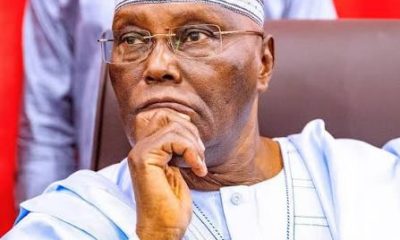

2027: More Hurdles for Atiku from Abuja Court Judgment
Spread the loveBy Isa Abdul, Abuja The hurdles for the African Democratic Congress leadership and its presidential candidate, Atiku Abubakar,...