
Politics
Presidency Has No Plot To Assassinate Atiku, APC Campaign Council Replies Timi Frank

By Felix Umande
The All Progressives Congress, APC, Presidential Campaign Council has dismissed as false an allegation by Timi Frank that the Nigerian Government is plotting to assassinate former Vice President Atiku Abubakar, presidential candidate of the African Democratic Congress, ADC.
Spokesperson of the Council, Dele Alake, said in a statement on Tuesday, October 20, 2026, that the claim is grave and must be proven.
He said the Council categorically rejects the claim that the Presidency or the APC Campaign Council is involved in any plot to assassinate the former Vice President or any opposition figure.
“Our attention has been drawn to the statement by Timi Frank, a member of the African Democratic Congress, alleging that the Nigerian Government is plotting to assassinate former Vice President Atiku Abubakar, the presidential candidate of the ADC. This is a grave allegation that Mr. Frank must prove,” the statement said.
Alake urged security agencies to invite Frank to substantiate the allegation, given its gravity and the need to preserve life, and called on Frank to provide any information in his possession to enable prompt investigation.
He also described as totally false the narrative that security personnel attached to the former Vice President have been withdrawn, stating that Atiku remains well protected by the police and the Department of State Security.
“Contrary to the falsehood promoted by Timi Frank, President Tinubu recently directed security agencies to reinforce and increase protection for all presidential, vice-presidential, governorship and deputy governorship candidates across the country,” he said.
“The security around the ADC presidential candidate has never been compromised. As a former Vice President of Nigeria, he enjoys two levels of state-funded security protection. President Tinubu has increased security protection for Alhaji Atiku Abubakar as a presidential candidate ahead of the 2027 general elections,” Alake added.
He said President Bola Tinubu, as a statesman and democrat, recognises opposition politics as essential to Nigeria’s 27-year-old democracy, noting that Tinubu was for 16 years the face of opposition before galvanising the movement that defeated the Peoples Democratic Party in 2015.
Alake described Frank’s claim as “typical opposition rabble-rousing meant to heat the polity,” accusing some opposition figures of writing open letters and tagging foreign leaders and international organisations on social media to draw attention.
“As we go deeper into the campaign season, politicians and supporters will continue to make outlandish statements and frivolous allegations to gain political advantage,” he said.
He urged candidates, political parties and supporters to be factual and responsible in public statements and avoid utterances that can trigger tension, adding that political competition should be peaceful, lawful and focused on issues that matter to Nigerians.






By Isa Abdul, Abuja
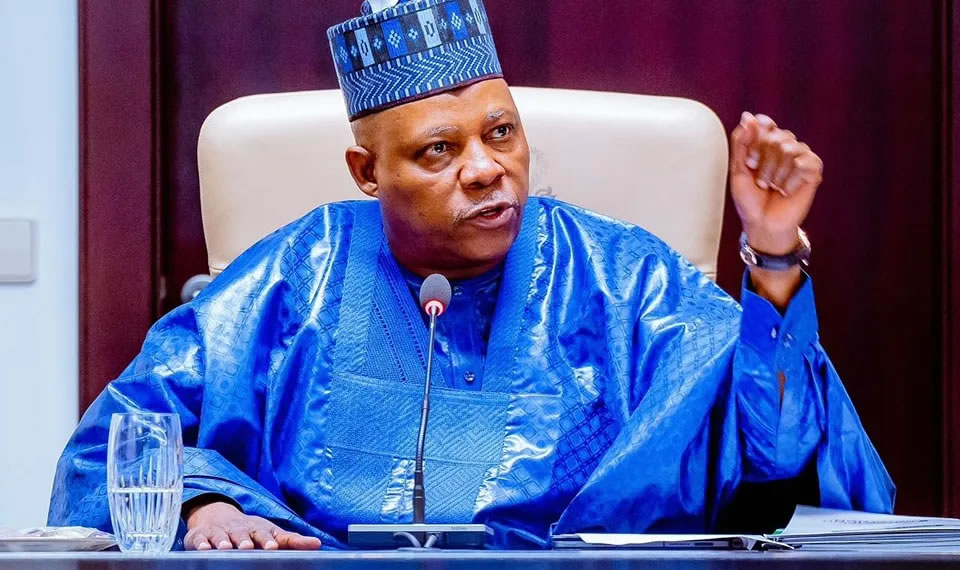
The deeply embedded contradictions within the ruling All Progressives Congress APC, are more worrying than the fears posed by the opposition ahead of the 2027 general elections, according to Nigeria’s Vice President, Kashim Shettima.
Shettima expressed these fears on Saturday in Abuja while unveiling the campaign head office of Arewa for Asiwaju (A4A), a northern coalition backing the Tinubu/Shettima ticket, and formally inaugurating its campaign structure. In his words:
“Honestly, I am not afraid of the Peoples Democratic Party PDP. I am not afraid of a diminished Peter Obi. But I am more afraid of internal contradictions within our household. If we unite as a people, as a family, we will conquer.”
He cited northern leaders’ who were in the presidential race at the expense of their governors, warning:
“There is no point in championing the cause of the presidential election and then undermining the governor in the gubernatorial election. Honestly, it will not go down well with the system.
“Let’s rally round our governors. Let’s rally round our members of the National Assembly. Let’s rally round President Bola Ahmed Tinubu and see to the victory in the next round of elections.”
Shettims said the North had already made its choice. “By now, I believe the North has spoken. We have spoken with a resounding voice and unmistakable conviction. From Adamawa to Zamfara, from Borno to Niger, we have spoken.”
He reminded the gathering: “In less than 100 days, Nigerians will return to the polls. Democracy requires us to seek their confidence again, with humility about the work outstanding and conviction about the cause we have chosen.”
He told party members how to defeat Atiku Abubakar, charging them “Go and perform. Go and defeat Baba Atiku. Defeat him respectfully,” he said.
He expressed optimism that the party had the structure to contest every polling unit. “There are 176,845 polling units across the country. The APC, from ward to local government levels, has 361,045 officials. What it means is that we can match every polling unit two to two,” he said.
Shettima stressed that each appointee must prove their local strength because “Politics is still local”, adding that he had asked the Borno State governor to compile a list of all political appointees from the state to local government level.
“Let him account for his performance at his polling unit, at his ward unit and in his local government,” he said.
On the party’s standing in the North, he said, “Out of 19 states in the North, 18 are in the APC.” He said 15 of the 18 members of the New Nigeria Peoples Party (NNPP) from Kano in the House of Representatives have crossed to the APC, adding: “The governor is with the APC.”
The Vice President acknowledged that many families are struggling. “Every household struggling to make ends meet reminds us how much remains to be done,” he said. “We lose our hearing when applause becomes our only source of information.”
Defending the administration’s economic record, he said Tinubu inherited a weak economy. “When President Bola Ahmed Tinubu assumed the mantle of leadership in this country, what we had in our foreign reserves was a country with 3.9 billion dollars, barely enough to import oil for one month. And our Ways and Means expenditure was over N27 trillion.
“Nigeria was on the road to Caracas. The economy was teetering on the brink of collapse. He literally saved the nation,” Shettima said, adding that “for the first time in nearly 18 years, our foreign reserves are in the neighbourhood of 58.9 billion dollars.”
He assured that the North has nothing to fear about a Tinubu second term.
“For the North, we have absolutely nothing to fear in a Tinubu second term. He has the North at heart,” he said.
At the event, the National Chairman of the APC, Prof. Nentawe Yilwatda, moved a motion for the President’s return and asked the audience to affirm it. In his words:
“Today is a time for us to renew a mandate that was largely supported by the North, and the North again will largely support the return of President Bola Ahmed Tinubu for a second term.”
He cited the President’s projects in the region, including the Abuja-Kaduna-Kano and Kano-Maiduguri roads. “Those two roads alone are over 900 kilometres, more than the 700 kilometres of Lagos Road,” he said.
The Director General of A4A and former Jigawa State governor, Muhammad Badaru Abubakar, disclosed that the new campaign headquarters is at No. 4 Port Harcourt Street, Area 11, Garki, Abuja, describing it as “the biggest campaign office anywhere in the country.” He added:
“Let it be understood that this building is more than just a campaign office. It is a message. It says that Arewa is serious.”
He promised that the group would run “a campaign that is disciplined, peaceful and issue-based,” taking its message to markets, farms, campuses, mosques and churches.

By Felix Umande
The Independent National Electoral Commission, INEC, has assured Nigerians and the international community of its neutrality and commitment to the integrity of the ballot as the country begins the final 100-day countdown to the 2027 general elections.
Chairman of the Commission, Prof. Joash Amupitan, SAN, gave the assurance on Tuesday at a World Press Conference and National Stakeholders’ Meeting at the Bola Ahmed Tinubu International Conference Centre, Abuja.
“We have moved decisively from planning into execution. Our materials are in production, our technology is undergoing rigorous quality assurance, our register is finalised and our workforce is being systematically trained,” he said, describing the 100-day mark as a call to action.
Prof. Amupitan said since assuming office on October 23, 2025, the Commission had conducted off-cycle governorship elections in Anambra, Ekiti and Osun, FCT Area Council polls and several bye-elections, which passed integrity benchmarks and tested early deployment of materials and intelligence-led security.
He said of the 14 statutory milestones in the revised timetable released on February 26, nine had been executed, synchronised across 23 headquarters departments, 36 state offices, the FCT and 774 LGAs.
On the voter roll, he disclosed that 10.7 million new voters were registered in three phases of CVR, bringing the national register to 103 million. The register will be displayed for claims and objections from October 9 to 15, while distribution of Phase 1 PVCs begins October 9.
Eighteen of 22 parties submitted 36 presidential tickets, while the final list for National Assembly candidates was published September 12. Governorship and State Assembly lists will be out October 10.
On logistics, Amupitan said production of 57,000 new BVAS devices is advanced, procurement of ballots and result sheets is near completion, and MoUs have been renewed with NURTW, RTEAN and MWUN for over 100,000 vehicles and 4,000 boats. Sensitive materials will move from CBN vaults 72 hours before polls to 8,838 RACs by 4pm on election eve to enable 7:30am opening.
On technology, a six-day BVAS stress test is scheduled for October 23-28, with nationwide mock accreditation in November. He announced a new Artificial Intelligence Division within ICT operating under human oversight.
On security, he said INEC working through ICCES will train thousands of electoral security personnel and deploy joint undercover teams with EFCC, ICPC and NFIU to track vote-buying. Violators will face arrest under the Electoral Act 2026.
INEC requires 707,384 ad-hoc staff per election day — January 16 and February 6, 2027 — totalling 1.4 million engagements across 176,846 polling units. Recruitment via INECPRES opened September 18 and closes November 18.
He warned against AI-driven disinformation, urging media to fact-check and avoid premature results declaration. “In national elections, it is far more important to be right than to be first,” he said, adding that the Media Accreditation Portal will go live before end of October.
Representing the IGP, AIG Alyonu Idu said police are conducting clearance operations in Kogi, Niger, Benue and Taraba to stabilise flashpoints and will review pre-election work in November.
EU Ambassador Gautier Mingot described INEC’s task as “Herculean” and said the EU will deploy an expert mission for the polls.
— Others insist 2027 time for Kogi west
By Michael Lim
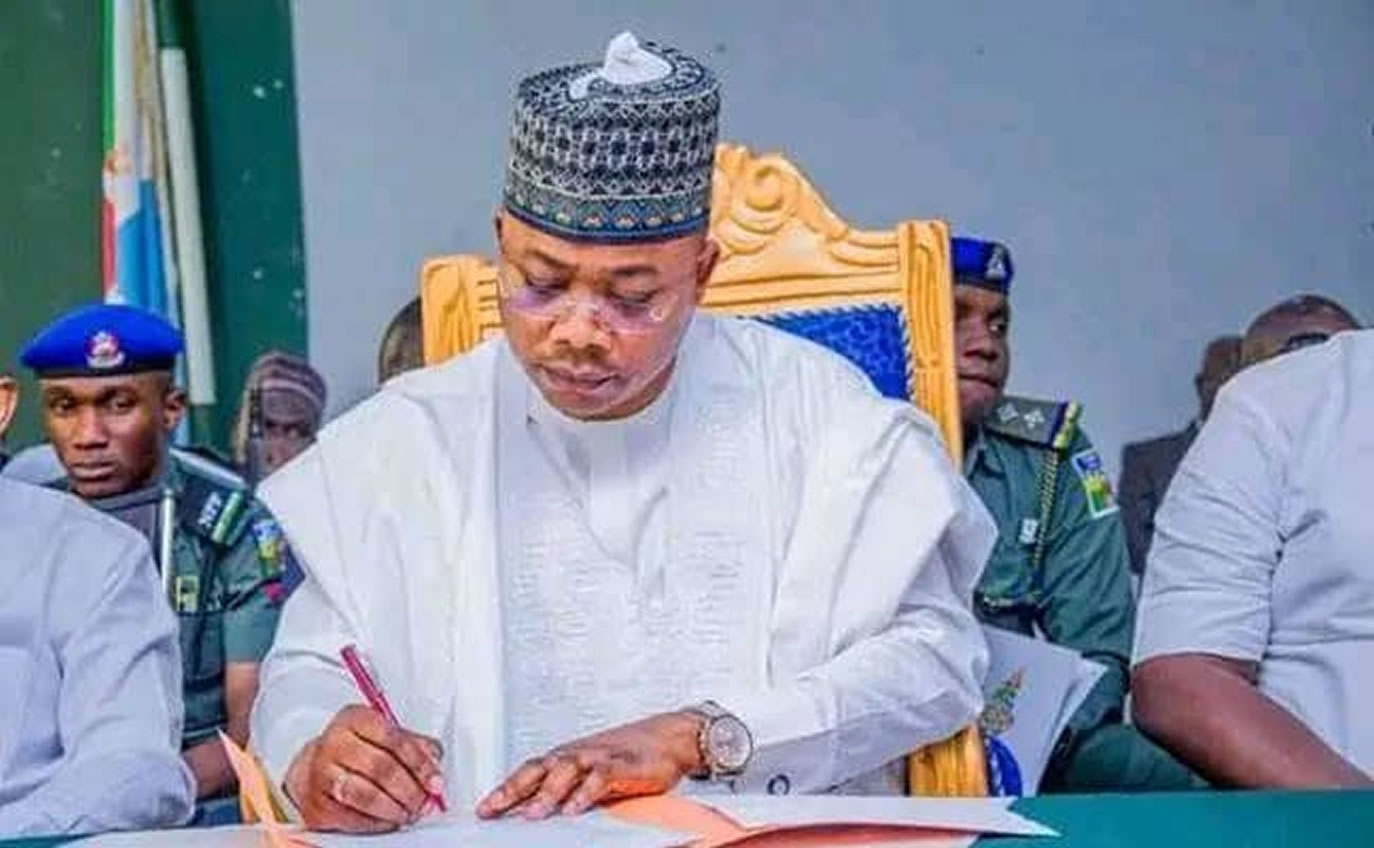
Stakeholders from Kogi State’s three senatorial districts have, at a maiden Kogi State Power Rotation Summit, thrown their weight behind the commencement of a rotational governing arrangement from 2032.
The two-day summit held on September 30 and October 1, 2026, at the Kay Galaxy Event Centre in Lokoja, under the theme, “Retooling Kogi for Unity, Equity and Shared Prosperity,” formed part of the resolutions reached at the event.
Convened by the Kogi Unity Accord, the summit brought together traditional rulers, religious leaders, political stakeholders, community and socio-cultural organisations, professionals, organised labour, youths, students and civil society representatives.
In a communique issued at the end, the organisers said most of the views expressed by participants favoured an eight-year rotational arrangement, with implementation proposed to begin in 2032.
The communiqué said the proposed timeline would allow for further legislation, consultations and development of an appropriate legal framework, while any transition would remain subject to constitutional, electoral and democratic processes.
The summit recognised power rotation as a possible mechanism for promoting fairness, unity, peaceful coexistence and a stronger sense of belonging among residents of the state.
It also stressed that considerations of competence, integrity, capacity, accountability and leadership ability should remain relevant in any political arrangement. Part of the communique read:
“The Summit recognised that power rotation could serve as a mechanism for promoting fairness, unity, peaceful coexistence and a stronger sense of belonging among the people of Kogi State.”
The summit further recommended the development of a broad-based framework for political inclusion and equitable participation involving the three senatorial districts and other stakeholders.
It called for the proposed framework to be subjected to further consultations across Kogi East, Kogi Central and Kogi West before a final position is adopted.
While most of the views reported in the communiqué favoured commencement of rotation in 2032, some delegates and organisations advocated an earlier transfer of political power to Kogi West.
President of the Okun Development Association, Amb. Rotimi Akenson, argued in favour of an Okun candidate succeeding the incumbent governor at the expiration of the governor’s tenure.
Akenson said Kogi West had not produced a governor since the creation of the state and maintained that the senatorial district should be considered in the next phase of political succession.
Similarly, a representative of the Christian Association of Nigeria (CAN) at the summit supported a rotational arrangement that would see political power move to Kogi West after the expiration of the incumbent governor’s tenure.
The CAN representative also advocated consideration of a Christian candidate, citing what the representative described as ethnic and religious considerations.
The positions formed part of several views presented during the summit, with participants differing on the timing and structure of any power-rotation arrangement.
A major development at the summit came from the Kogi State House of Assembly, with the Speaker, Rt. Hon. Aliyu Umar Yusuf, saying the legislature was prepared to consider legislation providing a framework for power rotation.
Yusuf said the issue would require careful deliberation, adding that the views of stakeholders would be considered in the legislative process.
Any such legislation, if introduced and enacted, would provide an institutional framework for a debate that has so far largely centred on political advocacy and convention.
The communiqué also acknowledged that the 1999 Constitution, as amended, does not expressly prescribe rotation of the governorship among senatorial districts. It therefore recommended that any eventual arrangement should operate through lawful political, democratic and institutional processes.
Governor Ahmed Usman Ododo, represented at the summit by Commodore Jerry Omodara (Rtd.), urged stakeholders to pursue political dialogue without compromising peace in the state.
The governor said Kogi’s diversity should be treated as a source of strength and called on stakeholders to build trust, promote peace and encourage inclusive dialogue as the state approaches another electoral cycle.
Ododo also urged young people to reject political violence and encouraged stakeholders to pursue peaceful engagement and constructive dialogue.
The summit chairman, Vice Admiral Joseph Ajayi (Rtd.), described the dialogue as important to Kogi’s political development and called for a structured framework to promote inclusion and reduce political tensions and ethnic divisions.
Former Deputy Comptroller-General of the Nigeria Customs Service, Sir Kehinde Ejibunu, who participated in the summit, also urged stakeholders to consider the political aspirations of minority groups in discussions on power-sharing arrangements.
“We want the state to be together; we don’t want it to be set ablaze,” he said.
Among other resolutions, the summit proposed the development of a Kogi Charter of Equity and Inclusion to guide political participation, peaceful engagement and representation across the state.
It also recommended the establishment of a follow-up mechanism, expansion of the Kogi Unity Accord, creation of zonal structures and further consultations across the three senatorial districts.
Traditional rulers, religious leaders, women, youths, professional groups, political actors and community organisations were urged to remain involved in the process.
The communiqué further called for measures to ensure that minority tribes and communities are represented in political participation and appointments, in line with the principle of equitable representation and the spirit of federal character.
The summit stressed that its resolutions should serve as the beginning of a sustained process rather than the conclusion of discussions on power rotation.
The proposed 2032 commencement date, alongside calls from some participants for an earlier shift of political power to Kogi West, leaves the timing and structure of any rotational arrangement subject to further consultation and political processes.


STATE POLICE: Benue, Ogun, Delta, Enugu, Others Approve Constitution Amendment As Draft Bill Heads To Justice Ministry
Spread the loveBy Felix Umande The push for state police in Nigeria has gained fresh momentum as Benue, Ogun, Delta,...


Ugbema Roundabout Becoming A Death Trap For Thousands.
Spread the loveBy Felix Umande The current state of Ugbema Roundabout, a major junction in Benue State connecting many neighbouring...

Plateau Indigenous Youths Reject Petition Against DSS, Accuse Fulani Groups of Orchestrating ‘Calumny’ to Halt Security Operations
Spread the loveBy Philip Nyam A coalition of Plateau indigenous youth organisations has defended the Department of State Services (DSS),...


Hope for Patients as Reps Pass Organ, Tissue Transplantation Authority Bill
Spread the loveBy Philip Nyam The House of Representatives at plenary on Wednesday passed through second reading a bill seeking...

FG Sets Up Technical Committee To Accelerate Livestock, Wheat Production
Spread the loveBy Felix Umande The Federal Government has set up a technical committee to immediately accelerate livestock development and...


Presidency Has No Plot To Assassinate Atiku, APC Campaign Council Replies Timi Frank
Spread the loveBy Felix Umande The All Progressives Congress, APC, Presidential Campaign Council has dismissed as false an allegation by...

FG Says Ebola Patient in FCT, Traces 44 Contacts
Spread the loveBy Nick Ibe, Abuja One case of Ebola disease has been confirmed in Abuja by the Federal Capital...


Saudi Arabia executes Bangladeshi Couple Over Mosque Kiss
Spread the loveBy Isa Abdul, Abuja In Saudi Arabia, a kiss in the mosque would earn you death, as two...

Kaduna Gov Settles Land Dispute: Gives Victims Alternative Plots, Farmlands, Free Fertiliser
Spread the loveBy Michael Lim No community will be rendered homeless in Kaduna State because our administration believes in human...

Award-winning, Journalism Amazon, Christiane Amanpour, Leaves CNN after 43 years
Spread the loveAmanpour began her tenure at CNN in 1983 “After more than 43 years at CNN, Christiane has decided...