
Politics
Kogi’s Rotational Governorship Arrangement Supports Ododo’s second term

— Others insist 2027 time for Kogi west
By Michael Lim
Stakeholders from Kogi State’s three senatorial districts have, at a maiden Kogi State Power Rotation Summit, thrown their weight behind the commencement of a rotational governing arrangement from 2032.
The two-day summit held on September 30 and October 1, 2026, at the Kay Galaxy Event Centre in Lokoja, under the theme, “Retooling Kogi for Unity, Equity and Shared Prosperity,” formed part of the resolutions reached at the event.
Convened by the Kogi Unity Accord, the summit brought together traditional rulers, religious leaders, political stakeholders, community and socio-cultural organisations, professionals, organised labour, youths, students and civil society representatives.
In a communique issued at the end, the organisers said most of the views expressed by participants favoured an eight-year rotational arrangement, with implementation proposed to begin in 2032.
The communiqué said the proposed timeline would allow for further legislation, consultations and development of an appropriate legal framework, while any transition would remain subject to constitutional, electoral and democratic processes.
The summit recognised power rotation as a possible mechanism for promoting fairness, unity, peaceful coexistence and a stronger sense of belonging among residents of the state.
It also stressed that considerations of competence, integrity, capacity, accountability and leadership ability should remain relevant in any political arrangement. Part of the communique read:
“The Summit recognised that power rotation could serve as a mechanism for promoting fairness, unity, peaceful coexistence and a stronger sense of belonging among the people of Kogi State.”
The summit further recommended the development of a broad-based framework for political inclusion and equitable participation involving the three senatorial districts and other stakeholders.
It called for the proposed framework to be subjected to further consultations across Kogi East, Kogi Central and Kogi West before a final position is adopted.
While most of the views reported in the communiqué favoured commencement of rotation in 2032, some delegates and organisations advocated an earlier transfer of political power to Kogi West.
President of the Okun Development Association, Amb. Rotimi Akenson, argued in favour of an Okun candidate succeeding the incumbent governor at the expiration of the governor’s tenure.
Akenson said Kogi West had not produced a governor since the creation of the state and maintained that the senatorial district should be considered in the next phase of political succession.
Similarly, a representative of the Christian Association of Nigeria (CAN) at the summit supported a rotational arrangement that would see political power move to Kogi West after the expiration of the incumbent governor’s tenure.
The CAN representative also advocated consideration of a Christian candidate, citing what the representative described as ethnic and religious considerations.
The positions formed part of several views presented during the summit, with participants differing on the timing and structure of any power-rotation arrangement.
A major development at the summit came from the Kogi State House of Assembly, with the Speaker, Rt. Hon. Aliyu Umar Yusuf, saying the legislature was prepared to consider legislation providing a framework for power rotation.
Yusuf said the issue would require careful deliberation, adding that the views of stakeholders would be considered in the legislative process.
Any such legislation, if introduced and enacted, would provide an institutional framework for a debate that has so far largely centred on political advocacy and convention.
The communiqué also acknowledged that the 1999 Constitution, as amended, does not expressly prescribe rotation of the governorship among senatorial districts. It therefore recommended that any eventual arrangement should operate through lawful political, democratic and institutional processes.
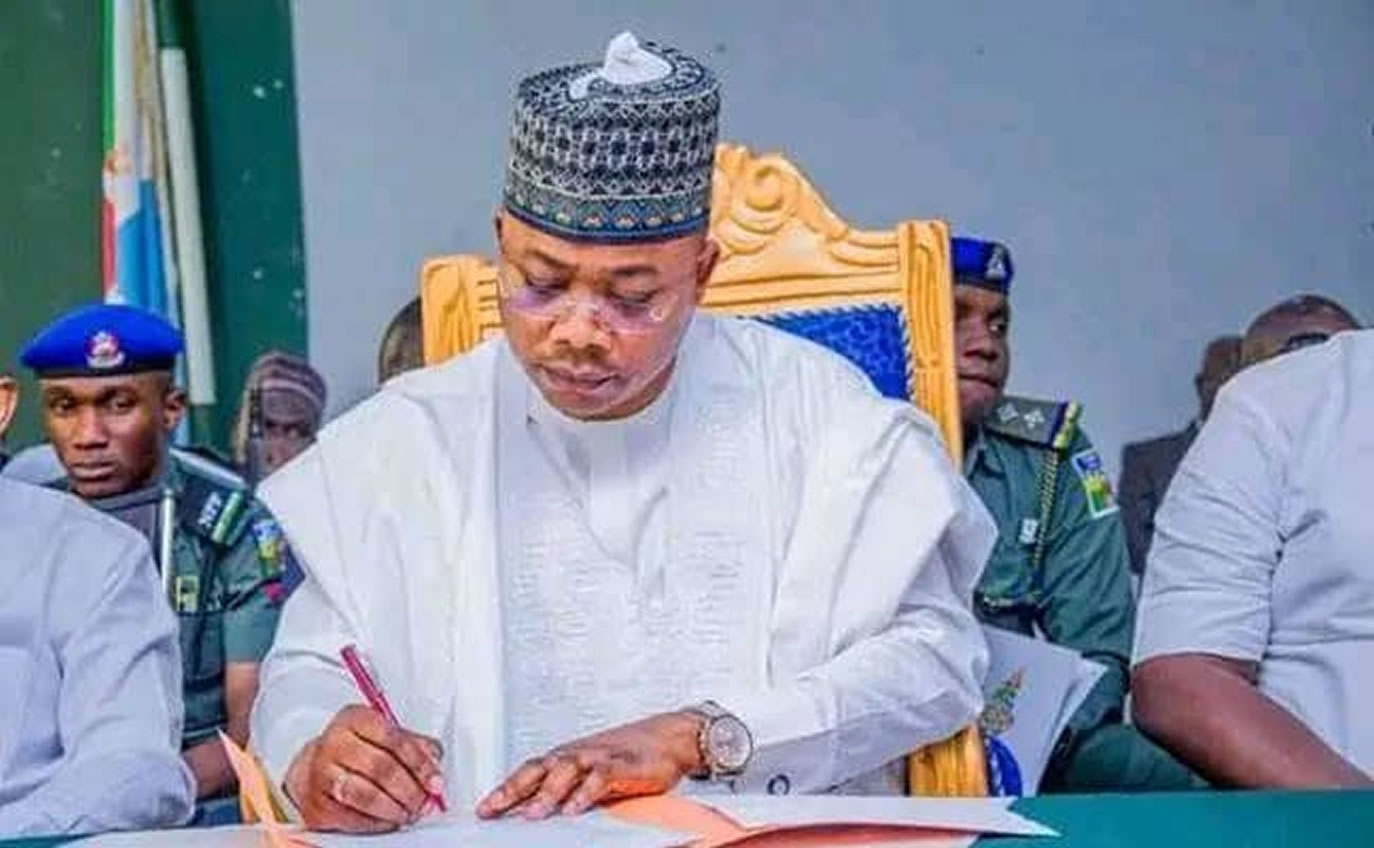
Governor Ahmed Usman Ododo, represented at the summit by Commodore Jerry Omodara (Rtd.), urged stakeholders to pursue political dialogue without compromising peace in the state.
The governor said Kogi’s diversity should be treated as a source of strength and called on stakeholders to build trust, promote peace and encourage inclusive dialogue as the state approaches another electoral cycle.
Ododo also urged young people to reject political violence and encouraged stakeholders to pursue peaceful engagement and constructive dialogue.
The summit chairman, Vice Admiral Joseph Ajayi (Rtd.), described the dialogue as important to Kogi’s political development and called for a structured framework to promote inclusion and reduce political tensions and ethnic divisions.
Former Deputy Comptroller-General of the Nigeria Customs Service, Sir Kehinde Ejibunu, who participated in the summit, also urged stakeholders to consider the political aspirations of minority groups in discussions on power-sharing arrangements.
“We want the state to be together; we don’t want it to be set ablaze,” he said.
Among other resolutions, the summit proposed the development of a Kogi Charter of Equity and Inclusion to guide political participation, peaceful engagement and representation across the state.
It also recommended the establishment of a follow-up mechanism, expansion of the Kogi Unity Accord, creation of zonal structures and further consultations across the three senatorial districts.
Traditional rulers, religious leaders, women, youths, professional groups, political actors and community organisations were urged to remain involved in the process.
The communiqué further called for measures to ensure that minority tribes and communities are represented in political participation and appointments, in line with the principle of equitable representation and the spirit of federal character.
The summit stressed that its resolutions should serve as the beginning of a sustained process rather than the conclusion of discussions on power rotation.
The proposed 2032 commencement date, alongside calls from some participants for an earlier shift of political power to Kogi West, leaves the timing and structure of any rotational arrangement subject to further consultation and political processes.









By Felix Umande
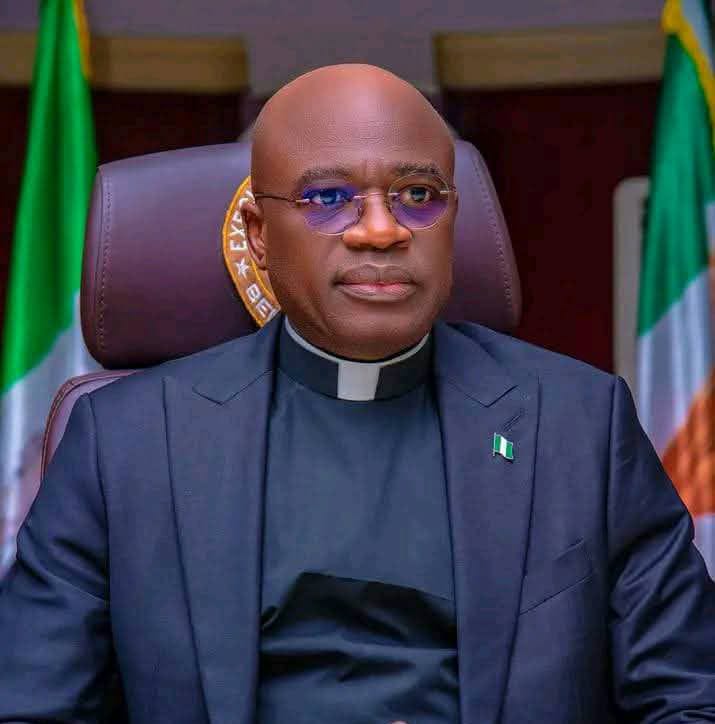
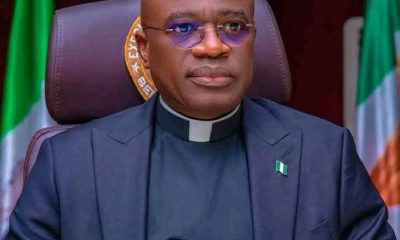
The NKST Synod has declared its support for the re-election of Benue State Governor, Rev. Fr. Hyacinth Alia, ahead of the 2027 governorship election.
The NKST Church’s highest decision-making body commended Alia’s administration for its developmental strides and commitment to the welfare of the church and the people of the state.
The declaration was made by the President of the Synod, Rev. Dr. N. A. Adure, during his address.
Adure expressed appreciation to God and acknowledged Governor Alia for what he described as the responsibilities and divine mandate entrusted to him.
The Synod described Alia as a “talk-and-do Governor”, noting that his administration’s achievements were visible and worthy of recognition.
The Synod President quoted Romans 13:1, which teaches that governing authorities are instituted by God, stressing that the NKST Church recognises the importance of supporting leadership and acknowledging good governance.
The Synod also acknowledged the Governor’s efforts towards addressing insecurity in Benue State, expressing confidence in his leadership and declaring that the church would stand firmly behind his 2027 re-election ambition.
According to the Synod, while successive administrations have made contributions to the NKST Church, Governor Alia’s interventions and support have been particularly remarkable.
They further expressed confidence that the Governor would fulfil his promise concerning support for the university at Mkar, assuring him that the commitment remained important to the church.
The Synod also commended the administration for the construction of the bridge at Ahwa and the provision of boreholes in communities, describing the projects as practical interventions that have positively impacted the people.
They acknowledged the Governor’s commitment to the construction of the NKST Church project at Amaafu, noting that the building, which is nearing completion, is designed to accommodate about 10,000 worshippers.
The Synod equally appreciated Governor Alia for facilitating 17 pilgrimage opportunities to Jerusalem for members of the church and appealed for additional opportunities in the future.
The Synod observed that the Governor had consistently demonstrated an inclusive leadership approach by ensuring that the NKST Church was carried along in relevant government programmes and engagements.
Reaffirming their position, the Synod declared their solidarity with Governor Alia and pledged support for his re-election in 2027, expressing optimism that his administration would sustain its development efforts across Benue State.
NKST is a highly populated Christian denomination with headquarters in Benue State.

By Felix Umande
The crisis in the Benue State chapter of the All Progressives Congress has deepened, with two rival groups mobilising for President Bola Ahmed Tinubu’s re-election in 2027 trading accusations of sabotage and political blackmail.
The Benue Strategic Alliance for Tinubu/Shettima 2027, led by its Director-General, Chief Akange Audu, has accused the Tinubu/Alia 2027 Campaign Council of attempting to intimidate and discredit it.
The Alliance was reacting to a press briefing by Hon. Citizen Richard Asema, Director-General of the Tinubu/Alia Council, who accused it of plotting to sabotage the President’s re-election bid.
In a statement dated November 14, 2026, Audu described the allegation as unfortunate, misleading and politically counterproductive.
He said the Alliance is not a political party or a faction seeking to take over the APC, but a lobby and mobilisation platform for estranged APC members pushed out of the party’s mainstream structure under Governor Hyacinth Alia, alongside stakeholders from other parties committed to Tinubu’s re-election.
The Alliance, he said, is not fighting to reclaim positions in the APC or competing with Governor Alia for control of the party.
“It is therefore important to distinguish between supporting President Tinubu and supporting Governor Alia. These are two different political choices, and one should not be made a condition for the other,” Audu said.
He listed the Alliance’s support base to include the three senators representing Benue, ten members of the House of Representatives, several members of the State House of Assembly, and elected APC executives at state, local government and ward levels whose structures were dissolved by the governor. He said many of the members are loyal supporters of the Secretary to the Government of the Federation, Sen. Dr George Akume.
Audu said the Alliance has already set up a Tinubu/Shettima 2027 Joint Campaign Council with over 1,000 members, and urged the Alia camp to concentrate on its own campaign.
“Stop the political blackmail and allow us to work for President Bola Ahmed Tinubu. President Tinubu needs more supporters, not political gatekeeping,” he said.
But in a response on Sunday, November 15, 2026, the Tinubu/Alia Campaign Council, through its Director of Communications, Sir Tersoo Kula, described the Alliance as a motley crew of politicians bearing grudges, masquerading as Tinubu supporters while working to destabilise the APC.
Kula said President Tinubu is not an independent candidate but a candidate produced and sponsored by the APC, and that to weaken the party is to weaken the President.
“In a democracy, the Party produces the candidate; the Party provides the structure; the Party provides the agents and defends the votes. To weaken APC is to weaken PBAT,” he said.
He argued that in Benue, Governor Alia is the leader of the party and the driver of the vehicle that will carry Tinubu to victory, and questioned why the Alliance was formed without consulting him.
“Why is he not aware of this coalition? Why was he not consulted or invited to the table? If this Alliance was truly and genuinely for Tinubu, the first person to know of it should ordinarily have been the governor who leads the party in the state,” Kula said.
He noted that the President and the APC national secretariat appointed Governor Alia as State Coordinator of the Tinubu/Shettima elections, and said avoiding the coordinator exposes the coup intent of the organisers.
Kula warned that a parallel structure with conflicting messages would only create confusion and give the opposition an advantage, adding that anyone working against the APC winning Benue is working against Tinubu’s victory.
“The president knows the difference between a supporter and a saboteur. They cannot cut the roots and expect the tree to bear fruit,” he added.



ABU DSS student wins N1m prize at essay competition
Spread the loveA student of Demonstration Secondary School, Ahmadu Bello University, Adejoh Joshua Unekwu, has clinched a second position at...

Football Legend, Segun Odegbami, Attacked in Abeokuta, Escapes Death
Spread the loveBy Seyi Balogun, Lagos With no clear knowledge of the assailants or their motive, former Super Eagles captain...

FG, Chinese Firm Agree to Produce CNG Buses in Ibadan
Spread the loveBy Seyi Balogun, Lagos To introduce compressed natural gas-powered buses and establish a local assembly plant, to reduce...


JAMB UTME Free for Candidates with Disabilities, Fee Refund at Exam Centres
Spread the loveBy Isa Abdul, Abuja Special examination support has been established for candidates with disabilities, by the Joint Admissions...

Sharing Money is Digging Hole for Eco Woes, Can’t End Poverty – Fasua
Spread the loveBy Son Tertsea, Abuja A warning has been issued that distributing cash to Nigerians without addressing underlying economic...

“I conceded defeat to Buhari, a statesman that loved God, Nigeria.’ –Jonathan
Spread the loveBy Isa Abdul, Abuja The reason for conceding defeat to the late President Muhammadu Buhari in the 2015...

Secrets Behind Flamingos’ World Cup Win – Busari:
Spread the loveAfter guiding Nigeria’s Flamingos to a historic FIFA U-17 Women’s World Cup triumph, head coach Akeem Busari speaks...


Failure to Secure NNPCL GMD Job: EFCC Arraigns Woman Over N1.1 bn Fraud
Spread the loveBy Isa Abdul, Abuja One Halimat Adenike Tejuosho was Wednesday arraigned before a High Court of the Federal...

Let’s Honor All Pioneer Paramount Rulers Across Tiv and Idoma Lands.
Spread the loveBy Peters Ichull Today, the Tiv nation and the entire Benue family pause in solemn reflection to mark...

NKST Synod Says: “Alia Is A Talk-And-Do Governor”, Deserves Re-election in 2027
Spread the loveBy Felix Umande The NKST Synod has declared its support for the re-election of Benue State Governor, Rev....