
General News
Olukoyede to Faith Leaders: Fight Corruption With Moral Dignity of Honest Living

By Isa Abdul, Abuja
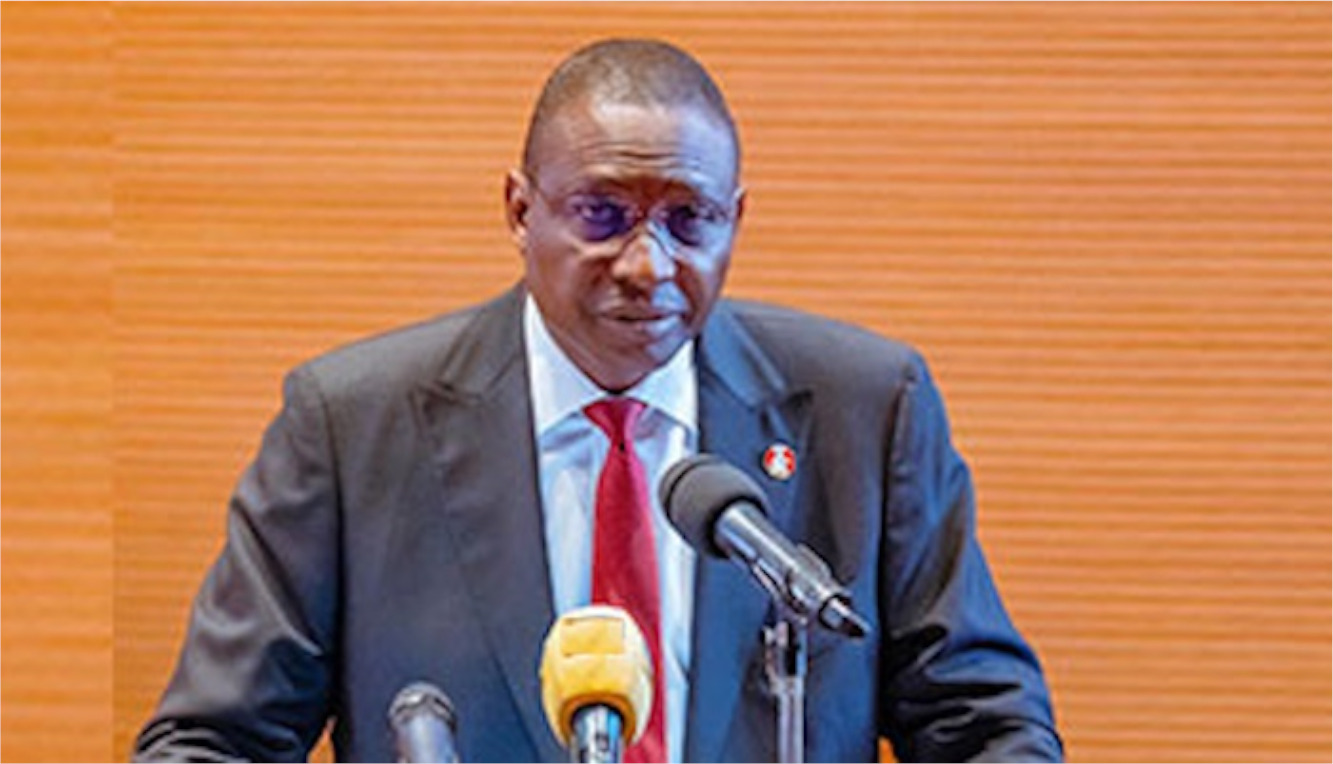
Religious leaders across the country have been called by the Chairman of the Economic and Financial Crimes commission, EFCC, Ola Olukoyede, to continually preach the right religious doctrine to their followers, especially those that pertain to corruption and its ills on the society.
The EFCC boss gave the charge in Abuja on Wednesday, September 23, 2026, at the 2026 second Council Meeting of the Nigeria Inter-Religious Council, NIREC, and the launch of the Anti-Corruption Interfaith Manual for religious leaders.
In his paper presentation, he stated that the theme of the event “Shared Sacred Flourishing in Nigeria,” demands that stakeholders in the anti-corruption fight must recognize that the wellbeing of Nigerians is dependent on the actions of individual citizens and that acts of corruption create division in the shared flourishing. As such, one of the most consequential contributions religious leaders can make to shared sacred flourishing, he said, is to restore the moral dignity of honest living.
Corruption, he regretted, “Privatizes what is shared, converts the commonwealth into private advantage, and allows one person to flourish by making many others poorer adding that the unique role of the EFCC, therefore, is to defend the integrity of that commonwealth.”
According to him, by preaching the right religious doctrines, both Christianity and Islam can retain their distinctive beliefs and traditions while their adherents work together for peace, justice, human dignity and the wellbeing of our nation.
To ensure that worship centres play transformational roles in the lives of Nigerians, the EFCC boss disclosed that the Commission began tasking religious leaders on the need to infuse anti-corruption contents in their messages to their followers. “We have been doing this through the inter-faith framework. Over the years, we have specifically spelt out what should be the roles of religious leaders and the doctrine they need to pass down to their followers. We believe that no religion condones corruption and no faith entertains fraudulent engagements,” he stated.
Further in the endeavour, he disclosed that the EFCC over the years engaged leaders of both the Christian and Muslim faiths in fashioning an Inter-Faith Manual which captures the doctrinal positions of holy books on corruption.
“We are using this opportunity to launch the Manual which we hope our religious leaders will surely find useful in preaching anti-corruption messages to their members,” he said.
Speaking on the non-discriminatory nature and effects of corruption and financial crimes, he stated that “financial crime has no religion. Corruption has no tribe. Fraud does not become Christian or Muslim because of the identity of the person accused of committing it.
When public money is stolen, both Christians and Muslims suffer. A badly equipped hospital does not first ask a dying patient where he worships. A collapsed road does not distinguish between a Christian traveller and a Muslim traveller. Unemployment does not respect denomination. Inflation does not spare one faith community. We enjoin our pastors and imams to keep faith with the manual and actively engage their members to know why corruption is heinous.”
While encouraging religious leaders to play more active roles in changing the society, Olukoyede observed that “Religious institutions have extraordinary responsibility in Nigeria’s anti-corruption struggle.
The EFCC can investigate a person’s conduct. Faith communities can influence that person’s character. We can prosecute fraud. Religious teaching can cultivate honesty. We can confiscate illicit wealth. Churches and mosques can challenge the values that make society worship wealth without questioning its source. We can punish corruption after the event. Faith can help prevent it before it begins.”






By Vincent Tyoduugh
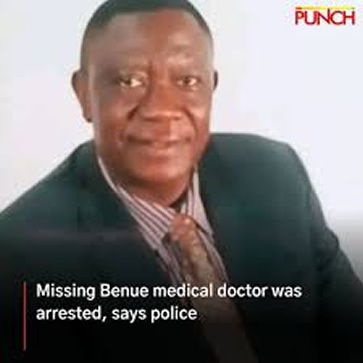
The fears spread over the abduction of Dr Jonah Ogbaji have been allayed as the Police Public Relations Officer for the Benue State Command, DSP Peter Aondongu, has stated that the Chief Medical Director of Multicare Hospital, Makurdi, was arrested by operatives of the Special Tactical Squad attached to the Force Intelligence Department in Abuja.
The PPRO was reacting to the alleged abduction of the medical doctor, which had gone viral on social media across the state.
The police spokesman said in a statement issued Thursday that the medical doctor was arrested by operatives of the Special Tactical Squad attached to the Force Intelligence Department, Abuja, in connection with an undisclosed investigation.
Social media platforms in the state had been awash with reports of the suspected abduction of the medical doctor around 9pm on Wednesday while he was attending to patients at his hospital along Ankpa Road, Makurdi.
Aondongu, in the statement, described the alleged abduction claim as “false”.
According to him:
“The Command has received enquiries regarding reports of the alleged abduction of a medical doctor and owner of a hospital in Makurdi.
“Upon verification, the report is false. The doctor was not abducted. He was arrested yesterday at his hospital by operatives of the Special Tactical Squad (STS) attached to the Force Intelligence Department (FID), Abuja, in connection with an ongoing investigation.”
Aondongu said the specific circumstances surrounding the investigation were yet to be known to the Command.
The command, however, advised the people of the state to disregard reports of the medical doctor’s alleged abduction or kidnapping.
The arrested medical doctor was a two-term ex-officio member of the Peoples Democratic Party (PDP), North Central.
By Nick Ibe
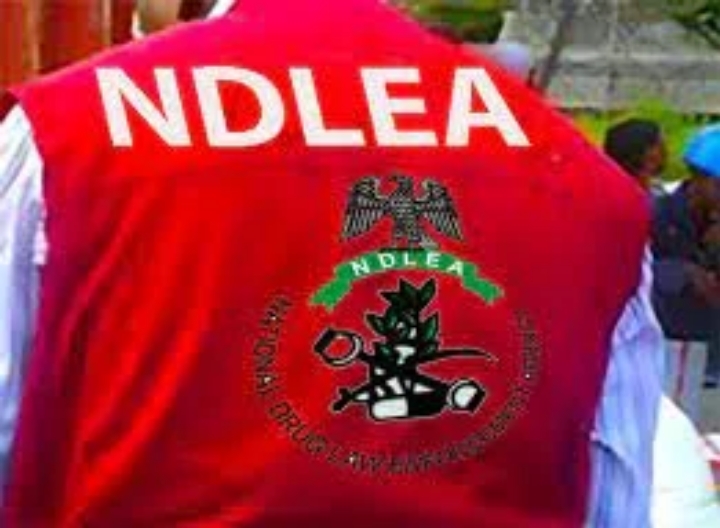
A Nigerian-Mexican drug cartel operating a clandestine methamphetamine laboratory in Eziama community in Obeagu, Awgu Local Government Area of Enugu State has been dismantled by the National Drug Law Enforcement Agency (NDLEA), which struck a decisive blow against another transnational organised crime.
According to a press release on Thursday , 24th September, 2026, signed by Femi Babafemi, Director, Media and Advocacy, NDLEA Headquarters, Abuja, two kingpins: 45-year-old Chukwu Obumneme Christopher, alias Brown, and 60-year-old Chukwu Georginus Monday, alias George, were arrested in connection with the operation of the meth lab in partnership with a notorious Mexican drug cartel member, Rodriguez Villanueva, based in Mexico City, Mexico.
The statement said the arrest followed “several months of intelligence and surveillance on the syndicate.”
The suspects have already been arraigned according to NDLEA: “They were arraigned before Hon. Justice Mabel Taiye Segun-Bello of the Federal High Court, Enugu Judicial Division, on a five-count charge bordering on conspiracy, the organisation, management and financing of a Drug Trafficking Organization, and unlawful possession of precursor chemicals used in methamphetamine production, contrary to the NDLEA Act. After their plea, Justice Segun-Bello has now scheduled their trial for 21st October 2026, following an application by the Agency for an accelerated hearing.”
Also named in the charge, and currently at large, are Uchenna, alias Uche; Celestine Ikemefuna Iwuchukwu; and Rodriguez Villanueva, who is a notorious member of a Mexican drug cartel.
Investigations by a Special Operations Unit (SOU) of NDLEA revealed a sophisticated, transnational operation by the Nigerian-Mexican cartel. Surveillance activities by NDLEA between 1st and 4th December, 2025, tracked Brown’s movements between Lagos, Enugu and Anambra States, ultimately leading operatives to a compound in Obeagu where a clandestine laboratory capable of producing methamphetamine in commercial quantities was uncovered. The lab, fitted with improvised reactors and distillation apparatus, mirrored similar facilities recently dismantled in Ogun, Oyo and Ebonyi.
A search of the premises led to the recovery of vast quantities of precursor chemicals, including 690 litres of methylamine, 1,000 litres of isopropyl alcohol, 300 litres of hydrochloric acid, 290 litres each of toluene and acetone, 400 litres of liquid sodium hydroxide, 125 kilograms of N-phenylacetamide, 414 kilograms of lead acetate, and 769.6 kilograms of tartaric acid, among other controlled substances, a haul consistent with a high-potency, P2P-based methamphetamine manufacturing operation.
A related search of George’s family residence yielded eight large fuel tanks, four commercial gas burners, four dehydrators, and 11 kilograms of ephedrine, further underscoring the scale of the cartel’s operations.
Reacting to the development, Chairman/Chief Executive of the NDLEA, Brig. Gen. Mohamed Buba Marwa (Rtd), reaffirmed the Agency’s unwavering resolve to track down every fleeing suspect connected to the cartel, and ensure that they all face the full weight of the law.
He commended all NDLEA officers involved in the operation for their professionalism and doggedness in cracking yet another international drug syndicate. He described the Enugu lab bust as further proof that Nigeria will not be allowed to become a haven for transnational drug cartels, warning that the Agency’s intelligence-driven operations and international partnerships would continue to close every loophole exploited by drug barons, whether local or foreign.
He reiterated his charge to all NDLEA personnel to sustain the momentum of relentless enforcement until the nation is rid of the scourge of illicit drug production and trafficking.
By Nick Ibe, Abuja
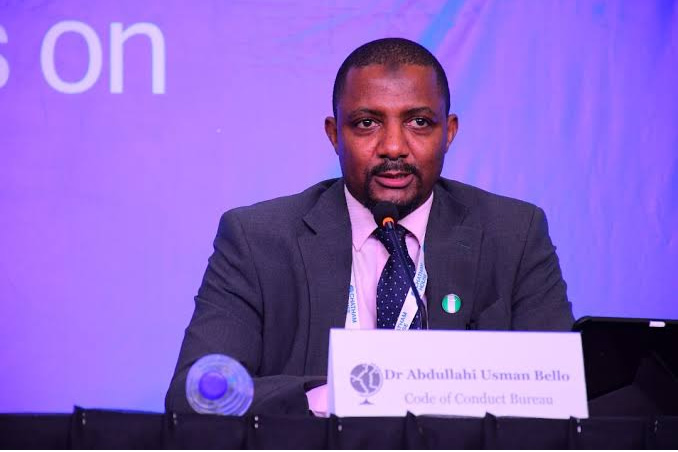
The assets of more than 20 ministers and 30 permanent secretaries have been investigated and verified as part of efforts to strengthen accountability among public officers, according to the Chairman of the Code of Conduct Bureau, Abdullahi Bello.
Bello disclosed this in Abuja on Wednesday at an anti-corruption and asset tracing stakeholders’ workshop organised by the Human and Environmental Development Agenda in collaboration with the Platform to Protect Whistleblowers in Africa.
Bello said the CCB had moved beyond merely receiving asset declaration forms to examining declarations, investigating suspected infractions and prosecuting offenders.
“We are not submitting forms anymore. Now, we’re examining the forms, we’re also investigating, and we’re also prosecuting,” he said.
The chairman said the bureau had focused its verification exercise on high-profile public officers.
“We have interviewed and verified the relations of more than 20 ministers, 30 permanent secretaries, 32 health agencies, and other high-profile individuals,” Bello said.
He said the bureau invites public officers to its office for face-to-face examination of their records.
“One of the key things that we do is that, once you declare your assets at the beginning of your term, we verify it; then we’ll wait for you at the end of your term, and we’ll also verify it.
“If you see any difference between the beginning and the end, that can only be explained by your non-social income, then we investigate you and prosecute you,” he said.
He stressed that the CCB could commence an investigation before the end of an official’s tenure where allegations or intelligence existed.
“But it doesn’t mean that we have to wait for you to finish office before we can investigate you. If there is any allegation against you, we can also investigate. Or if there is intelligence against you, we can also investigate, he said.
Bello described asset tracing as central to the bureau’s anti-corruption efforts.
“Asset tracing is not a side issue. It’s where investigation becomes persistent,” he said.
He also said the CCB had secured convictions and forfeited properties and funds linked to breaches of the code of conduct.
“For the first time in the life of CCB, we have been able to do that,” he said.
Bello said the Code of Conduct provisions provided for sanctions including removal from office, disqualification from holding public office and forfeiture of assets acquired through breaches.
“If you look at the prohibition of the Code of Conduct, there are three major punishments for Code of Conduct breaches. First, you can be banned from office for 15 years. You can be removed from office. And then finally, the assets that you acquire from a breach can be forfeited to the government,” he said.
Speaking at the workshop, the Executive Secretary of HEDA, Arigbabu Sulaimon, said the meeting was aimed at strengthening inter-agency collaboration, intelligence sharing and the role of civil society in combating corruption.
Sulaimon said the workshop was “conceptualised not merely as a platform for speeches, but as a technical working session” to advance three core institutional objectives.
He said the first objective was “bridging interagency silos and fostering civic synergy,” stressing the need for effective information sharing among government agencies and civil society organisations.
“Realising full accountability requires seamless real-time intelligence exchange among our primary military and enforcement bodies,” Sulaimon said.
He added that civil society organisations could contribute to investigations through grassroots monitoring and open-source intelligence.
“Importantly is forging strong operational pipelines with civil society organisations whose grassroots tracking and open-source intelligence tools provide invaluable leads for criminal investigation,” he said.
Sulaimon also called for greater use of the Proceeds of Crime Act and the Code of Conduct Bureau’s statutory mechanisms in tracing and recovering illicit assets.
“Operationalising the Proceeds of Crime Act, POCA, is essential to ensure that confiscated assets are not only effectively recovered, but managed and disposed of with absolute public transparency,” he said.
He further urged the authorities to make asset declaration a more effective tool for detecting illicit enrichment and abuse of public office.
“Furthermore, we must transform the code of conduct we use after the declaration process from a routine and restricted exercise into a dynamic, verifiable mechanism for detecting early signs of illicit enrichment and public office abuse,” Sulaimon said.
On whistleblower protection, the HEDA executive secretary said greater safeguards were needed to encourage individuals to provide information on corruption and other crimes.
“Whistleblowers remain the single most effective catalyst for uncovering criminal crimes. Yet, without robust statutory protections and safe reporting mechanisms, courageous individuals remain vulnerable to retaliation,” he said.


Dr Ogbsji Arrested Not Abducted Benue Police PRO Confirms
Spread the loveBy Vincent Tyoduugh The fears spread over the abduction of Dr Jonah Ogbaji have been allayed as the...
NDLEA Discovers, Dismantles Enugu Drug Lab, Nigerian -Mexican Cartel Kingpins Docked
Spread the loveBy Nick Ibe A Nigerian-Mexican drug cartel operating a clandestine methamphetamine laboratory in Eziama community in Obeagu, Awgu...

CCB Probes Assets of over 20 Ministers, 30 Perm Secs
Spread the loveBy Nick Ibe, Abuja The assets of more than 20 ministers and 30 permanent secretaries have been investigated...


BUILDING A BUSINESS: Maria Cabral Menezes worked as a trader before deciding to risk it all and start her own business.
Spread the loveMaria Cabral Menezes, 27, never set out to be an entrepreneur — let alone one behind a product...

Prof Obi Davies-Ekwenna: Surgeon Who Led Nigeria’s First Tele-robotic Surgery
Spread the loveThe Professor of urology and transplant surgery has been involved in pioneering robotic surgical programmes in Nigeria and...

Nasarawa: PDP suffers major set back, as Gaza’s governorship receives boostBy Philip NyamAbuja
Spread the loveThe Peoples Democratic Party (PDP) Wednesday suffered a tsunami in Nasarawa state as its former youth leader, Hon....


‘Small Businesses Are An Important Part Of Our Economy’ — Tinubu Hails $12m Entrepreneurship Centre In Abuja
Spread the loveBy Felix Umande President Bola Ahmed Tinubu has welcomed the construction of the $12 million Abuja Centre for...

Olukoyede to Faith Leaders: Fight Corruption With Moral Dignity of Honest Living
Spread the loveBy Isa Abdul, Abuja Religious leaders across the country have been called by the Chairman of the Economic...

Iran Walks Out of UNGA in Protest Over Trump’s Combative ‘Annihilation’ Speech
Spread the loveUnited States President Donald Trump threatened on Tuesday to “annihilate” Iran if Tehran fails to reach a deal...
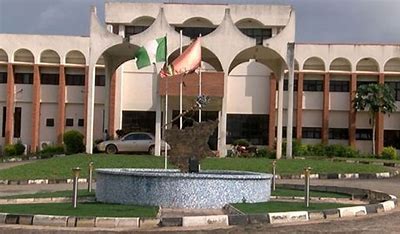

Osun State Assembly First to Approve State Police as N’Assembly Clarifies Transmission
Spread the loveBy Seyi Balogun The National Assembly clarified Tuesday that the constitutional amendment seeking to create the State Police...