
Business and Economy
BREAKING FROM THE CROWD


Maria Davidson: Building a Business
At Age 26
She Was a Construction Industry Outsider. Within 5 Years, Her Business Was Bringing In $5 Billion In Orders.
Maria Davidson got the idea for Kojo by showing up on construction job sites with pizza and donuts.
Kojo is the largest construction materials procurement platform in the U.S.
Its founder, Maria Davidson, was an outsider to construction when she decided to create the company.
Davidson relied on conversations she had with “thousands” of construction workers about pain points in the industry to create Kojo.
Eleven years ago, Maria Davidson was 23 years-old, living in London and working in an entry-level job as an investment banking analyst at Goldman Sachs when she went on vacation in California. While there, she had a chance encounter with Joe Lonsdale, co-founder of Palantir and founder of the venture firm 8VC. This meeting changed the trajectory of her life; in a single hour, he convinced her to quit her job, move to San Francisco and become his chief of staff at 8VC. Lonsdale saw potential in Davidson, and the 8VC team at the time was small.
“He gave me this pitch that Goldman is an incredible place, but you are a cog in a giant wheel,” Davidson tells Entrepreneur in a new interview. “There were so many industries that no one was paying attention to on the tech side in the U.S. He got me really passionate about doing something to help improve how those industries work.”
So, in 2015, at the age of 23, Davidson decided to move to the U.S. She knew precisely three people in California at the start, and lived on her friend’s couch for a while as she searched for a place to live longer term.
Maria Davidson. Credit: Kojo
Maria Davidson. Credit: Kojo
Working with Lonsdale at 8VC exposed her to “big, traditionally unsexy industries” full of broken workflows that affected millions of people but had seen little modern software. So at age 26, in 2018, she left 8VC to start Kojo, committing to spend the next eight years tackling one of the most complex of those industries: construction.
In a handful of years, Kojo was processing more than $5 billion in annual orders and became the largest construction materials procurement platform in the country.
How she got started
Davidson’s path to founding Kojo began far from Silicon Valley. “I got here in a very roundabout way, as many immigrants do,” she says.
She was born in the Soviet Union, then moved to Israel after the Soviet Union collapsed, without knowing a word of Hebrew. She then moved to London when she was 13 without speaking a word of English, completed school there and went on to study politics, philosophy and economics at Oxford. Her first taste of entrepreneurship was running the Oxford Union.
After college, she worked at Goldman Sachs for a couple of years. “I thought I needed to do the traditional route and follow the traditional wisdom,” she says.
Seeing a broken system
Davidson built Kojo around a simple question: why does it take so long, and cost so much, to build the physical world around us? She points out that the Empire State Building took only about 400 days to construct in the early 1930s, yet something as simple as a San Francisco bus lane took 27 years to complete. Projects, from hospitals to schools, are routinely late and over budget, slowing down city development.
Digging deeper, Davidson realized that for those in the trades, from electricians to plumbers to roofers, roughly 60% of costs are for labor and 40% are for materials. These tradespeople order more than $400 billion worth of commercial materials annually across the U.S. — yet the supply chain for those materials runs on phone calls, emails and text messages. There is little transparency about price, availability or inventory. Mistakes are common: wrong items arriving, double orders, materials lost in warehouses and field teams constantly chasing information.
As a complete industry outsider, Davidson started the process of identifying the problem by showing up on construction job sites with pizza and donuts to get workers to talk. She asked what slowed workers down, what caused delays and what they most hated doing.
“As I had thousands of conversations, I heard time and time again that materials were incredibly frustrating,” Davidson says. “That includes how people dealt with and tracked them. There was very little visibility into when materials were actually arriving and what materials had already been ordered.”
That feedback pushed her to focus on a real-world problem that construction workers felt every day.
Launching the product
The early years were spent simply figuring out what to build. Davidson founded Kojo in 2018, but didn’t bring a product to market until 2020. Kojo’s core product is a procurement platform that unifies field teams, office staff, and distributors in one place. It automates price and inventory comparisons, purchase order creation and communication.
Kojo officially launched the product in the summer of 2020, even though COVID hit and the team briefly feared the company was over. Instead, remote work and illness exposed just how risky it was to have purchasing data trapped in email inboxes and binders. Kojo’s sales took off as contractors sought centralized, digital visibility into materials.
Kojo grew astonishingly fast once it launched. In mid-2020, it was processing $0 in materials orders. Within five years, it was handling over $5 billion annually across more than 75,000 job sites, Davidson discloses.
She adds that the company saved over two million labor hours for construction workers last year alone, by cutting field workers’ time on phones and emails and eliminating about 75% of office teams’ manual data entry.
On the materials side, Kojo helps contractors save roughly 3% to 5% per order, according to Davidson.
The company raised a $7 million Series A in the fall of 2020, a $33 million Series B in the fall of 2021 and a $39 million Series C in the fall of 2022. In the fall of 2025, Kojo raised a $10 million Series C extension from Wesco, the largest electrical distributor in the U.S.
Early on, many investors told Davidson that construction firms didn’t want software. She relied on a handful of believers and small early checks to build a prototype. Only from the Series A funding round onward did strong metrics and customer enthusiasm start to flip investor sentiment.
Tactics for growth
Davidson says that the most important strategy for growth is building close relationships with customers from the very beginning. She understood from the start that construction is a word-of-mouth industry. The most important thing to do in the early days, she says, was to build an “extremely loyal” group of evangelists who loved the product and told everyone around them about it.
From that point, Davidson started hiring a sales team that was constantly on the phone with contractors, asking about their biggest pain points. The team tried to figure out the issues and send feedback to the product division, so that the product was constantly improving over time.
Through the process of scaling from zero to $5 billion, Davidson also realized that there are a lot of things that traditional investor wisdom tells you to do that you should actually not do.
She gave the example of investors urging her to hire seasoned executives with fancy titles after a fresh funding round. Instead of following that wisdom, she relied on internal promotions to make Kojo grow.
“What we found is being able to promote people from within allowed us to scale our teams much more effectively because those people knew how to do the work,” Davidson says. “They actually knew the product, they knew the customer.”
Davidson adds that it was important for her to approach a field like construction with a true beginner’s mindset. She didn’t have any preconceived notions about the way things worked and was able to assess the industry with a fresh pair of eyes.
She also emphasizes deep curiosity — when a process looks broken, there is usually a reason it evolved that way.
“If you want to solve it, you need to solve from a place of empathy and understanding why things are the way they are today,” Davidson says.
This article is part of Young Entrepreneur series highlighting the stories, challenges and triumphs of being a young business owner.
Business and Economy
JPMorgan Alters Banking in Nigeria, Gets CBN Approval, As Esther Alade Joins Merchant Bank
By Seyi Balogun, Lagos
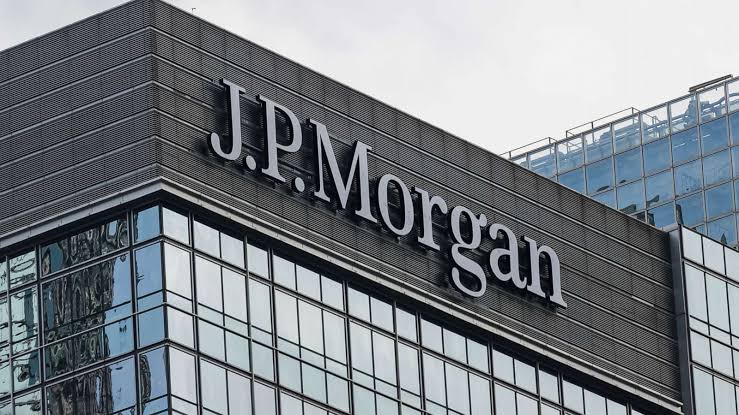
The Central Bank of Nigeria (CBN) has approved plans by global financial services giant JPMorgan to establish a merchant bank in Nigeria, opening a new chapter in the lender’s presence in the country’s financial sector.
The proposed institution, to be known as JPMorgan Merchant Bank Nigeria Limited, has received, according to Legit.ng, approval-in-principle from the apex bank.
The American banking giant JPMorgan Chase has taken another step by appointing former Central Bank of Nigeria (CBN) acting governor, Sarah Omotunde Alade, as an independent non-executive director of JPMorgan Merchant Bank Nigeria Limited. The appointment brings one of Nigeria’s most experienced monetary policy expert’s into the governance structure of the proposed bank as the US financial institution seeks to strengthen its presence in Africa’s largest economy.
Alade, who spent 24 years at the CBN, brings extensive experience in economic management, banking operations, financial markets and public finance.
Her appointment comes amid expectations that JPMorgan’s expansion could create fresh opportunities for Nigerian businesses seeking international financing, investment advisory services and access to global capital.
Alade served as acting governor of the CBN in 2014 following the suspension of then governor Sanusi Lamido Sanusi. She assumed the position on February 20, 2014, overseeing the apex bank during a sensitive period for Nigeria’s monetary policy and financial markets. Before that appointment, she had served as deputy governor in charge of Economic Policy since March 26, 2007. Her responsibilities included monetary policy, economic research, statistics, trade and exchange, and financial markets.
As an independent non-executive director at JPMorgan Merchant Bank Nigeria, Alade will provide strategic guidance and board-level oversight rather than manage daily banking operations.
From university lecturer to CBN leadership Alade began her professional career in 1977 at the Ministry of Finance and Economic Development in Ilorin, Kwara State. She subsequently joined the University of Ilorin as a lecturer before moving to the CBN in 1993 as an assistant director in the Research Department. At the apex bank, she headed several departments responsible for government finance and fiscal analysis. In 2004, she became director of Banking Operations, later chairing the board of the Nigeria Inter-Bank Settlement System (NIBSS).
She also served as secretary of the National Payments System Committee, contributing to the development of Nigeria’s financial infrastructure.
Alade retired from the CBN in March 2017 after more than two decades of service. Buhari appoints Alade economic adviser Her retirement did not mark the end of her involvement in national economic policymaking. In November 2019, former President Muhammadu Buhari appointed her Special Adviser on Finance and the Economy.
Nigerian bank expands, set to begin full commercial operations in November
Alade holds an Economics degree from the University of Ife, now Obafemi Awolowo University, a master’s degree from the University of Melbourne and a PhD from the University of Ilorin.
What JPMorgan’s expansion means for Nigeria
JPMorgan’s planned merchant banking operations could strengthen competition in Nigeria’s corporate and investment banking sector. Unlike conventional retail banks, merchant banks primarily serve businesses, institutional investors and large organisations through specialised financial services.
These include capital raising, corporate finance, investment advisory and structured financing. The proposed institution could also provide Nigerian companies with stronger connections to international capital markets. However, the range of services JPMorgan Merchant Bank Nigeria can offer will depend on its regulatory approvals and licensing conditions.
Alade’s appointment signals the institution’s intention to draw on experienced Nigerian financial leadership as it develops its local operations.

By Nick Ibe, Abuja
Legal and business leaders have revealed situations that discourage long term investments in Nigeria. Consequently, they warn that investors may continue to shun long-term investments in Nigeria if courts fail to enforce contracts consistently, if commercial disputes drag on for years, and if government policies undermine existing business agreements, according to the Punch..
The country’s ability to attract and retain capital depended not only on the potential for profit but also on whether investors could protect their assets, obtain fair decisions in commercial disputes and recover their investments when necessary.
Putting this in focus was the Managing Partner of Candide-Johnson Law, Charles Adeyemi Candide-Johnson, SAN, who said that capital was attracted by safety rather than merely the promise of profit. In his words:
“Actually, capital goes where it is safe.”
The warning formed part of discussions at the third annual Multi-Door Courthouses and Alternative Dispute Resolution Stakeholders Summit 2026, held at the MUSON Centre, Onikan, Lagos, on October 19 and 20.
The summit had the theme, ‘Investor Confidence and ADR: Strengthening Nigeria’s Investment Climate’.
Anther speaker, Bode Olanipekun, SAN and the President and Chairman, Council of the Nigerian-British Chamber of Commerce, Abimbola Olashore, identified weak contract enforcement, questionable ex parte orders, inconsistent government policies and unpredictable dispute resolution as obstacles to investment.
The Chief Executive Officer of the American Business Council Nigeria, Mrs Margaret Olele, also warned that regulatory inconsistencies and breaches of contractual commitments could force companies to reconsider their operations or leave the country.
Olanipekun, Managing Partner of Wole Olanipekun & Co, said investors were concerned not only about the returns they could earn but also about the possibility of losing their capital in prolonged commercial disputes.
He described the two concerns as “return on investment” and “return off investment”, explaining that businesses want their investments to grow while ensuring that their money was not lost.
“Everybody has heard of ROI, return on investment. At the back of our minds, I want us to use two forms of ROI this morning: ROI as return on investment and ROI as return off investment.”
He added, “As an investor, I don’t want my investment to diminish; I want my investment to grow. That’s return on investment.
“Now, there’s return off investment. As an investor, I don’t want to lose my investment. I don’t want my money to get lost.”
To illustrate the consequences of prolonged litigation and the misuse of ex parte orders, Olanipekun cited a commercial dispute in which one company allegedly obtained court orders after another judge had declined to grant similar reliefs without first hearing the opposing party.
According to him, Company A approached a court on October 27, 2015, seeking orders against Company B, but the application was refused.
He said Company A subsequently filed the same case before another judge and obtained the orders on December 4, 2015.
Company B challenged the orders, which the Court of Appeal discharged on March 30, 2016. The Supreme Court subsequently affirmed their impropriety on July 13, 2018, Olanipekun said.
He added that the Court of Appeal later held that the second suit amounted to an abuse of court process and dismissed it.
Company B subsequently sought damages over the losses allegedly caused by the orders, with the High Court awarding more than N71bn on July 18, 2023. Olanipekun said an appeal against the damages award was pending.
Questioning the consequences for the company, he said, “What really will be the status of Company B today, 10 years after, if it has not recovered a dime from that loss which the court had found that it did suffer?”
He urged business leaders to consider whether commercial disputes would be better handled by independent arbitrators with the necessary industry knowledge and the ability to deliver final decisions efficiently.
“People of commerce would prefer commercially skilled and knowledgeable independent arbiters who understand their businesses to resolve their disputes,” he said.
“The more a jurisdiction can provide this quality of arbiters, the more confident investors would be to commit capital to such destinations.”
Olanipekun also cited a 2023 dispute involving Seplat Energy, in which three shareholders holding a combined 162 shares reportedly obtained ex parte orders restraining the company’s chief executive officer, executive management and board members from acting in their official capacities.
He said their combined holdings represented less than 0.002 per cent of the company’s issued shares.
According to him, the Court of Appeal suspended the orders on May 15, 2023, four days after they were granted, while the shareholders filed a notice of discontinuance on May 22.
He argued that the case demonstrated how court orders obtained without hearing the opposing party could affect corporate governance and business operations, potentially damaging investor confidence.
Candide-Johnson in his submission said the judiciary needed to provide a predictable commercial justice system in which contractual agreements were enforced according to their terms, subject to applicable laws and legitimate legal exceptions.
He argued that parties included choice-of-law and dispute-resolution clauses in commercial agreements because they anticipated the possibility of disputes and wanted to know how those disagreements would be resolved.
“If they can say with certainty that if my disputes come to these courts, the contracts will be enforced as we intend it, without influences outside of precedent, they will be confident to invest,” he said.
The lawyer, who also works as an arbitrator, said courts should understand the commercial expectations of contracting parties and avoid undermining agreements without sufficient legal justification.
“To be honest, there’s no reason why a contract should not be enforced as it appears in the fine print, except there’s some extenuating factors of illegalities and all of that,” he said.
He acknowledged that investors may not expect to win every dispute but would want assurances that the process would be fair and free from undue influence.
“Nobody expects to go to court and win all the time. In fact, it would raise certain questions if some particular persons win all the time.
“What people expect is an experience that they can say is fair and not influenced by considerations of relationships.”
Candide-Johnson urged Lagos State to lead efforts to establish a credible model of commercial justice, citing its economic importance and the implications of its institutions for Nigeria’s reputation.
“Lagos State is big enough to be a country by itself. The economy of Lagos State is larger than the economy of Côte d’Ivoire, Senegal, and Kenya combined,” he said.
He pointed to the English legal system as an example of how consistency and predictability could strengthen confidence in commercial transactions, noting that its development under Lord Mansfield was intended to provide merchants with rules they could understand and trust.
He also warned against treating the existence of laws and constitutional provisions as sufficient guarantees of justice, arguing that their effectiveness depended on the commitment of those responsible for enforcing them.
Candide-Johnson said mediation and other alternative dispute resolution mechanisms should complement the courts, allowing less complex disputes to be resolved without adding to judicial backlogs.
“Sometimes it’s just pride and anger that creates disputes,” he said, adding that some disagreements could be settled through conversation and mediation.
He said integrating ADR into the justice system, under appropriate judicial supervision, would reduce pressure on the courts and allow judges to concentrate on more complex cases.
Also, Olashore said weak contract enforcement and policy inconsistency were discouraging investors from committing long-term capital to Nigeria.
He argued that investors wanted to know not only whether a project would generate profits but also whether they could access those returns and recover their capital.
“In truth, the capital will go to where it is welcomed and where it is treated well,” he said.
Explaining the priorities of investors, Olashore said foreign investors wanted assurances that they could repatriate their earnings, while local investors needed confidence that projected profits would translate into money available in their bank accounts.
“For a foreign investor, how do I repatriate? If you are local, how do I assure that this projected profit will end up as cash in the bank?” he asked.
He illustrated the effect of Nigeria’s reputation for weak contract enforcement with an experience involving efforts to persuade an American airline to establish direct flights between Lagos and the United States.
Olashore said the commercial prospects for the proposed route were attractive, but concerns about the enforcement of aircraft leasing agreements in Nigeria undermined the proposal.
According to him, the airline’s chief executive, who had previously worked at Boeing, was concerned about the difficulties aircraft owners could face recovering their planes from operators who allegedly failed to meet their lease obligations.
Olashore said the executive had consequently formed a negative opinion about doing business in Nigeria.
“He said he had made up his mind that, as far as he was concerned, Nigeria was not a place where you could do business because they were not sure about enforceability,” he said.
Olashore said the experience showed how uncertainty about enforcing contractual rights could outweigh an otherwise attractive business opportunity.
“The issue about people investing is that when I cannot price the risk, I would rather not invest,” he said.
He maintained that investors could calculate some risks, including the time required to resolve disputes, but uncertainty about whether their rights would ultimately be protected was more difficult to accommodate.
“I tell people, it is not about the length of time. Again, I can price that. If there is a dispute that takes 20 years, let me put that into my calculation and do my risk analysis,” he said.
“When there is uncertainty even at the end of the 20 years, I will not invest,” he added.
Olashore said Nigeria needed long-term financing for projects and businesses but would struggle to attract such capital if investors continued to distrust its institutions.
“When I see all the comments asking how come we have only short-term money coming in, that is because people don’t trust us. That is why they invest for the short term,” he said.
He urged the government to protect property rights, ensure accountability and maintain consistent policies, arguing that investor perceptions could change if the country demonstrated a sustained commitment to doing the right things.
Meanwhile, Olele identified breaches of contractual commitments, inconsistent government policies and poor implementation of regulations as additional factors driving businesses away from Nigeria.
She said businesses could face uncertainty when a new state administration altered the terms or costs associated with existing agreements, sometimes requiring industry groups to intervene on behalf of affected companies.
“One major concern is the sanctity of contracts,” she said.
Olele argued that regulations could be well designed but still undermine businesses when authorities failed to implement them consistently.
She cited Kimberly-Clark, recalling efforts to persuade the company to establish a factory in Lagos.
According to her, the company subsequently faced competition from businesses operating in a free trade zone, whose products allegedly entered the Nigerian market at prices that made it difficult for the local manufacturer to compete.
She said the situation illustrated how inconsistent implementation of regulations could disadvantage businesses that had invested in local production.
Olele also cited Uber’s experience with Nigeria’s regulatory environment, saying uncertainty over how to classify the ride-hailing company and differing interpretations by government agencies created difficulties for its operations.
She said effective coordination among regulators was necessary to avoid imposing conflicting requirements on businesses.
Olele further warned that policies governing data localisation and cross-border data transfers needed to be designed and implemented in ways that did not unnecessarily obstruct business operations.
She argued that Nigeria’s investment strategy should focus not only on attracting new companies but also on retaining existing businesses by providing a predictable operating environment.
The speakers’ submissions converged on the need for stronger institutions, consistent enforcement of commercial agreements and efficient dispute resolution.
They argued that Nigeria’s ability to attract long-term capital would depend on whether investors could trust the rules governing their businesses, obtain fair hearings when disputes arose and recover their investments without being exposed to avoidable legal and regulatory uncertainty.

By Nick Ibe, Abuja
Investors from 51 of Africa’s 54 countries and more than 90 countries worldwide have subscribed to its initial public offering, according to Dangote Petroleum Refinery and Petrochemicals.
According to the Chief Financial Officer of Dangote Group, Murat Erden, in a statement on Sunday:
“This offering represents far more than a capital-raising exercise. It is a landmark opportunity for Africans and global investors alike to participate in the ownership of one of the continent’s most transformative industrial assets. The extraordinary participation from individuals and institutions across Africa demonstrates a shared conviction that Africans should not only benefit from industrial development but also own and create wealth from it”.
The company maintained that the IPO broke the Nigerian capital market record on its opening day and surpassed the previous African record within its first 10 days. It attributed the performance to demand from retail investors, pension funds, institutional investors, asset managers and other members of the investing public.
The refinery recently reported revenue of $22.5bn and a net profit of $4.7bn for the nine months ended 30 September, 2026, compared with a loss of $117.2m in the corresponding period of 2025.
According to the company, revenue rose by 144 per cent from $9.2bn in the corresponding period of 2025, while earnings before interest, taxes, depreciation and amortisation increased nearly ninefold to $5.5bn from $627.6m.
Operating cash flow also rose more than tenfold to $3.68bn, while the company moved from a net debt position of $1.73bn in September 2025 to a net cash position of $651m in September 2026.
Erden said the refinery’s financial performance had exceeded the assumptions used in determining the IPO valuation.
“Our financial performance has already advanced well beyond the baseline assumptions used in determining the IPO valuation. The refinery’s operational momentum, scale and efficiency continue to create substantial shareholder value and reinforce our confidence in its long-term growth prospects,” he added.
The company disclosed that the offer had also benefited from cross-border market collaborations involving Botswana, Egypt, Ethiopia and Kenya, which it said had helped broaden access and reduce barriers to participation for investors across Africa.
It added that the IPO offered investors an opportunity to become shareholders in one of Africa’s largest industrial enterprises, with the potential for dollar-linked dividends, subject to the company’s dividend policy and applicable regulatory approvals.
With the offer scheduled to close on October 27, the refinery said it had intensified investor education and engagement activities across key markets to widen participation.
The refinery stressed that “no further extension of the offer period is currently planned”.


FG Gives Workers N70,000 Monthly Transport Support for Six Months
Spread the loveBy Nick Ibe, Abuja To cushion the harsh impact of rising living costs, the Federal Government has approved...


Trump and the 95-year Mother: Government That Cares for All Citizens
Spread the love“Trump… Please bring my son back to me. I am begging you for mercy.” And what Trump did...


Probe Panel Says Heat, Dehydration Killed 33 Detained Niger Miners
Spread the love–Calls for NSCDC reforms, compensation for victims By Son Tertsea, Abuja Dehydration was cause of the death of...

Tinubu Seeks Law To Bring Back Nigerians Jailed Abroad
Spread the loveBy Felix Umande President Bola Ahmed Tinubu has transmitted a bill to the Senate seeking to empower the...

Senate Says: Travel Agencies, Short-let Apartments Need Closer Scrutiny in Human Trafficking Probe
Spread the loveBy Isa Abdul, Abuja As part of efforts to dismantle trafficking networks and protect Nigerians from exploitation abroad,...


El Niño: Its Meaning, Effects and How Nigerians Should Prepare for It
Spread the loveBy Son Tertsea, Abuja Nigerians have been alerted that El Niño event would raise concerns that potentially affect...


Accusations of Data Theft: MTN Explains How Nigerians Consume Data Fast
Spread the loveBy Nick Ibe, Abuja: Engaging in high-resolution video streaming, automatic downloads, background applications, cloud backups and increased internet...


Kogi Authorities Probe Why Police Corporal Killed female Colleague, Self
Spread the loveBy Michael Lim The Kogi State Police Command has begun to probe why a police corporal, Amos Yusuf,...


WHO Declares Nigeria Ebola-Free After Evacuation of Patient to Switzerland
Spread the loveBy Nick Ibe, Abuja Dr Mohamed Janabi, the World Health Organisation’s (WHO) Regional Director for Africa, says Nigeria...


Fake Letter Lands Atiku Supporter in Court
Spread the loveBy Isa Abdul, Abuja For circulating a fake document purportedly written by President Bola Ahmed Tinubu to the...