
General News
Speaker Abbas wants Nigeria-Algeria visa policy review, stronger ties


By Saint Mugaga
The Speaker of the House of Representatives, Hon. Tajudeen Abbas has called for a review of the visa policy between Nigeria and Algeria towards a better bilateral relationship between the two African countries.
He made the call during his meeting with the Algerian Minister of Foreign Affairs, National Community Abroad and African Affairs, His Excellency, Mr. Ahmed Attaf, as part of his ongoing working visit to the North African country.
The speaker specifically recommended that both Nigerian and Algerian Parliaments work towards a bilateral visa facilitation framework, including visa-free access for diplomatic and official passport holders and streamlined visa processes for ordinary citizens, business leaders, students, researchers, and cultural exchanges.
While commending the Algerian minister for sharing the commitment to advancing Nigeria–Algeria cooperation, the speaker recalled when Attaf met with Nigeria’s Minister of Foreign Affairs, Ambassador Yusuf Tuggar earlier in August and agreed to strengthen diplomatic relations with the revitalisation of the Binational Commission to advance strategic cooperation between both nations.
Abbas also suggested that the parliaments of both countries should strategise on how to fast-track the revival of this Commission to provide a structured framework for sustained bilateral cooperation.
The speaker also recalled that during his last visit, Minister Tuggar performed the groundbreaking ceremony for a new Nigerian Embassy chancery in Algiers to demonstrate Nigeria’s commitment to improving relations and providing better consular services, and affirmed the parliament’s readiness to support the initiative through legislative backing and oversight.
Abbas also reaffirmed Nigeria’s legislative support and commitment to the successful completion of the massive Trans-Saharan Gas Pipeline Project, while assuring the Algerian minister of Nigeria’s willingness to mobilise support for the project from other West African parliaments whose countries are involved in the project.
Noting that both Nigeria and Algeria are members of the African Continental Free Trade Agreement (AfCFTA), the speaker highlighted how parliamentary cooperation can support the removal of legislative barriers to trade such as customs duties and visa challenges for businesspeople Speaker Abbas also stressed the need to combat regional security challenges in the Sahel caused by terrorism, climate change, and political instability, while emphasising the need for parliamentary strategy and legislative support towards military and regional cooperation.
After acknowledging Nigeria’s support for Algeria’s leading role in the Joint Operational Staff Committee established to combat terrorism, especially its mediation efforts in the region, the Speaker stated the importance of peaceful settlements for regional conflicts.
He also noted the value of joint parliamentary resolutions to support the African Union’s peace efforts and continental frameworks on governance and human rights.
Speaker Abbas further expressed a desire to strengthen cooperation between the Foreign Affairs Committees of both legislatures, even as the two Ministers of Foreign Affairs are advancing bilateral cooperation.





The Mayor of London is a Muslim.
The mayor of Birmingham is a Muslim.
The Mayor of Leeds is Muslim.
Mayor of Blackburn – Muslim.
The mayor of Sheffield is a Muslim.
The mayor of Oxford is a Muslim.
The mayor of Luton is a Muslim.
The mayor of Oldham is Muslim.
The mayor of Rochdale is Muslim.
All this was achieved by only 4 million Muslims out of 66 million people in England:
Today, there are over 1800 mosques in England.
There are over 80 sharia courts.
There are more than 50 Sharia Councils.
78 percent of Muslim women do not work, receive state support + free accommodation.
A large percentage of Muslims do not work and receive state support + free housing.
State-supported Muslim families with an average of 3 to 8 children receive free accommodation.
Now, every school in the UK is required to teach lessons about Islam.”
- Johann P @JohannPbooks
By Nick Ibe, Abuja
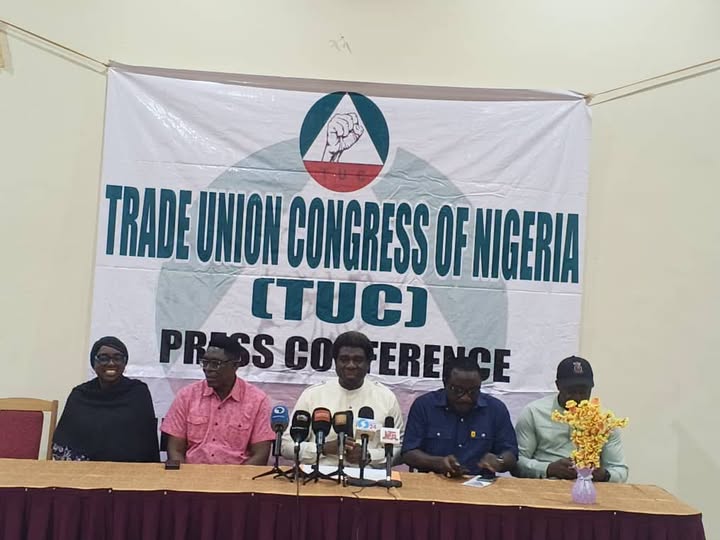
The Federal Government’s proposed N70,000 transport allowance for six months has been rejected by the Trade Union Congress of Nigeria, TUC, with the union demanding an immediate salary increase for workers and the implementation of outstanding agreements with health workers under the Joint Health Sector Unions.
The congress insisted that temporary wage awards were inadequate to address the worsening economic hardship confronting Nigerian workers, arguing that the government should increase salaries rather than introduce relief measures that might not be implemented consistently.
The TUC further accused the Federal Government of failing to fulfil its 2023 wage award obligations to some workers and neglecting a seven-month-old agreement on the adjustment of the Consolidated Health Salary Structure for health workers under JOHESU.
The congress made its position known in a statement issued on Wednesday by its President, Festus Osifo, and Secretary-General, N.A. Toro, following a National Administrative Council meeting held in Abuja on October 8, 2026.
According to the statement, the congress had written to the Federal Government through the Office of the Secretary to the Government of the Federation, demanding an immediate salary review in response to rising living costs.
The TUC argued that the government did not need to wait for negotiations on the national minimum wage before increasing workers’ salaries, noting that there was no legal ceiling on how much employers could pay their workers.
It said, “The Federal Government should review increasing workers’ salaries. This was hinged on the fact that the government does not require the minimum wage to be negotiated before increasing workers’ pay, as there is no maximum wage law in the country.”
The Congress proposed that the Federal Government could raise the salary of the lowest-paid worker to N300,000 from the current N70,000 and apply the appropriate consequential adjustments to other salary levels.
It maintained that while negotiations on the national minimum wage remained important, they should not be used as a reason to delay urgent salary increases for workers struggling with rising food, transportation, healthcare and other essential expenses.
The TUC said its leadership had held consultative meetings with government officials, including the Secretary to the Government of the Federation, during which it rejected the proposed wage award.
Explaining its opposition, the congress said the previous wage award negotiated in October 2023 had not been fully implemented, raising concerns about the credibility of another temporary arrangement.
“The wage award agreed between FGN and organised labour on the 2nd of October 2023 was to be implemented until a minimum wage was agreed in 2024 but was never implemented holistically,” the statement said.
It added that some workers were still being owed one or two months’ payments, while others had not received the allowance at all.
The Congress also alleged that workers who received the award did not always get their payments monthly, with some experiencing intervals of one or two months and having to make repeated demands before receiving their entitlements.
It further claimed that more than 80 per cent of states and workers in the informal sector had not benefited from any form of wage award.
“How do we go back to the same wage award that never benefited all workers? How can workers be expected to trust fresh promises when previous obligations remain outstanding?” the TUC asked.
The congress insisted that a permanent salary increase would provide more dependable relief than temporary allowances, which it said had failed to reach workers uniformly.
It stated, “Negotiations of a new national minimum wage must not become an excuse for postponing urgent pay increment.”
Beyond salary increases, the TUC called on federal, state and local governments to introduce measurable interventions to reduce the cost of essential goods and services.
It urged the authorities to ensure timely payment of salaries and pensions, protect existing jobs, curb exploitative labour practices and revitalise the productive sector to create decent employment.
The congress said economic hardship was not limited to federal workers but also affected state and local government employees, pensioners, private-sector workers and people in the informal economy.
It called for adequately funded interventions with clear implementation timelines, arguing that government announcements must translate into tangible improvements in the living conditions of Nigerians.
JOHESU agreement remains unimplemented
The TUC also accused the Federal Government of failing to honour an agreement reached with the Joint Health Sector Unions after months of industrial action.
According to the congress, its President, Osifo, led a delegation of organised labour, including JOHESU leaders and a representative of another labour congress, in negotiations aimed at resolving the dispute.
The negotiations culminated in a conciliation meeting at the Federal Ministry of Labour and Employment, where both parties agreed to a communiqué.
The Federal Government delegation was led by the Minister of Labour and Employment, Dr Muhammad Maigari Dingyadi, alongside the Coordinating Minister of Health and Social Welfare, Prof Muhammad Ali Pate, and the then Minister of Finance and Coordinating Minister of the Economy, Wale Edun.
The TUC said JOHESU suspended its industrial action in good faith after the agreement was signed, but accused the government of failing to fulfil its own obligations.
It said the agreement provided for the resolution of outstanding issues relating to the adjustment of the Consolidated Health Salary Structure, known as CONHESS.
However, the congress alleged that seven months after the agreement, the adjustment remained unimplemented.
“While the workers have kept their side of the bargain, the government hasn’t kept its side of the agreement,” the statement said.
The TUC described the delay as a breach of the principle of good faith, warning that failure to honour agreements could undermine confidence in collective bargaining between the government and organised labour.
It demanded the immediate implementation of the CONHESS adjustment, publication of a clear implementation timetable, provision of the necessary budgetary allocations and resolution of all outstanding issues in consultation with the relevant unions.
The congress said health workers should not be expected to continue delivering essential services while commitments made to them remained unfulfilled.
“The TUC demands tangible action, not further assurances,” it said, pledging to stand with affected unions and pursue lawful measures to compel the government to comply with the agreement.
The congress reiterated that workers were not seeking favours but demanding improved living conditions and respect for their rights.
“Workers’ welfare is not a privilege. Agreements must be honoured. Workers’ rights must be respected. Government must comply,” the statement added.
The TUC said it was awaiting the outcome of its scheduled meeting with the Federal Government before deciding on its next line of action.
The dispute comes against the backdrop of Nigeria’s prolonged cost-of-living crisis, which has intensified pressure on organised labour to secure higher wages and measures to protect workers’ purchasing power.
In July 2024, President Bola Tinubu signed the new national minimum wage law, raising the statutory minimum monthly wage from N30,000 to N70,000 following negotiations between the Federal Government and organised labour.
The agreement followed months of disagreements over the amount workers should earn amid the effects of the removal of petrol subsidy and other economic reforms on transportation, food and household expenses.
Organised labour had initially demanded a substantially higher minimum wage, while the government and employers raised concerns about the ability of employers, particularly state governments and businesses, to meet the proposed increases.
The resulting N70,000 minimum wage established a new statutory floor for eligible workers, but it did not automatically resolve demands for adjustments to salaries across different grades or address the broader rise in the cost of living.
The 2023 wage award was introduced as an interim relief measure during negotiations over the new minimum wage. The TUC’s latest statement renews concerns about the implementation of that arrangement and argues that future relief should be structured around permanent salary increases.
The JOHESU dispute represents a separate but related challenge involving remuneration and the implementation of agreements in the health sector. The union’s demands over CONHESS have been a source of industrial tension, with the latest TUC statement accusing the government of failing to implement the adjustment covered by the settlement.
The congress did not announce an immediate nationwide strike in its statement but said it would determine its next steps after receiving the outcome of its scheduled meeting with the Federal Government.
By Isa Abdul, Abuja
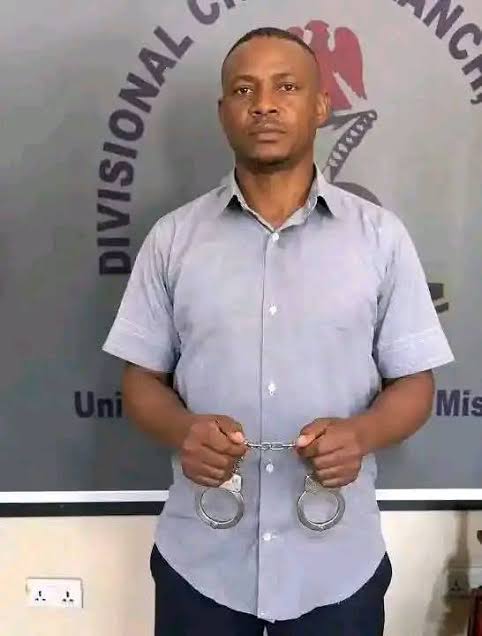
For alleged sporadic shooting at a market in Kubwa, Abuja, a Deputy Superintendent of Corps with the Nigeria Security and Civil Defence Corps (NSCDC) has been arrested by the Federal Capital Territory (FCT) Police Command.
The police said a pistol and 17 rounds of live 9mm ammunition were recovered from the suspect, identified as Onoja Samuel.
The command’s spokesperson, SP Josephine Adeh, said the incident occurred at about 1:50 p.m. on October 25, 2026, following a distress call reporting that a man armed with a pistol was firing into the air at the market.
Adeh said operatives attached to the Kubwa Police Division were promptly deployed to the scene and, after concerted efforts, disarmed and arrested the suspect.
“Preliminary investigations identified the suspect as one Onoja Samuel, a Deputy Superintendent of Corps with the Nigeria Security and Civil Defence Corps (NSCDC),” she said.
According to the police, preliminary findings indicated that the suspect went to the market armed with a pistol following reports that some traders had assaulted his wife.
“During an ensuing argument with the traders, he fired several shots into the air,” Adeh said.
She added that the suspect remained in police custody and would be charged to court after the conclusion of investigations.
The Commissioner of Police in the FCT, CP Ahmed Muhammed Sanusi, urged personnel of sister security agencies to exercise restraint and notify the police divisions responsible for areas where they intend to conduct authorised operations within the territory.
The command said the measure was necessary to improve operational coordirnation and prevent avoidable clashes.
Residents can contact the FCT Police Command on 08032003913 or 08061581938 for emergencies.



England: “This is how to take over a nation by soft jihad.”
Spread the loveThe Mayor of London is a Muslim.The mayor of Birmingham is a Muslim.The Mayor of Leeds is Muslim.Mayor...


Africa must be built on African knowledge, by African ingenuity and sustained by African Enterprise
Spread the loveBy Goodluck Ebere Jonathan Today, I joined fellow African leaders and other stakeholders at the closing panel of...
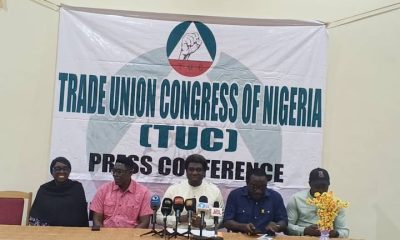

TUC Rejects N70,000 Transport Allowance, Tells FG: We Prefer Salary Increase
Spread the loveBy Nick Ibe, Abuja The Federal Government’s proposed N70,000 transport allowance for six months has been rejected by...


Alleged Assault of Wife: NSCDC Officer Arrested for Shooting at Kubwa Market
Spread the loveBy Isa Abdul, Abuja For alleged sporadic shooting at a market in Kubwa, Abuja, a Deputy Superintendent of...


Court Jails FCDA Official 25 Years for Land Racketeering
Spread the loveBy Nick Ibe, Abuja A staff of the Federal Capital Development Authority, FCDA, Kinsley Eselebor, has been convicted and...


FG Gives Workers N70,000 Monthly Transport Support for Six Months
Spread the loveBy Nick Ibe, Abuja To cushion the harsh impact of rising living costs, the Federal Government has approved...

Trump and the 95-year Mother: Government That Cares for All Citizens
Spread the love“Trump… Please bring my son back to me. I am begging you for mercy.” And what Trump did...


Probe Panel Says Heat, Dehydration Killed 33 Detained Niger Miners
Spread the love–Calls for NSCDC reforms, compensation for victims By Son Tertsea, Abuja Dehydration was cause of the death of...

Tinubu Seeks Law To Bring Back Nigerians Jailed Abroad
Spread the loveBy Felix Umande President Bola Ahmed Tinubu has transmitted a bill to the Senate seeking to empower the...

Senate Says: Travel Agencies, Short-let Apartments Need Closer Scrutiny in Human Trafficking Probe
Spread the loveBy Isa Abdul, Abuja As part of efforts to dismantle trafficking networks and protect Nigerians from exploitation abroad,...