
General News
NFIU: Terrorists Adopt Crowdfunding, Proxy Accounts, Mules, Others To Raise, Transfer Funds

By Isa Abdul
Crowdfunding networks, gender proxy accounts and other ways are now being exploited to raise and channel funds for terrorist operations, the Nigeria Financial Intelligence Unit has uncovered.
The new disclosures are contained in the NFIU’s 2025 Annual Report, obtained by the press from a top official.
The crowdfunding scheme involves foreign-based facilitators using social media platforms to solicit donations under false pretexts of humanitarian relief or educational support, before moving the funds through multiple layers to terrorist operatives in Nigeria.
The NFIU said hundreds of sympathisers were typically encouraged to make deliberately small donations, ranging from $50 to $500, through PayPal pages or conventional bank accounts, to evade automated anti-money laundering alerts.
“The following is a case study on Crowdfunding Network identified during the year: A foreign-based facilitator runs social-media campaigns claiming humanitarian relief or educational support and uses encrypted apps (Telegram, Signal) to share links to convincing PayPal pages or standard bank accounts.
“Hundreds of sympathiser donors contribute $50–$500 each, amounts small enough to avoid most automated AML alerts,” the report read.
The funds are subsequently pooled into a “master account” controlled by a senior member of the group living legally abroad.
“When the pool reaches a threshold, that account becomes the hub for onward movement,” the report stated.
The NFIU said the funds were again fragmented into dozens of smaller payments and transferred through International Money Transfer Operators and remittance applications to a network of money mules in Nigeria.
It identified students, small-business owners and relatives among those used as mules, noting that the strategy was designed to avoid reporting thresholds and obscure the origin and destination of the funds.
“Rather than sending one large transfer, the senior member fractures the funds and sends dozens of sub-threshold payments through IMTOs and remittance apps to a network of money mules in Nigeria; students, small-business owners, or relatives, avoiding reporting triggers.
“Upon receipt, the money was either converted to cash, used to purchase dual-use items such as motorcycles, fertilisers and satellite internet equipment, or transferred through mobile banking channels to logistics managers and field operatives.”
The report described the final stage as the “integration” of the funds into terrorist operational financing.
The Unit also identified the use of gender-based proxy accounts as another emerging terrorist financing technique, with terrorists opening bank accounts in women’s names while male commanders or logistics managers secretly control them.
“Terrorist financiers are opening bank accounts in women’s names while male commanders and logistics managers secretly control them.
“They exploit cultural norms that make women less likely to be suspected by authorities, using wives, sisters, or female associates as fronts to distance illicit funds from the true operatives.
“This tactic functions as identity laundering: women’s accounts are managed by men who hold ATM cards, mobile-banking credentials, and PINs, while the women often remain unaware of the transactions and volumes,” the report stated.
The report further revealed that terrorist facilitators were using telephone numbers that were not registered to the account holders or actual beneficiaries for mobile banking and transaction alerts.
It said pre-registered SIM cards, numbers registered to deceased persons and SIMs linked to gender-based proxies were being used to break the connection between bank accounts, SIM cards and Bank Verification Numbers.
“Terrorist facilitators use phone numbers for mobile banking or account alerts that are not registered to the account holder or the true beneficiary.
“They bypass the security link between SIM cards and BVNs by using pre-registered SIMs, SIMs registered to deceased people, or SIMs tied to gender-based proxies. This severs the audit trail: when a transaction is flagged, investigators trace the phone to an unrelated person, letting the real facilitator stay anonymous and continue operations,” it stated.
The NFIU also uncovered sophisticated methods of disguising terrorist transactions through detailed or coded narrations.
It said cells, particularly those linked to the Islamic State West Africa Province, used precise transaction descriptions to maintain what analysts described as an internal accounting system.
According to the report, frequent logistics-related payments with detailed narrations were often sent from a single source to multiple recipients, reflecting a structured financial system within the terrorist network.
“Terrorist cells, particularly those linked to ISWAP, routinely use precise, professional-sounding transaction narrations to maintain internal accounting. Operating like “shadow states” with strict bureaucratic controls, they require detailed descriptions so field commanders can justify expenses to central financial controllers. Although truthful narrations appear counterintuitive, they create an internal audit trail; analysts repeatedly observe high-frequency, logistics-related payments with accurate narrations sent from a single source to multiple recipients,” the report said.
The NFIU report added that some facilitators used innocuous words, secret codes and alphanumeric strings in transaction descriptions, sometimes switching between languages, to conceal the purpose of payments and evade automated bank filters.
“Transaction descriptions employ innocuous words, secret codes, or alphanumeric strings to conceal intent. Facilitators use this coded language, often switching languages to evade banks’ automated keyword filters that flag terms like ‘Jihad,’ ‘Arms,’ or ‘Boko.’
“This practice obscures the true purpose of transfers, preventing detection and enabling continued financing,” it said.
It noted that fraud remained a dominant predicate offence, with growing cases of Ponzi schemes, fraudulent crowdfunding arrangements, cryptocurrency-enabled investment scams and hacking-related fraud.
The Unit said the schemes increasingly exploited fintech onboarding gaps, including tiered accounts requiring minimal identification, while digital platforms were used to rapidly recruit victims and move funds.
The report also highlighted persistent vulnerabilities in public sector financial management, including the diversion of state and local government funds through accounts belonging to finance officers and associated third parties.
It identified procurement processes and cash transactions as significant risk areas, saying the latter complicated audit trails and efforts to trace illicit assets.
The NFIU said its findings were translated into targeted advisories, executive alerts and strategic intelligence products to support competent authorities, reporting entities and policy responses.
“Financial Fraud and Investment Scams: Fraud remains a dominant predicate offence, with notable growth in Ponzi schemes, fraudulent crowdfunding arrangements, cryptocurrency-enabled investment scams, and hacking-related fraud (including compromised social media and messaging accounts).
“Analytical reviews during the period examined these trends and informed internal advisories and alerts, some of which remained restricted for operational purposes.
“These schemes increasingly exploit fintech onboarding gaps, including tiered accounts with minimal identification requirements, and leverage digital platforms to rapidly scale victim recruitment and fund movement.
“Corruption and Misappropriation of Public Funds Analysis highlighted persistent vulnerabilities in public sector financial management, including the diversion of state and local government funds through accounts of finance officers and associated third parties.
“Procurement processes remain a significant risk area, while utilisation of cash transactions complicates audit trails and asset tracing efforts,” the report said.
A security expert, Chidi Omeje, called on Nigeria’s security and financial intelligence institutions to enhance their operational strategies to counter the rising sophistication of non-state actors in the country.
Omeje noted that criminal elements are constantly devising new methods to circumvent existing security architecture.
He urged key agencies, including the Nigeria Police Force, the Department of State Services, and financial regulatory authorities tasked with monitoring banking transactions, to step up their efforts, stay ahead of criminal networks, and track illicit financial flows.
“Every single day, these guys grow in sophistication and desperation, and we must also devise means to bring them to their knees.
“The state must ultimately deal with them. They must follow the money trail to monitor these movements and effectively tackle the situation,” he said.
Omeje emphasised that the government and security apparatus cannot afford to yield ground to criminal groups, insisting that intelligence-driven operations and financial tracking remain critical to safeguarding national security.
Another security analyst, Lawrence Alobi, urged security agencies to step up intelligence sharing and work closely with financial institutions to curb the trend.
Addressing the issue, Alobi emphasised that security agencies must enhance their information gathering to outsmart criminals attempting to evade detection through fraudulent account setups.
“It behoves us now, the security agencies, to intensify intelligence sharing and information gathering, because it is through information that we can get some of these things.
“Security agencies need to work with the banks and also warn them. Any bank found to have connived or aided this act should be sanctioned,” he said.
He further stressed the need for strict compliance and verification procedures within the banking sector to prevent proxies from being used to run illicit accounts.
“The banks themselves must sit up and ensure they properly verify every individual’s identity so that there is a real, verifiable person behind every account, not just someone acting by proxy. Intelligence agencies must go the extra mile to hold banks accountable for any loopholes exploited within their system,” he added.









General News
Benue Bishop Shuts Schs, Hospital, Parish In Alia’s Community Says “Church Cannot … Expose Priests, Students To Danger”

By Felix Umande
The Catholic Bishop of Gboko, Most Rev. William Avenya, has ordered the indefinite closure of four Catholic institutions in Ihugh, Benue State, and withdrawn pastoral agents following repeated attacks, arson and insecurity.
The decision, contained in a letter and decree dated October 12, takes immediate effect and affects St. Winifred Secondary School, St. Winifred Nursery and Primary School, St. Thomas Hospital, Salus Mind Care Center and St. Winifred Parish, Ihugh.
In the pastoral letter, Avenya described the withdrawal as painful but necessary to protect lives, stressing it was not motivated by anger or retaliation.
“The Church cannot, in conscience, continue to expose her Priests, Consecrated Persons, Teachers, Medical personnel, Students and Patients to danger,” he said.
The bishop cited repeated disturbances including the burning of student hostels at St. Winifred Secondary School on October 28, 2025, May 10 and 15, 2026, and October 11, 2026, recurrent burglaries at St. Winifred Parish and criminal incidents at St. Thomas Hospital. He recalled that during the reopening of the hospital on June 21, 2024, some persons displayed placards and chanted slogans demanding that Reverend Sisters leave Ihugh.
Avenya said the Diocese had engaged the host community, traditional rulers, elders and security authorities to find lasting peace, but without security guarantees.
The decree directs the withdrawal of priests, consecrated persons, catechists, pastoral workers and lay mission partners, while teaching and non-teaching staff, medical personnel and administrators are to be redeployed through appropriate diocesan offices.
It also orders safeguarding of diocesan property, transfer of parish registers and archives to the diocesan archives, and reverent removal of the Blessed Sacrament, sacred vessels and other sacred objects under supervision.
The bishop said arrangements would be made to minimise impact on students, patients and staff. Students are to be assisted to continue education in other Catholic schools in the Diocese, while patients at St. Thomas Hospital will be referred to other facilities, especially those needing urgent care. Affected staff, he said, would be treated with justice and charity.
Addressing Catholics in Ihugh, he declared:
“To our Catholic faithful in Ihugh: do not lose heart. Your Baptism is not lost with a building, nor is your faith diminished by the closing of a door.”
He appealed to community leaders, traditional rulers, youth leaders, government and security agencies to restore peace and ensure perpetrators are brought to justice, adding that return is conditional on genuine repentance, restitution and credible assurances of safety.
“This decision is a painful one, but it is not a final farewell,” he said.
Avenya called for intensified prayers for peace and designated Friday, October 23 as a day of prayer and fasting for peace and reconciliation.
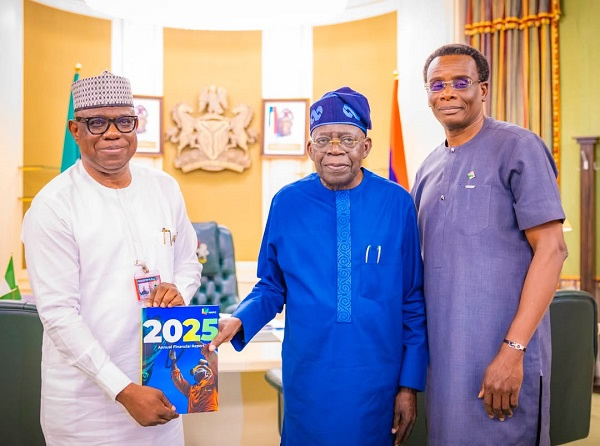
Group Chief Executive Officer, NNPC Limited, Engr. Bashir Bayo Ojulari, today at the Presidential Villa in Abuja, presented the Company’s 2025 Audited Financial Statement (AFS) to President Bola Ahmed Tinubu, GCFR.
Ojulari, who was accompanied by the Company’s Group Chief Finance Officer (CFO), Dapo Segun, presented the statement, which delivered impressive results that include ₦7.2 Trillion Profit After Tax (a 33% rise compared to ₦5.4 Trillion in 2024), ₦5.8 Trillion dividend and ₦34.5 Trillion revenue.
On 29th September, 2026, NNPC Ltd announced its audited results for the year ended 31 December 2025, following its Annual General Meeting and second Earnings Call with financial and business analysts.
The results highlight the Company’s growing earnings strength and improved operational performance, laying the foundation for future growth.
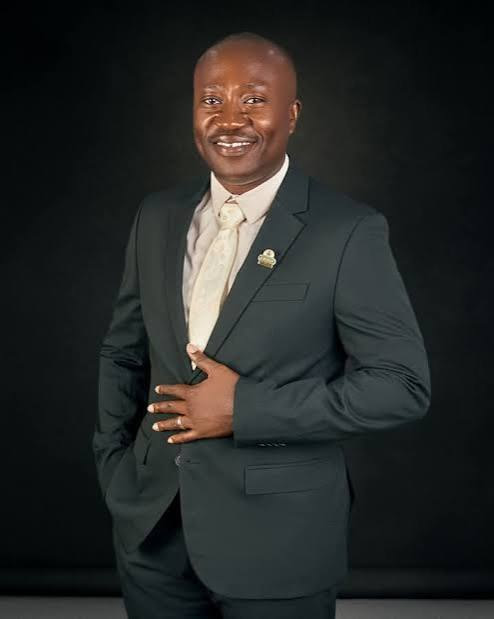
The National Chairman of the Nigerian Institution of Marine Engineers and Naval Architects (NIMENA), Dr. Eferebo Sylvanus has been honoured with the Maritime Innovation and Technology Leadership Award at the 15th Democracy Heroes Award Africa.
Eferebo received the honour at the ceremony held at the weekend at the Transcorp Hilton, Abuja, in recognition of his professional leadership and contributions to marine engineering, naval architecture and maritime technology.
The award comes amid growing calls for Nigeria to harness its maritime resources through indigenous expertise, technological advancement and research-driven industrial development.
The Democracy Heroes Award Africa, now in its 15th edition, recognises individuals making contributions across different sectors.
Eferebo’s recognition places a spotlight on a specialised but strategically important profession whose impact extends beyond engineering into industrial development and the wider blue economy.
As Nigeria continues to explore new opportunities in maritime trade, offshore energy and shipbuilding, the challenge will be ensuring that professional recognition is matched by sustained investment in research, infrastructure, training and the practical application of homegrown technology.
With more than two decades of experience in engineering consultancy and technical leadership, Eferebo leads NIMENA, a professional body committed to advancing marine engineering through research, education, technical standards and industry collaboration.
His academic background includes a Bachelor of Technology in Marine Engineering, a master’s degree in Naval Architecture and Ship Construction, and a doctorate in Naval Architecture and Shipbuilding from Rivers State University, Port Harcourt.
He is also a Fellow of the Nigerian Society of Engineers and a registered engineer with the Council for the Regulation of Engineering in Nigeria (COREN).
Beyond his professional credentials, Eferebo has built a career around developing technical solutions for Nigeria’s maritime and offshore industries.
He is the founder and chief executive officer of Somatrix Marine Limited, an engineering consultancy involved in marine consulting, ship design, marine surveys, construction management and research and development.
His leadership extends to engineering regulation and policy development, including work on maritime engineering standards and local content development.



Benue Bishop Shuts Schs, Hospital, Parish In Alia’s Community Says “Church Cannot … Expose Priests, Students To Danger”
Spread the loveBy Felix Umande The Catholic Bishop of Gboko, Most Rev. William Avenya, has ordered the indefinite closure of...


President Tinubu Receives NNPC’s 2025 Audited Financial StatementBy Aliyu Musa
Spread the loveGroup Chief Executive Officer, NNPC Limited, Engr. Bashir Bayo Ojulari, today at the Presidential Villa in Abuja, presented...


NIMENA chair, Sylvanus receives tech leadership awardBy Philip NyamAbuja
Spread the loveThe National Chairman of the Nigerian Institution of Marine Engineers and Naval Architects (NIMENA), Dr. Eferebo Sylvanus has...


SDP crises: Court strikes out criminal case against Shehu Gabam
Spread the loveBy Saint Mugaga A Magistrate Court in the Federal Capital Territory (FCT), Abuja, has struck out a criminal...


Wike Orders Removal of Illegal Structures, Stops Unauthorised Commercial operations
Spread the loveBy Isa Abdul, Abuja Wike has ordered the immediate enforcement of operations against unauthorised commercial activities and illegally...


Benue Govt Closes Two Schools in Makurdi Over Textbook Sales Violation
Spread the loveBy Vincent Tyosuugh Two academic institutions, Orenda Opal Schools have been closed by the Benue State Government over...

Only Deaf, Dumb, and Blind Can Tell Us He’s not Hearing the Truth About Nigerians’ Suffering –Cardinal Onaiyekan
Spread the loveBy Son Tertsea, Abuja Cardinal John Onaiyekan has explained why the reactions to his interview with Arise TV’s...


Nigeria Fighting Cervica Cancer: 18 Million Girls Vaccinated
Spread the loveBy Nick Ibe, Abuja In its intensified efforts to eliminate cervical cancer in Nigeria, the Federal Government said...


Bauchi Govt: Minimum Pension Now N32,000, Pays Gratuities To 2012, 2013 Retirees
Spread the loveBy Michael Lim As part of effort to reduce the huge backlog of gratuities, the Bauchi State government...


Nigeria’s Overall Best Teacher From Ogun Shows: Where You Start in Life Does Not Matter
Spread the loveBy Seyi Balogun, Lagos The emergence of Nigeria’s Overall Best Teacher for 2026 at the Federal Government’s President’s...