
Business and Economy
FCCPC Probes Why Nigerians Pay More for Cement than African Neighbours

–Possible price manipulation
–Search for alternative to cement on
By Nick Ibe
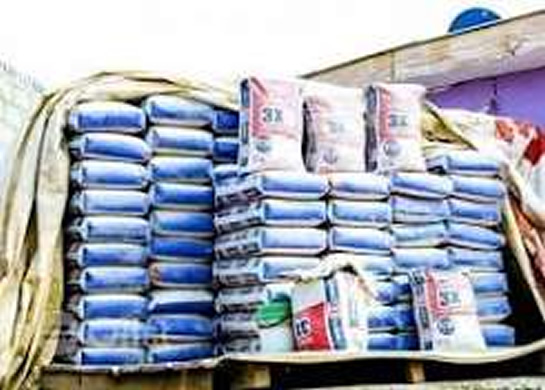
The Federal Competition and Consumer Protection Commission has said its preliminary investigation into Nigeria’s cement industry suggests likely manipulation of cement prices, following widespread complaints over the soaring cost of the commodity despite the country’s large production capacity and abundant limestone deposits.
It has also opened an investigation into possible price manipulation in Nigeria’s cement industry after a three-month inquiry raised concerns that prevailing market conditions may not fully explain the cost of the building material.
The preliminary findings followed a cross-border study conducted by the commission’s Anticompetitive Practices Department in response to widespread complaints over the rising cost of cement.
In a statement issued on Tuesday by the FCCPC Director of Corporate Affairs, Ondaje Ijagwu, the commission said its investigation compared Nigeria’s cement market with those of Kenya, Tanzania, South Africa, Egypt, Morocco, Algeria and Togo.
An analysis of findings in the FCCPC report showed that the cost of cement in Nigeria is higher than the prices of the same quantity of the commodity in neighbouring African countries.
The study examined the availability of limestone, population, production capacity, consumption and retail prices. The statement read:
“Findings from an industry-wide investigation conducted by the Federal Competition and Consumer Protection Commission suggest possible manipulation of prices of cement in the Nigerian market.
“This is the preliminary summation of the 40-page field reports collated following a three-month cross-border study by the Anticompetitive Practices Department of the Commission, undertaken in response to widespread public complaints over the high cost of cement, a common staple in the country’s construction industry.”
The commission noted that Nigeria has substantial limestone deposits and installed cement production capacity estimated at between 60 million and 65 million metric tonnes annually, against domestic consumption of about 25 million to 30 million metric tonnes.
Despite the reported excess capacity and Nigeria’s position as a net exporter to neighbouring countries, the commission said domestic prices had continued to rise.
Market intelligence reviewed by the FCCPC showed that a 50kg bag of cement, which sold for between N9,300 and N9,700 in January, rose to between N10,500 and N13,000 by mid-year. By July, prices of between N13,000 and N15,000 were reported in some parts of the country.
The commission also found that cement sold at lower prices in some African markets. In Kenya, where the population is about 58.6 million and cement demand was estimated at 9.3 million metric tonnes in 2025, a bag sold for about $5.40, or N7,344.
In Tanzania, with a population of about 66.3 million and similar cement demand, a bag sold for about $4.80, or N6,528. In Togo, which the commission said has no limestone deposits, cement retailed at about $6.75, or N9,180 per bag.
The FCCPC said the price disparity had raised questions about why Nigeria’s significant production capacity and raw material endowment had not translated into greater downward pressure on prices.
It said industry players had attributed the high prices to energy costs, naira depreciation, imported machinery and spare parts, as well as transportation and logistics expenses.
However, the commission said it was testing those explanations against verified information on production costs, pricing, capacity utilisation and other market conditions.
“Of particular concern to the commission is that this level of production capacity has not resulted in the downward pressure on domestic prices that might ordinarily be expected in a competitive market with substantial excess capacity.
“Information provided by industry participants has identified energy costs, depreciation of the Naira and its effect on imported machinery and spare parts, as well as transportation and logistics costs, among the factors contributing to cement prices.
“The commission is testing these explanations against verified information on costs, production, pricing and market conditions. However, the weight of preliminary findings provides sufficient grounds for the investigation to continue,” the statement said.
The FCCPC said the preliminary findings provided sufficient grounds to continue the investigation and determine whether cement prices were driven by legitimate costs or by anti-competitive practices.
The probe will examine possible coordinated conduct, abuse of market power, restriction of domestic supply and anti-competitive distribution practices.
Accordingly, the commission has issued Notices of Commencement of Investigation and Summons to Produce to key players in the sector, demanding records on pricing methodologies, production, capacity utilisation, exports and commercial relationships.
“Next is to determine whether prevailing cement prices can be explained by legitimate costs and market conditions, or whether there is evidence of coordinated conduct, abuse of market power, restriction of domestic supply, anti-competitive distribution practices or other conduct contrary to the provisions of the FCCPA,” it added.
Commenting, the Executive Vice Chairman and Chief Executive Officer of the FCCPC, Tunji Bello, said the investigation was necessary because of cement’s strategic importance to the economy.
“Cement occupies a strategic place in the Nigerian economy. Its price affects the cost of building a home, developing commercial property, delivering public infrastructure and, ultimately, the cost of doing business. When concerns persist about how such an important market is functioning, the Commission has a duty to look beyond assumptions and establish the facts,” Bello said.
He stressed that the investigation was not aimed at dictating how companies should conduct their businesses or limiting legitimate profits.
“Businesses are entitled to make legitimate commercial decisions and earn returns on their investments. Competition law does not prevent that. Its purpose is to protect the competitive process, so that prices, output and other market outcomes are determined by genuine competition rather than conduct that unlawfully restricts it,” Bello said.
The investigation comes amid growing pressure on the construction sector, where rising cement prices have increased the cost of housing and infrastructure projects across the country.
OPS, economists react
Building sector leaders and economists explained that the factors behind the high cement prices in Nigeria are compounded; on the one hand, it is largely structural, including transportation of limestone on impassable roads, and on the other hand, it could be influenced by monetary policy, including taxes.
They noted that there is only so much that the FCCPC could do, especially because any government intervention risks could impact free trade.
Reports indicate that, business leaders, including the Chairman of the Lagos Chamber of Commerce and Industry Construction Group, Soji Adeniji, explained that his experience in a recent project confirmed the FCCPC report.
“I was in Canada recently, and a friend of mine who is having a project in Canada was contemplating buying cement from abroad. He was of the opinion that, why can’t we buy cement from Nigeria, as in he wants to import cement from Nigeria and stuff like that.
“By the time he did his calculations, he found out that cement is not as cheap in Nigeria, and that we could arrange for the importation.
Eventually, as the report stated, he found out that Turkey is more price-friendly. He was able to establish a relationship with Turkey. Of course, the Tanzania, Kenya market too was a bit preferable, which boils down to the fact that the price of cement in Nigeria is higher. But then the question would be, what is the location of that kind of high cost?”
Adeniji also acknowledged that the cement market in Nigeria is experiencing a moment of scarcity, but noted that the given reasons may not be as satisfying.
“Why are we having scarcity? Some people are saying because it was raining and therefore limestone deposits, well, that is not, I mean, for me, for the past two weeks now, since the beginning of August, there has not been much rainfall to affect any production. But what is happening to the limestone would be another thing,” the LCCI construction group leader stated.
He noted that other business factors could play a role, adding, “If you check the production line and look at that production chain line, you look at it from limestone to the facility that is an infrastructure facility for production.
“You look at the economy, which is stable, so we cannot be saying that things are changing. The economy is stable, and has been consistent for too long a time. Then other challenges, maybe with the manufacturer.
“You’d notice that Lafarge has just changed. A company called HBM has just bought over Lafarge, meaning that maybe the management issue or something like that. So, when you look at that production, up to the level of distribution, you’ll ask again, why are we experiencing this? They will be telling you logistics, transportation for delivery, and that kind of thing.
He noted that taxation could be another factor. “Some people from the manufacturer’s side too might be talking about the issue of double taxation, and things like that. If the tax regime is not favorable, there’s nothing definite.”
These experts urged the government to invest in improving supply to meet increasing demand, which may have caused exorbitant prices. They recommended working with researchers and the private sector to develop alternatives to cement for concrete making.
On his part, Professor of Economics and Public Policy, University of Uyo, Prof Akpan Ekpo, said the housing sector, is a very crucial part of investment where the cement issue could be a supply problem.
“This could be more demand than supply. So what the government should do is that you look at that sector properly and see whether you can help that sector.”
Ekpo called on the government to help people who need access to finance in order to be in the cement business. “Otherwise,” he said, “you’d keep having this problem of high cost of cement.”
A member of the Nigerian Institute of Building and Yaba College of Technology researcher, Samuel Shonibare, said, “I urged the government to look for alternatives to the use of cement in construction. There has been a lot of research that studied other materials that can be used to replace cement partially in concrete production.
“I’m trying to look at the probability of using rice shells as partial replacements for cement in concrete production. It’s one research project I’m currently working on. Not that I’m even trying, I’m on it.”
He explained that if the country reduces the use of cement in construction, of course, there will be a drastic reduction in the price of cement that is being used in construction. “So the recommendations I would make for now is telling the stakeholders in the construction industry to focus on research that will yield an alternative material to cement. If the producers of cement have discovered that there’s a shift in the usage, I think that will lead to a reduction in the price,” Shonibare noted.
Meanwhile, the Chief Executive Officer of the Centre for Promotion of Private Enterprise, Dr Muda Yusuf, urged the government to carry out more rigorous research to ensure a detailed solution.
He said, “In order for a balanced view, it is important to hear from the FCCPC what the producers and distributors of cement have to say. Secondly, we need to know the cost structure of the cement producers and suppliers in the foreign countries. It will help us gain clear insight.”
Yusuf noted that understanding what factors impact the pricing of cement in the other countries will enrich the FCCPC inquiry.
He added, “The report needs to be more rigorous and show us the cost structure in the other countries. We need to know their cost of production, taxes, logistics and energy. Having the factors that underlie the prices will help (the probe), since it is presented as a comparative report.”

By Son Tertsea, Abuja
The three tiers of government, federal, states and local governments, have shared the Federation Account Allocation Committee (FAAC) sum of N2.441 trillion.
The amount was from the October 2026 Federation Account Revenue, which was shared at the FAAC meeting held in Abuja on Wednesday.
The N2.441 trillion comprised distributable statutory revenue of N1.688 trillion and Value Added Tax (VAT) revenue of N752.488 billion.
A communiqué issued by the Federation Account Allocation Committee (FAAC) indicated that gross revenue of N3.811 trillion was available in the month of October 2026.
Total deduction for cost of collection was N128.797 billion while total transfers, refunds and savings stood at N1.241 trillion.
According to the communiqué sent to media houses by Bawa Mokwa, Director of Press of the Office of the Accountant-General of the Federation, Wednesday night, gross statutory revenue of N2.999 trillion was received for the month of October 2026.
This was lower than the sum of N3.096 trillion received in the preceding month by N97.323 billion.
Gross revenue of N812.446 billion was available from the Value Added Tax (VAT) in October 2026. This was lower than the N816.872 billion available in the month of September 2026 by N4.426 billion.
The communiqué stated that from the N2.441 trillion total distributable revenue, the Federal Government received a total sum of N856.065 billion and the state governments received a total sum of N809.909 billion.
The Local Government Councils received N568.701 billion, while the sum of N206.384 billion (13% of mineral revenue) was shared to the benefiting State as derivation revenue.
On the N1.688 trillion distributable statutory revenue, the Federal Government received N780.816 billion and the State Governments received N396.040 billion.
The Local Government Councils received N305.331 billion and the sum of N206.384 billion (13% of mineral revenue) was shared to the benefiting States as derivation revenue.
From the N752.488 billion distributable Value Added Tax (VAT) revenue, the Federal Government received N75.249 billion, the State Governments received N413.868 billion and the Local Government Councils received N263.371 billion.
In October 2026, Excise Duty and CET Levies increased marginally, while Petroleum Profit Tax (PPT), Hydrocarbon Tax (HT), Petroleum Royalties, Import Duty, Companies Income Tax (CIT), CGT & SDT, Value Added Tax (VTA), Mineral Royalties, and Gas Flared Penalty, Rental Gas Flared Fee and Misc. Oil Revenue all decreased.
By Seyi Balogun, Lagos
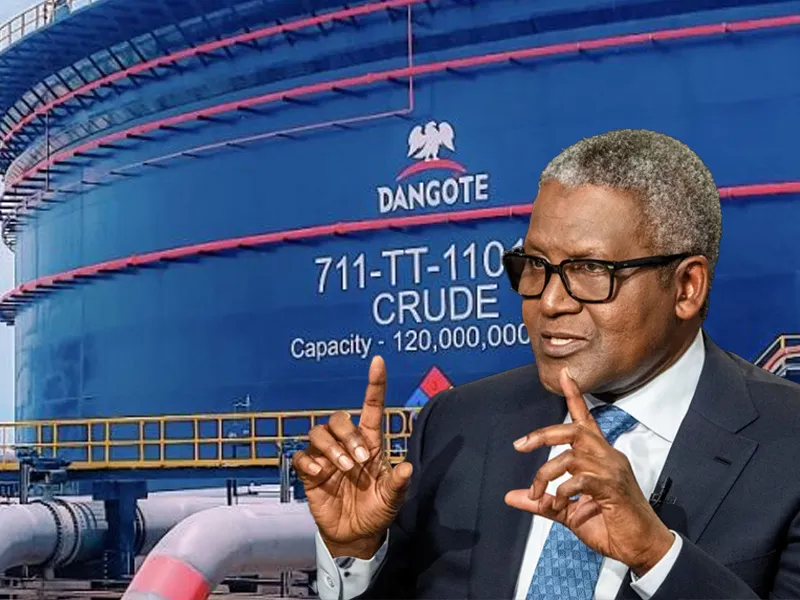
Following the overwhelming response to Dangote Petroleum Refinery’s initial public offering (IPO), attracting share applications worth approximately ₦5.85 trillion from about 3.8 million investors, Nigeria’s capital market has recorded a major investment milestone.
The subscription value is about three times the refinery’s initial fundraising target of ₦2.15 trillion, highlighting the level of interest in the country’s largest private-sector refining investment and the growing appetite for equity participation in major Nigerian businesses.
The offer opened on September 14 and closed on October 27, making 4.1 billion shares available at ₦525 each. However, applications reached approximately 11.15 billion shares, reflecting demand that significantly exceeded the number initially offered.
The figures point to a broad investor base, with retail investors accounting for the largest number of applications. Nearly 3.8 million individual subscribers represented about 84.39 per cent of the investor base, indicating considerable interest among Nigerians in acquiring ownership stakes in the refinery.
Their participation, however, tells a different story when measured by investment value. Retail applications amounted to approximately ₦32.69 billion, representing just 0.56 per cent of the total subscription value.
In contrast, three applicants accounted for approximately 46.72 per cent of the shares requested, with applications valued at about ₦2.73 trillion. The disparity highlights how a relatively small group of major investors can account for a substantial share of capital in large public offers, even when individual investors dominate participation.
International interest also contributed significantly to the subscription figures. Applications from investors outside Nigeria reportedly reached $2.1 billion, while domestic investors accounted for approximately $1.9 billion.
South Africa’s Public Investment Corporation, which manages pension assets for public-sector workers, was among the international institutions reported to have expressed interest in the offer. Nigerian pension fund managers also indicated interest in acquiring shares.
The offer reportedly attracted investors from 120 countries, including all 54 African nations, extending the refinery’s investment appeal beyond Nigeria’s borders.
The strong subscription response comes as the company advances plans for a $14.3 billion expansion programme over five years. Dangote Refinery intends to increase its refining capacity from approximately 650,000 barrels per day to 1.4 million barrels per day by 2029.
The proposed expansion is expected to strengthen its position in the global petroleum industry while increasing its ability to supply refined products across Nigeria and other African markets.
The public offer forms part of the company’s broader financing strategy for this expansion. Alongside the expected IPO proceeds, the refinery plans to leverage internally generated cash flow and additional financing to support its investment programme.
To accommodate demand beyond the original offer, the Securities and Exchange Commission has reportedly permitted an additional oversubscription of up to 30 per cent, subject to regulatory approval. This could increase the final amount raised beyond the initial target.
However, the ₦5.85 trillion recorded represents applications submitted by investors, not the actual proceeds from the offer. The final amount will depend on the shares allotted following the completion of the regulatory and allocation processes.
As attention shifts to the final allotment and subsequent listing on the Nigerian Exchange, the offering presents an important development for Nigeria’s investment landscape.
For the refinery, the scale of investor interest provides an opportunity to broaden its ownership structure and secure additional funding for its expansion ambitions. The next phase will be measured by how effectively it translates that confidence into operational growth, business performance and long-term shareholder value.
Business and Economy
Refinery IPO Didn’t Hit 10m Investors’ Target: But Shows Investment Habit Changing Fast in Africa — Dangote
By Seyi Balogun, Lagos
The initial public offering (IPO) of the Dangote Industries Limited (DIL), for the company’s refinery business did not achieve its 10 million investors target, Aliko Dangote, chairman of the group said..
Though falling short of the target, the IPO attracted “millions of investors”, according to Dangote, who revealed this at the 25th annual conference of the Women in Management, Business and Public Service (WIMBIZ) in Lagos.
The billionaire said the number of investors is yet to be officially determined, but attributed the shortfall to the limited time available for the offer and difficulties some prospective investors faced in accessing it.
“We cannot tell the figure right away because we have not reported to this, but we’ve gotten an amazing demand from various people,” Dangote said.
“If you look at it, the largest participating shareholders, like here now, was I think GTBank. When they did their own, it was 200,000. Okay, we are talking about millions of people that participated.
“Even in Kenya, Safaricom was the largest, less than 900,000. Saudi Aramco worldwide was about five million. So, and I’m sure we are not that far away.
“We didn’t hit the 10 million because of time constraint, and a lot of people, they didn’t know how to access.
“But it’s the shared trust of public enterprise that we have today in Africa, and that’s why people are now beginning to remove that money under their mattresses to go and invest.”
Tagged ‘The People’s IPO’, the Dangote refinery IPO, offered 4.1 billion shares at N525 each, with a minimum subscription of 10 shares costing N5,250.
The offer opened on September 14 and was extended to October 27.
Dangote had said the company was targeting 10 million retail investors as part of efforts to broaden ownership of the refinery beyond institutional and high-net-worth investors.
Reuters reported that more than two million investors had subscribed through digital channels before the offer closed, while the IPO attracted about N6.4 trillion in orders from Nigerian retail and institutional investors — roughly three times the targeted offer size.
Dangote said subscriptions came from 120 countries, including all 54 African countries.
Asked whether the IPO had changed his view on how Africa could mobilise capital from within the continent, Dangote said, “I think yes, it has actually changed. It has changed things dramatically. Things are really changing very fast”.



ABU DSS student wins N1m prize at essay competition
Spread the loveA student of Demonstration Secondary School, Ahmadu Bello University, Adejoh Joshua Unekwu, has clinched a second position at...


Football Legend, Segun Odegbami, Attacked in Abeokuta, Escapes Death
Spread the loveBy Seyi Balogun, Lagos With no clear knowledge of the assailants or their motive, former Super Eagles captain...

FG, Chinese Firm Agree to Produce CNG Buses in Ibadan
Spread the loveBy Seyi Balogun, Lagos To introduce compressed natural gas-powered buses and establish a local assembly plant, to reduce...


JAMB UTME Free for Candidates with Disabilities, Fee Refund at Exam Centres
Spread the loveBy Isa Abdul, Abuja Special examination support has been established for candidates with disabilities, by the Joint Admissions...


Sharing Money is Digging Hole for Eco Woes, Can’t End Poverty – Fasua
Spread the loveBy Son Tertsea, Abuja A warning has been issued that distributing cash to Nigerians without addressing underlying economic...


“I conceded defeat to Buhari, a statesman that loved God, Nigeria.’ –Jonathan
Spread the loveBy Isa Abdul, Abuja The reason for conceding defeat to the late President Muhammadu Buhari in the 2015...


Secrets Behind Flamingos’ World Cup Win – Busari:
Spread the loveAfter guiding Nigeria’s Flamingos to a historic FIFA U-17 Women’s World Cup triumph, head coach Akeem Busari speaks...


Failure to Secure NNPCL GMD Job: EFCC Arraigns Woman Over N1.1 bn Fraud
Spread the loveBy Isa Abdul, Abuja One Halimat Adenike Tejuosho was Wednesday arraigned before a High Court of the Federal...

Let’s Honor All Pioneer Paramount Rulers Across Tiv and Idoma Lands.
Spread the loveBy Peters Ichull Today, the Tiv nation and the entire Benue family pause in solemn reflection to mark...


NKST Synod Says: “Alia Is A Talk-And-Do Governor”, Deserves Re-election in 2027
Spread the loveBy Felix Umande The NKST Synod has declared its support for the re-election of Benue State Governor, Rev....