
General News
How Sokoto Communities Have Disappeared Ovet Night,

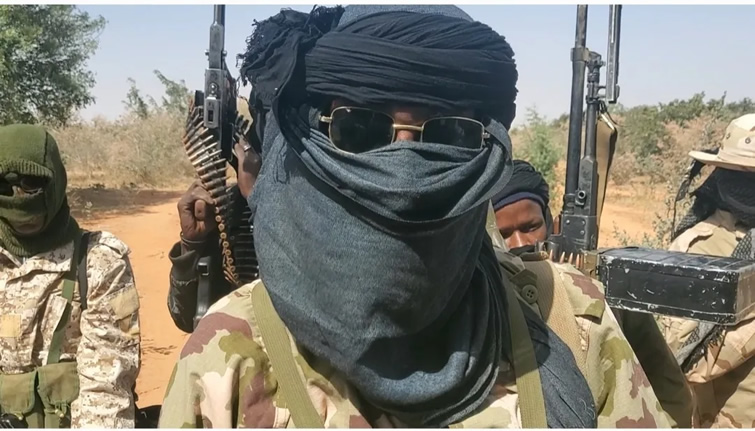
Animashaun Salman traveled into the heart of Danchadi District in Sokoto State to document the stories behind the statistics, revealing how banditry is not only claiming lives but emptying entire communities and turning once-thriving villages into ghost settlements in the state.
More than 30 villages have fallen silent.
Where children once played, markets bustled and farmers prepared for another planting season, empty homes now stand as grim reminders of lives interrupted. Across Danchadi District in Bodinga Local Government Area of Sokoto State, over 30 villages have been deserted after coordinated bandit attacks forced thousands of residents to flee, leaving behind generations of memories, livelihoods and hope.
For many families, the journey to safety began with nothing more than the clothes on their backs. Homes were abandoned, livestock—their life savings—were rustled, farms were left untended, and loved ones became separated in the chaos. Some survivors are still searching for missing relatives, while others are returning to communities stripped bare, not because they feel safe, but because they have nowhere else to go.
Homes that once echoed with children’s laughter now stand deserted. Farms lie untended at the height of the rainy season, while thousands of residents have fled with little more than the clothes on their backs after heavily armed bandits launched coordinated attacks on Danchadi District in Bodinga Local Government Area of Sokoto State.
The raids left at least eight people dead, more than 1,000 livestock stolen and entire communities emptied, triggering one of Sokoto’s worst episodes of mass displacement this year.
Beyond the casualty figures lies a far deeper tragedy. The attacks have shattered farming communities, wiped out livelihoods built over generations and exposed the fragile security architecture protecting many rural settlements across northwestern Nigeria.
For residents of Danchadi, the devastation cannot be measured by the death toll alone. It is written in abandoned homes, deserted villages and families scattered across neighbouring communities in search of safety.
The latest assault ranks among the largest incidents of mass displacement recorded in Sokoto this year, highlighting the growing reach of armed groups into communities that had until recently escaped the worst of the region’s violence.
The District Head of Danchadi, Alhaji Lirwanu Mafaran, Kuwarun Sarkin Musulmi, who documented the attacks in an official report submitted to the Bodinga Local Government Council and security agencies, described the assault as unprecedented.
Speaking after further investigations, the traditional ruler said the death toll had risen from six to eight, adding that many residents were still missing while hundreds had fled to neighbouring communities.
“My people are living in fear and confusion. Some women are still searching for their husbands after the attacks,” he said.
His words capture a district battling not only insecurity but the profound humanitarian crisis left in its wake.
The attacks affected more than 30 communities, including Gidan Gadanga, Gidan Dan Bube, Dutsin Mai Gunya, Batsauje, Sire Modi, Gwantsi, Kore Maiganga, Bangi Rafi, Bangi Dutsin, Yabawa, Lageji, Bille, Gonin Gari, Wumumu, Chohi, Saran Malan, Wure Yal’dde, Gidan Hodi, Dabugi, Rukusawa, Tunga, Lakes, Maikataru, Dutsin Toka, Karaje, Kwantsi Buga, Yan Gidaje, Runbuki, Kwantsi Tunga and Lau Gari.
Today, many of these settlements are ghost villages.
Residents fled in panic, abandoning homes, harvested food, household belongings and livestock that represented decades of hard work and family wealth.
The economic toll is staggering.
In rural Sokoto, livestock are far more than animals. They are savings accounts, farm machinery, school fees, dowries and the family’s insurance against hardship.
The rustling of more than 1,000 cattle, camels and other livestock has wiped out the wealth of dozens of households almost overnight, pushing many families into uncertainty.
The violence has also disrupted farming at one of the most critical periods of the agricultural calendar, raising fears that the attacks could deepen food insecurity and further weaken the rural economy long after the gunmen have gone.
Perhaps the most troubling revelation from the district head was not what happened during the attacks, but what happened afterwards.
According to him, security operatives visited the affected communities shortly after the raids but did not maintain a permanent presence, leaving frightened residents to fend for themselves.
“As I am speaking with you, there are no security personnel in the area,” he said.
For many villagers, that single statement explains why returning home remains a terrifying prospect. Across rural Sokoto, residents have long complained that attacks often last for hours before security forces arrive, if they arrive at all.
Determined to prevent a complete exodus, the district head said he spent the night at his palace with displaced residents, comforting frightened families and persuading them not to abandon the district for Sokoto metropolis.
His intervention, he said, convinced some to stay. But for many others, fear had already taken root.
‘They stayed until midnight’
For Malam Mainasara Danjumma, a resident of Kyaluje village, the nightmare stretched for nearly 10 hours.
The gunmen, he recalled, stormed the community around 2 p.m. Instead of carrying out a swift raid, they remained until midnight, moving from house to house almost unchallenged.
“They searched virtually every home, stole our valuables and mobile phones, assaulted women and killed three people, including our Chief Imam,” he recounted.
“We are in a state of confusion and distress. Some of us are still searching for our family members because the village has been completely devastated.”
His testimony echoes those of other survivors, who described attackers roaming freely from one village to another with little or no resistance.
The prolonged assault has renewed questions about security response times and the level of protection available to isolated rural communities increasingly vulnerable to armed groups.
As news of the attacks spread, anger boiled over in Bodinga town.
Hundreds of residents poured onto the Sokoto–Jega–Yauri highway, one of the Northwest’s busiest transport corridors, blocking traffic in protest against the worsening insecurity.
Burning tyres sent thick smoke into the air as stranded motorists watched traffic grind to a halt. Some vehicles were vandalised before security operatives dispersed the protesters and restored order.
For the demonstrators, the road blockade was not merely an act of defiance. It was a desperate plea for communities they believe have been abandoned to repeated attacks.
The assault on Danchadi is only the latest in a disturbing pattern of violence across Sokoto State.
In recent weeks alone, communities in Tureta, Sabon Birni, Rabah, Goronyo, Wurno and Bodinga have recorded killings, kidnappings and large-scale cattle rustling. Village heads, Islamic clerics, farmers and community guards have all fallen victim.
The recurring attacks suggest that despite ongoing military operations, armed groups remain capable of mounting coordinated raids across multiple local government areas.
Security analysts say the Northwest’s vast forests, difficult terrain and porous borders continue to provide criminal gangs with operational advantages.
The Danchadi district head believes the attackers entered through neighbouring Tureta after crossing from Zamfara State, underscoring the cross-border nature of the security challenge.
For the survivors, however, the crisis is no longer measured in security assessments but in daily survival.
Hundreds of displaced residents are now sheltering in schools, markets and the homes of relatives in Danchadi, Bodinga and Sifawa.
Many fled without food, clothing or personal belongings. Children have been forced out of school. Families remain separated, while women who survived the attacks continue to grapple with psychological trauma.
Although the Bodinga Local Government Council has distributed relief materials, including plastic mats, community leaders say the assistance falls far short of what is needed.
Food, medicines, temporary shelter and psychosocial support remain urgent priorities. Without sustained intervention, they warn, what began as an emergency displacement could evolve into a prolonged humanitarian crisis.
The scale of the tragedy has also drawn increasing political attention.
In the days following the attacks, senior government officials—including the Speaker of the Sokoto State House of Assembly, the Secretary to the State Government, security chiefs and federal lawmakers representing the area—visited Bodinga to assess the situation and reassure displaced residents.
The lawmaker representing Bodinga, Dange-Shuni and Tureta Federal Constituency, Nasiru Shehu Bobo, said additional security personnel had been deployed to the affected communities in an effort to restore calm.
But for many displaced residents, the deployment comes after the damage has already been done.
The scale of the attacks has also drawn political attention.
The governorship candidate of the African Democratic Congress in Sokoto State, Hon. Manir Muhammad Dan’iya, described the displacement of more than 30 communities as both a humanitarian and security emergency, urging governments at all levels to respond with greater urgency.
In a statement issued by his media aide, Aminu Abdullahi, the former deputy governor warned that the continued displacement of rural communities poses a serious threat to Sokoto’s economy, food security and social stability.
“It is deeply troubling that entire communities are being displaced while many families continue to live in fear,” Dan’iya said.
“The protection of lives and property remains the foremost constitutional responsibility of government, and every effort must be made to restore confidence among our people.”
He called for stronger intelligence gathering, closer collaboration among security agencies, increased engagement with traditional rulers and immediate humanitarian support for displaced families, while urging the Federal Government and the Sokoto State Government to reinforce security operations in vulnerable communities.
Yet even as officials announce new security measures, some residents have already begun making the painful journey back to their villages.
It is a decision born not of confidence, but of necessity.
Displacement is costly. Families cannot afford to remain indefinitely in schools, markets or the homes of relatives. The rainy season is advancing, crops need tending and survival depends on returning, even when fear remains.
But home is no longer what they left behind.
Many houses have been looted. Livestock—the wealth of entire households—has disappeared. Farms lie abandoned, and the uncertainty of another attack hangs over communities struggling to rebuild.
For these families, recovery will require far more than relief materials. It will depend on lasting security, the restoration of livelihoods and renewed confidence that the villages they fled can once again become places where life is possible.
Official records reduce the tragedy to numbers: more than 30 villages abandoned, eight people killed and over 1,000 livestock rustled.
But statistics cannot capture what has truly been lost.
Every deserted village tells the story of generations uprooted. Every displaced family carries memories of a home left behind. Every stolen herd represents years of labour wiped away in a single day.
The tragedy unfolding in Danchadi is a reminder that the cost of banditry extends far beyond casualty figures. It empties communities, destroys local economies and leaves deep psychological scars that may outlast the violence itself.
For Sokoto, the challenge is no longer only how to stop the next attack. It is how to ensure that communities emptied by fear do not become permanent ghost villages—forgotten not only by those forced to flee, but by the institutions charged with protecting them.








General News
PERSPECTIVE: Tiv Leaders Must Hear This: While Akwa Ibom Asked For A Future, Tiv Leaders Fight Over A Man

By Edward Tion
I watched the presidential campaign in Akwa Ibom today with a bleeding heart.
Not because I envy Akwa Ibomites. I admire them so very much. I watched a people who understand what politics is for.
Akwa Ibom people came out unanimously. Governor, Senate President, elders, youths, market women, traditional rulers — one voice, one demand: “Give us Ibom Deep Sea Port.”
And the President heard them. On the spot, in Uyo, he approved it. Approved international status for their airport. Because they asked as one people.
That is what unity buys. That is what leadership looks like. That is what politics is supposed to deliver: a port that will open jobs, trade, industries, and a future for millions of unborn children.
Then I looked back home to my own people, the Tiv, and my heart broke.
What do we have to show for all our noise, all our education, all our numbers, all our pride?
Retrogression. Division. Character assassination.
Our educated youths, the very ones who should be building the future, are divided and deployed as foot soldiers in a war over one person’s interest. Not over a project. Not over a port. Not over security. Not over industries. Not over schools. Over one man.
We have reduced the great Tiv nation, a nation of farmers, scholars, warriors, and builders, to a battlefield of who hates who, who insults who, who controls the party structure, who gets the ticket.
What a shame!
Akwa Ibom asked for a Deep Sea Port. What are we asking for?
We are not asking for the revival of our industries. We are not asking for the return of our displaced people. We are not asking for roads that connect our farms to markets. We are not asking for water, for security, for the dualization of federal roads in the state, for anything that will outlive this election cycle.
We are asking: who is loyal to who?
This is not politics. This is psycophancy self-destruction.
Akwa Ibom has taught us a lesson today. Politics is negotiation. Unity is bargaining power. When you speak as one people, even a president listens.
Tiv people, when shall we learn?
When will our leaders sit down, drop their egos, and agree on one single demand for Benue? One project that will change our story for the next 50 years?
When will our youths refuse to be used for character assassinations and instead demand for development, vision, and results?
We cannot continue to fight ourselves while others are building for the future generations.
It is time for Tiv leadership to wake up. It is time for Tiv youths to wake up.
History will not remember who insulted who on Facebook or X. History will remember who built something.
Let us stop fighting over one person, and start fighting for one future.
Tiv Nation Deserves Better. Benue Deserves Better. Nigeria Deserves Better.
General News
Pursue Unity, Peace, Play Active Role in Nigerian Politics, Deputy Speaker, Kalu Urges Igbo Elites, Leaders
By Saint Mugaga
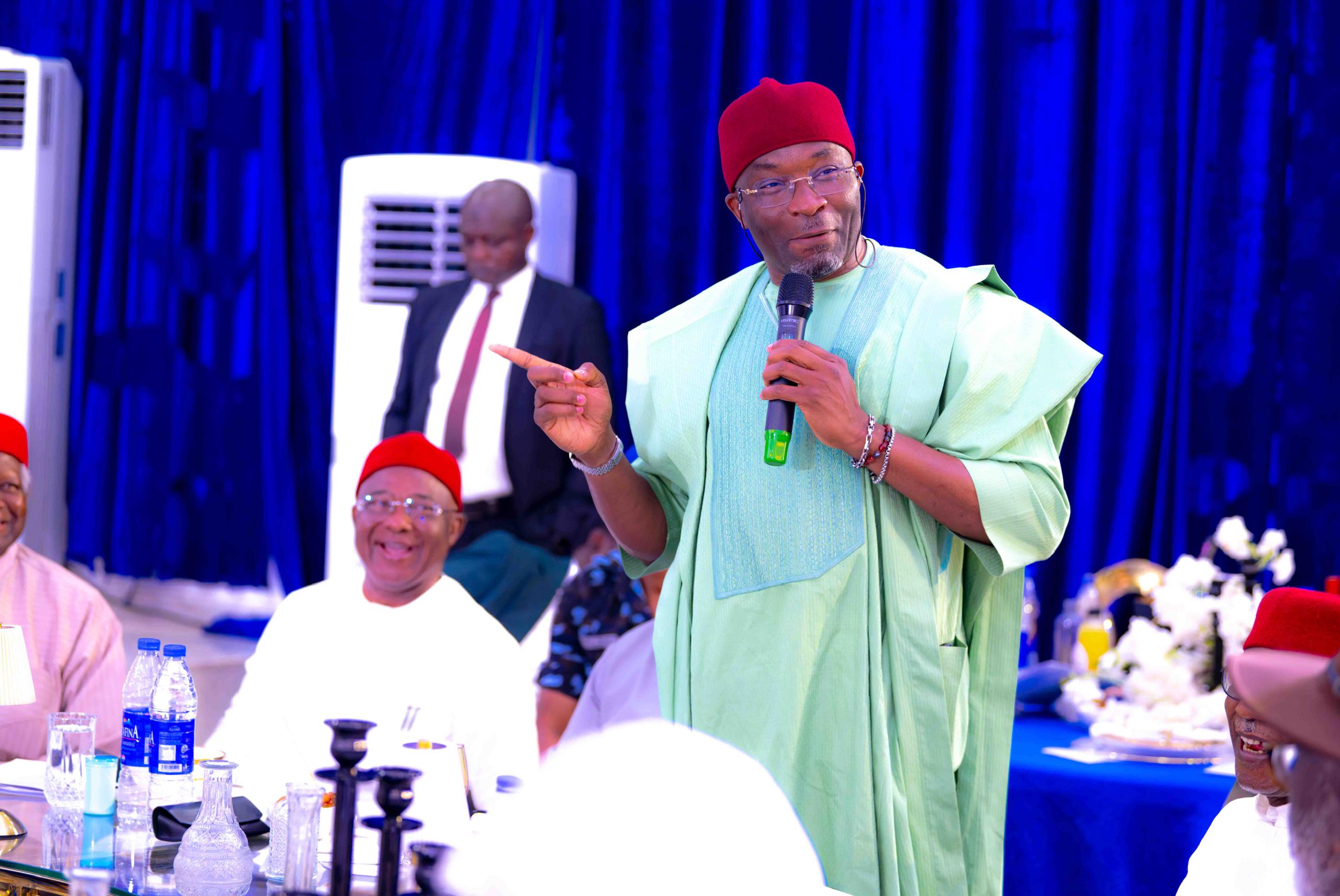
Deputy Speaker of the House of Representatives, Rt. Hon. Benjamin Kalu has called on Igbo elders, leaders and stakeholders to close ranks and speak with one voice in politics, cautioning that disunity has continued to weaken the political strength and heritage of Ndi Igbo of the South East region.
He also urged them to pay more than passive attention to socio-economic issues and get deeply involved into the national politics of Nigeria.
Kalu made the call at the South East Stakeholders’ Convergence (SESC), also described as the South East Elders and Stakeholders Meeting, convened in Owerri, the Imo State capital on Friday to discuss unity, progress and peace in Igbo land.
Addressing the gathering chaired by the former Military Governor of Imo State and Minister of Foreign Affairs, Senator (Gen) Ike Nwachukwu (Rtd), the Deputy Speaker said unity remains the foundation for development, stressing that peace in Igbo communities would only come when leaders reason together in harmony.
He said: “Unity is strength. We will achieve more when we are united. The need for unity cannot be overemphasized. Peace leads to the development of communities”.
Kalu who represents Bende Federal Constituency of Abia State at the National Assembly commended the elders for setting aside their personal engagements to attend the meeting, describing their action as patriotism and genuine love for Igbo land.
“I salute you all, my elders and stakeholders for this thoughtfulness, this great idea to come together and discuss the unity, progress and peace of Igbo land. This is patriotism. You all have what you are doing but for you to leave it and come here to discuss the development of our place, it means you love Igbo land. It shall be well with you all,” he said.
The Deputy Speaker said the upcoming and the contemporary younger generation are encouraged by the elders’ example, likening leadership to a relay race in which one generation hands the baton to the next.
“Some of us who are coming up are encouraged by this unity and patriotism you display. We are glad to see our elders sit together to discuss the future of Igbo land. This is like a relay race, where you run and later hand over the baton to the next person and the next generation. We are coming behind you so that whenever you hand us the baton, we collect it from you and continue with the race of progress and development,” he said.
Kalu however said that without unity, Ndi Igbo risk losing their direction and heritage.
“But if we are not in unity, we will miss our bearing and lose our heritage. But when we reason together in unity and harmony, we achieve greatness,” he said.
Speaking about Nigeria’s political structure, the Deputy Speaker noted that Igbo as one of the major tribes in Nigeria is not standing strong in the national politics.
He further argued that the political numbers of Ndi Igbo are not fully reflected across the five South East states because the people are scattered across the country.
To encourage active political participation, the Deputy Speaker urged a change of mindset, saying the post-war decision by many Igbo people to focus only on personal development and stay away from national politics had not served the region well.
“And it will not be good we shake and be left out in the scheme of things. Please, let’s come together. Let’s unite. When we unite, we gain more respect as a people. But when we work in isolation and silos, we lose our heritage.
“The number of votes of Ndi Igbo is not what we are getting across the five states because we are scattered around the country. If we take a position now and say, Igbo this is our agenda, this is what we want to do, I can assure you, the whole of Nigeria will feel our impact.
“But if we work in silos, every man to himself, to your tent O Israel, it is not encouraging at all. It yields no positive result. It reduces our number.
“After the war, we had believed we will work it out on our own and develop our place. We say we are not interested in politics. It is not our business. We have tried to develop on our own. It is about time we changed that mindset. The politics and governance of Nigeria should be our concern. We should get involved and play an active role because if we are not in the room, we can’t be part of the decision. We need to be part of the decision making process,” he said.
Kalu therefore called for a common position to help Ndi Igbo to deliver with one mind.
“There is no wisdom in saying we are not interested in the politics of Nigeria. It should be our business. Let us say one thing and stick to it with one mind, then, we will see the result of our togetherness. God bless you,” he said.
The stakeholders meeting held in Imo State Government House attracted the presence of Governor Hope Uzodinma as the chief host, some traditional rulers, representatives of religous leaders, women and youth groups from the five eastern States, other prominent Igbo sons and daughters in politics and governance, business, academia amongst whom are former Senate President/Secretary to the Government of the Federation (SGF), Senator Anyim Pius Anyim; immediate past Vice Chancellor of Federal University of Technology, Owerri (FUTO); Prof. Nnenna Oti; former chairman, Police Service Commission, Chief Simeon Okeke; former President-General, Ohaneze Ndigbo, Nze Ozichukwu Chukwu; Chief Tony Chukwu; Amb. Greg Mbadiwe; Prof. Osita Ogbu; Mazi Sam Ohuabunwa and Amb. Okey Emuche.
General News
2027: Amupitan Seeks Royal Support, Partnership to Discharge Mandate Peacefully, Effectively

By Isa Abdul
The National Chairman of the Independent National Electoral Commission (INEC), Professor Joash Amupitan, has said there is no way a successful election can be conducted without the support of traditional institutions, especially in an era bedeviled by voter apathy and thuggery.
Professor Amupitan disclosed this in Lokoja on Thursday while addressing members of the Kogi State Council of Chiefs as part of his activities to assess preparations for the 2027 elections in the North-Central geopolitical zone.
He promised that the commission would strive to organise and supervise a visible, verifiable, credible, free, and fair election in line with its mandate under Section 153 of the 1999 Constitution (as amended).
Amupitan added that the commission has embarked on an assessment tour to evaluate logistics, infrastructure, and personnel across the six geopolitical zones.
to reduce administrative bottlenecks.
The working visit to Lokoja in the North-Central zone, which comprises Benue, Kogi, Kwara, Nasarawa, Niger, Plateau and the Federal Capital Territory, Abuja, has marked the end of the evaluation tour.
He also urged the youth not to be used as instruments of violence during the election:
“I send an unequivocal message to our youth that no political aspiration is worth shedding human blood.”
The INEC chairman, further called on the royal fathers to assist in mobilising the electorate to collect their PVCs, prevail on the youth to shun thuggery and any form of violence, and support efforts to reduce misinformation and disinformation before, during, and after the election.
“The general elections will hold as scheduled in 2027. I have come to seek your support and partnership for us to discharge our mandate peacefully and effectively. INEC has no candidate; the commission is out to discharge its constitutional mandate fully,” Professor Amupitan told the traditional chiefs.
He said the commission under his watch had successfully conducted elections in Anambra, Ekiti, and Osun states and the Federal Capital Territory, Abuja, including 16 by-elections within a year, stressing his resolve to re-enact that feat in the upcoming general election.
At the event, the Kogi State Resident Electoral Commissioner (REC), Dr. Shehu Wahab, said the gathering of traditional rulers and INEC was to foster a unity of purpose that would ensure a peaceful election in 2027.
He added that an interface with custodians of culture and tradition at this crucial period in the electioneering process is essential for a free and fair election.
The Ohinoyi of Ebiraland, HRM Tijani Mohammed Anaje, while speaking on behalf of the traditional rulers, commended the INEC boss for his efforts to ensure a credible, free, and fair election in 2027.
The Ohinoyi of Ebiraland, who is the Vice Chairman of the Kogi State Council of Chiefs, expressed their readiness to support Professor Amupitan in all aspects of the electoral process for a peaceful election.



PERSPECTIVE: Tiv Leaders Must Hear This: While Akwa Ibom Asked For A Future, Tiv Leaders Fight Over A Man
Spread the loveBy Edward Tion I watched the presidential campaign in Akwa Ibom today with a bleeding heart. Not because...


Pursue Unity, Peace, Play Active Role in Nigerian Politics, Deputy Speaker, Kalu Urges Igbo Elites, Leaders
Spread the loveBy Saint Mugaga Deputy Speaker of the House of Representatives, Rt. Hon. Benjamin Kalu has called on Igbo...


2027: Amupitan Seeks Royal Support, Partnership to Discharge Mandate Peacefully, Effectively
Spread the loveBy Isa Abdul The National Chairman of the Independent National Electoral Commission (INEC), Professor Joash Amupitan, has said...


Place 7-Year Ban On Establishment Of New Tertiary Institutions– Edu Minister Begs NASS
Spread the loveBy Son Tertsea, Abuja The Federal government has appealed to the National Assembly to halt the passage of...

Gov Sule to Security Agencies: Fish Out Sponsors of VP Shettima’s Attackers in Lafia
Spread the loveSDP: attackers APC members against Wadada’s candidacy By Isa Abdul, Abuja Prominent personalities in the state planned and...


Wike’s Entry, Allocation of UniAbuja Land a Breach of Court Order– ASUU
Spread the loveBy Nick Ibe, Abuja The Federal Capital Territory Administration’s (FCTA) allocation of some hectares of land belonging to...


Alleged 4 Herbal Concoction Consumers Die in Benue
Spread the loveBy Vincent Tyosuugh After consuming a suspected poisonous herbal concoction allegedly sold to residents of Oju Local Government...


BENUE APC Split Deepens As SGF, Stakeholders Shun Alia Campaign Flag-off, Disown Campaign List
Spread the loveBy Felix Umande The crisis rocking the Benue State chapter of the All Progressives Congress (APC) deepened on...


Defence Minister Invites Cybersecurity, Drone, DefenceTech Experts for Collaboration with DICN
Spread the loveBy Nick Ibe, Abuja Minister of Defence, General Christopher Musa (rtd) has called on Nigerians with expertise in...


Wike’s Rainbow Coalition Faces Storm Over Alleged Split Voting: VP Shettima, SDP, Ondo APC Reject Coalition
Spread the loveBy Son Tertsea, Abuja Nyesom Wike’s Rainbow Coalition has been identified as a split voting device according to...