Connect with us

General News

DSS Dissatisfied with Life Sentence handed Ansaru Commanders: To appeal sentence

Published

on

Department of State Services (DSS)
Spread the love

By Nick Ibe, Abuja

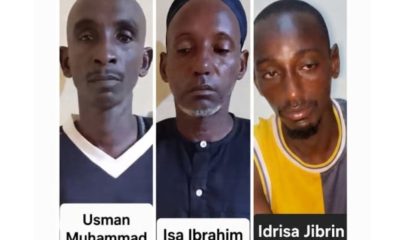
DSS is prepared to appeal to achieve death penalty for the two Ansaru terrorist group commanders given life sentences in Abuja were given by Emeka Nwite. The were sentenced on Monday after they pleaded guilty to a 32-count terrorism charge.

The convicts: Mahmud Usman, also known as Abu Bara’a/Abbas/Mukhtar, described as the self-styled Emir of Ansaru, and Mahmud al-Nigeri (a.k.a Malam Mamuda), his deputy and chief of staff.

The judge handed down the sentence after the convicts changed their plea from not guilty to guilty and, through their lawyer, appealed for leniency.

A senior DSS official, speaking after the judgement, said the agency considers the punishment inadequate given the gravity of the offences.

According to the official, the two men had initially indicated they would plead guilty but later changed their position around the period pupils and teachers were abducted in Oriire LGA of Oyo state by suspected members of the same group.

“For the nearly 60 days the kidnappers held on to the pupils and teachers of Oriire, the Ansaru commanders in our custody changed,” the official said.

“One of the top conditions the abductors gave was the unconditional release of these same Ansaru commanders in exchange for the Oriire kidnap victims.”

The DSS official said the defendants, who had earlier pleaded not guilty, later told the court they were undecided on the plea they intended to enter.

“Justice Nwite even had to hand them an ultimatum to make up their minds on or before Monday’s sitting.

See also  Role Of State Assemblies To Success Of Constitutional Review, Critical - Kalu

“After the Oriire rescue, they came to court to plead guilty to all the charges.

“Allowing the two terror commanders walk away with life sentences will not serve the cause of justice for the two Oriire teachers beheaded by their abductors.

“The reason the terrorists beheaded the two Oriire teacher’s was to put pressure on government to release these two Ansaru commanders.

“It, therefore, wouldn’t be fair to see two men beheaded and their families are made to live with the losses without adequately bringing the culprits to book.”

General News

Akume Inaugurates 10th Surveyor Council, Says Digital Geospatial Data Key To Renew Hope Agenda

Published

on

By

Spread the love

By Felix Umande

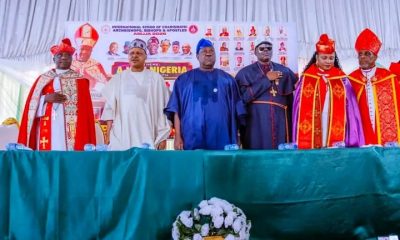
The Secretary to the Government of the Federation, Sen. George Akume, CON, has inaugurated the 10th Surveyors Council of Nigeria, SURCON, describing it as a landmark step toward strengthening Nigeria’s geospatial governance and digital modernisation agenda.

The ceremony took place on Tuesday, 21st July, 2026 in Abuja.

In his address, Sen. Akume said SURCON has a critical role to play in advancing Nigeria’s geospatial infrastructure, regulating and licensing surveying professionals, and promoting best practices.

“In this era of rapid digital transformation, Nigeria’s future depends on a robust national geospatial data infrastructure which must be standardised to ensure seamless interoperability,” he said.

The SGF said the inauguration marks a strategic move by President Bola Ahmed Tinubu’s administration to integrate geospatial intelligence into national planning and security frameworks, to ensure that decisions are informed by verified spatial data.

He noted that moving the Office of the Surveyor General of the Federation under the direct purview of the Presidency has elevated Nigeria’s geospatial governance to a strategic level.

“Surveying is the backbone of national planning. Placing the Office of the Surveyor General of the Federation under the Presidency aligns with the Renewed Hope Agenda’s emphasis on transparency, infrastructure expansion, digital modernisation and efficient land administration,” Akume stated.

According to him, the move has strengthened coordination across ministries, accelerated the development of a unified national geospatial data infrastructure, and will ensure that critical decisions are informed by authoritative spatial intelligence.

Dr. Akume urged the new Council to serve with responsibility, integrity and innovation. He called for an update of licensing standards to include competencies in modern geospatial tools, enforcement of digital practice standards, and stronger monitoring in the oil and gas, mining sectors and national boundary management.

See also  Reps wade into Dangote, NMDPRA rifts, summons Dangote, Ahmed

He also tasked SURCON to prioritise curriculum updates and capacity building to prepare a workforce for a future driven by artificial intelligence and spatial analytics.

The President of the 10th SURCON, Surv. Moshood Onifade Akinwade, fnis, expressed gratitude to the SGF for the opportunity to serve.

“The Secretary to the Government of the Federation has charged us to embrace digitisation; therefore, I assure everyone that we will not fail you. We will work diligently to achieve a digitised geographical management system for Nigeria, contributing to national development and security,” Akinwade said.

In his welcome address, the Permanent Secretary, Office of the Surveyor General of the Federation, Dr. Abubakar Ibrahim Kana, mni, stressed the vital role of surveyors in national development.

“Surveyors play a very vital role in every country and every society. As we can see in Nigeria, we are blessed with land, sea, and many natural resources. Therefore, Surveyors help the government in environmental planning. We cannot underestimate the importance of surveyors and their contributions to national development. The council plays a major role in the governance of Nigeria,” he said.

Continue Reading

General News

Nigeria’s Boko Haram Trials Ineffective, Flawed says Human Rights Watch

Published

on

By

Spread the love

By Isa Abdul

Nigeria’s prosecution of Boko Haram suspects has been criticized as lacking prosecurial effort and skills necessary in advancing justice for serious international crimes.

Worse, the cases continue to target primarily low-level suspects amid raising significant fair trial concerns.

Trials are allegedly conducted without witnesses or circumstantial evidence, with prosecutors dropping seemingly serious charges, while many plea-driven convictions are for aiding armed groups that may have been coerced, and legal defense provided by the government appeared inadequate.

Consequently, Nigerian authorities should ensure that all terrorism trials comply with international fair trial and due process standards, including basing prosecutions on credible and sufficient evidence, and guaranteeing adequate time and facilities to prepare a defence.

All these raise significant fair trial concerns, according to Human Rights Watch.

On April 8, 2026, the Nigerian authorities began the ninth phase of terrorism trials involving more than 500 defendants. The tenth phase began on June 15 with about 600 defendants. Lower-level suspects accused of offenses related to providing material support to armed groups, such as Boko Haram, dominated the court’s docket, while prosecution of those most responsible for serious international crimes are not being prioritized. The judicial proceedings also appear to be based on evidence insufficient to justify criminal convictions. Human Rights Watch raised similar concerns in 2018.

“Nigerian authorities should hold those responsible for atrocities by Boko Haram and security forces to account, but they repeatedly prosecute people with tenuous connections to the most serious crimes in trials that don’t deliver justice,” said Anietie Ewang, Nigeria researcher at Human Rights Watch.

“Prosecutions should target higher level offenders and meet fair trial standards to ensure accountability for atrocities by both sides.”

The recent phases of the trials held at the Federal High Court in Abuja from April 8 to 11 and June 15 to 18, with 10 judges hearing cases simultaneously in separate courtrooms. Human Rights Watch observed proceedings in five of these courtrooms on April 9 and 10 and June 17 and 18, monitored reporting on the trials, and interviewed a government official involved in the proceedings. Human Rights Watch also wrote to relevant government institutions involved in the trials, including the Federal Ministry of Justice and the Legal Aid Council of Nigeria, seeking responses to questions and concerns about the trials. The Legal Aid Council of Nigeria and the director of public prosecution, on behalf of the Federal Ministry of Justice, have responded.

In its response to Human Rights Watch, the director of public prosecutions said that Nigeria’s approach to prosecutions aims to balance the need to confront “terrorism” with the imperative to “preserve the constitutional rights of every person before the courts.” The response went on to emphasize that the office aims to prosecute support networks—including financing, logistics, recruitment, and material support—as part of what it calls “an internationally recognized strategy for disrupting and dismantling terrorist organizations.”

The Legal Aid Council stated that it was dissatisfied with the convictions and sentences imposed by the courts in some cases during the ninth phase, and had appealed those decisions.

According to media reports, during the 4 days of trial hearings in April, the judges found 386 defendants guilty of terrorism-related crimes, including participation in Boko Haram attacks on civilians, and ordered sentences ranging from 5 years to life in prison. The judges discharged eight defendants in cases in which the director of public prosecutions, in his response, indicated that continuing the prosecutions would not serve the interests of justice and acquitted two others. The court adjourned 112 other cases until June.

During the June proceedings, the court heard cases involving 490 defendants on the first day and an additional 84 on the second day, according to media reports.

Twenty-five of the cases that Human Rights Watch observed were linked to Boko Haram and its splinter group, the Islamic State West Africa Province (ISWAP). Human Rights Watch also observed 10 cases involving the Indigenous People of Biafra (IPOB), a separatist movement in southeast Nigeria, and 2 other cases involving banditry-related offenses. Criminal groups commonly referred to as “bandits” operate mainly in the northwest and north central regions of Nigeria.

In 2017 and 2021, the Nigerian government issued terrorism proscription orders designating the activities of IPOB as “bandits” and “terrorism,” specifying that “any person … participating in any manner whatsoever in any form of activities involving or concerning … the [designated] groups … will be violating the provisions of the Terrorism (Prevention) Act … and liable to prosecution.”

In all cases Human Rights Watch observed, prosecutors did not present witnesses or circumstantial evidence to substantiate the alleged charges, which were in some cases ambiguous and lacking crucial information like the specific date and details of the alleged offense.

The director of public prosecutions, in his response, stated that a range of evidence is considered—including witness testimony, electronic and forensic evidence, military operational reports, financial records, documentary exhibits, and expert evidence—before terrorism charges are filed. However, none of these forms of evidence were presented in the cases Human Rights Watch observed, in which convictions were all based on defendants’ guilty pleas, with only confessional statements and investigation reports provided in some cases as supporting evidence.

See also  Eyo festival reminder that culture, tradition hold tourism potential, Tinubu

Judges based the convictions primarily on guilty pleas with alleged confession statements, and investigation reports tendered by the prosecutors as supporting evidence in some cases. When defendants entered not guilty pleas, the prosecution was unable to substantiate the alleged charges and withdrew them. These charges were then struck without being tested in court, even in cases potentially including attacks resulting in civilian deaths.

The prosecution only proceeded with charges to which defendants pleaded guilty, typically related to providing material support to a designated “terrorist” group or failure to report information about members of the group or their activities to security forces.

This pattern raises serious concerns about the credibility of these charges and whether Nigerian prosecutors had sufficient evidence to justify bringing or sustaining them in court.

Many defendants had already spent years in pretrial detention, some since 2016, which may amount to arbitrary detention, while some were arrested as recently as 2025.

Under Section 13 of the Terrorism (Prevention) Act, which criminalizes material or nonviolent support to terrorist groups, individuals face penalties of up to 20 years in prison. While Section 13 provides a legal basis for prosecution, its broad framing risks sweeping in individuals whose involvement may have been indirect or coerced, particularly those in conflict-affected areas.

Coupled with the serious fair trial concerns observed, including weak evidentiary basis for the criminal charges and concerns about the ability of defendants to mount an effective defense, these sentencing outcomes raise significant concerns about due process and the proportionality of harsh sentences for minor or tendentious allegations of material support, including when those actions may have been carried out under duress, Human Rights Watch said.

In some cases, defendants and their lawyers presented mitigation statements, including fear of harm to themselves or their families, or inability to report to authorities due to lack of access or security constraints. While these factors led to lesser sentences in some cases, they did not do so in others.

In December 2020, the former International Criminal Court (ICC) prosecutor Fatou Bensouda announced the completion of her office’s preliminary examination into the situation in Nigeria, during which it assessed whether it would open a formal investigation. The ICC Office of the Prosecutor concluded that there was a reasonable basis to believe that members of Boko Haram and its splinter groups, as well as members of the Nigerian security forces, had committed crimes against humanity and war crimes in the context of the Boko Haram insurgency in Nigeria since June 2011. However, at the time, the prosecutor decided not to request the judges’ authorization to open an investigation into the situation in Nigeria, including due to resource constraints.

As a court of last resort, the ICC only steps in when national courts are unable or unwilling to investigate and prosecute serious crimes. In the years that followed, the ICC Office of the Prosecutor sought to constructively engage with the Nigerian authorities to ensure they delivered on their legal obligation to bring justice with respect to alleged international crimes in the country.

On March 26, the ICC’s Office of the Prosecutor (OTP) signed a Memorandum of Understanding with the Nigerian government deferring to Nigeria’s primary responsibility to investigate and prosecute alleged serious international crimes before its domestic judicial system. The memorandum also stipulates the prosecutor’s office’s commitment to provide support to Nigerian authorities, including through continued encouragement and technical and strategy-related assistance.

Despite these commitments, the current domestic trials have yet to demonstrate the authorities’ genuine willingness and ability to address the pervasive impunity gap in the country, including for serious international crimes committed by the Nigerian security forces, as the focus of the proceedings so far has primarily been on Boko Haram, ISWAP, and other non-state actors.

The OTP should use its unique leverage and the commitments made under the memorandum to press Nigerian authorities to implement the necessary reforms in law and in practice to ensure the genuine investigation and prosecution of serious international crimes committed by all parties, Human Rights Watch said.

Nigerian authorities should ensure that all terrorism trials comply with international fair trial and due process standards, including basing prosecutions on credible and sufficient evidence, and guaranteeing adequate time and appropriate facilities to prepare a defense.

They should amend the Terrorism (Prevention) Act to narrow the scope of material support offenses, and ensure that people who acted under coercion or duress are not prosecuted or punished for providing support to armed groups. The amendments should further ensure that people who are unable to report terrorist activity safely, lack meaningful involvement in such activity, or are otherwise in vulnerable or coercive circumstances are not subject to disproportionate penalties for failing to report. The authorities should also establish a process to review and commute sentences imposed on people convicted despite acting under coercion.

See also  Why we dismissed 115 personnel - DSS

“More than eight years after these trials began, recent proceedings continue to reflect substantive and procedural failures,” Ewang said.

“If the Nigerian authorities are serious about delivering real justice, they should address these shortcomings, prioritize credible investigations into serious international crimes, and produce robust evidence that can withstand judicial review in fair and credible trials.”

For more information on the trials observed, please see below.

Weak Evidentiary Standards and “Plea-Driven” Convictions
In the cases Human Rights Watch observed that were linked to Boko Haram and ISWAP, Justice Ministry prosecutors brought a range of charges related to association with the groups and their activities. These include membership in one of the groups, failure to report information about members of the group or their activities to security forces, and providing material or nonviolent support to the group.

Alleged material support offenses include paying a religious tax in the form of farm produce or farming; supplying essentials such as gasoline, firewood, rice, corn, seasonings, and other foodstuffs; rearing stolen cattle; purchasing agrochemicals for the group; transporting ammunition; acting as informants; recruiting; kidnapping; and receiving ransom payments. Some of these charges conflate serious allegations of support to proscribed groups with situations in which ordinary people may be coerced into providing resources. This raises serious concerns about whether some of the charges should be brought at all, Human Rights Watch said.

All defendants in the cases Human Rights Watch observed were represented by lawyers from the Legal Aid Council of Nigeria, a government-funded agency that provides legal assistance to indigent people.

However, in its written response to Human Rights Watch’s questions and concerns, the Legal Aid Council stated that it provided legal representation to the majority of the defendants in line with its mandate to provide pro bono legal services, but noted that a small number of defendants in the trials were represented by private legal practitioners if they could afford to hire a lawyer.

In the trials that Human Rights Watch observed, prosecutors relied on guilty pleas rather than testing evidence through adversarial proceedings. In 26 of the 35 applicable cases, the prosecution asked the judge to strike out all charges to which the defendants had pleaded not guilty and proceeded to seek convictions only on the charges to which the defendants had pleaded guilty.

This pattern persisted even in cases that could include serious international criminal charges, such as attacks against a civilian population resulting in deaths, which could amount to war crimes and crimes against humanity. These cases raise concerns that prosecutors are either overcharging defendants to coerce them into pleading guilty to lesser offenses or are not making meaningful efforts to secure accountability for the most serious crimes.

In one case, the prosecution brought four charges against the defendant, including participation in a Boko Haram attack in Gwoza, Borno State; participation in an attack in Biu, Yobe State, with civilians allegedly killed in both attacks; membership in Boko Haram; and receiving weapons training to carry out acts of terrorism. The defendant pleaded not guilty to the two charges concerning participation in attacks against civilians which were broadly framed and lacked specific details about the defendant’s alleged conduct or role in the attacks. Following the not guilty pleas, the prosecution applied to withdraw those charges, and the court struck them out. The defendant was subsequently convicted on the remaining two charges to which he had pleaded guilty and was sentenced to 20 years on each count, with the sentences to run concurrently.

In one case in which an innocent plea resulted in charges being dropped, a defendant pleaded not guilty to all charges, including membership in Boko Haram, failure to report named individuals, and supplying goods such as gasoline and soft drinks. The prosecution then asked to adjourn the proceedings without presenting any evidence to challenge the plea. An official involved in the trials told Human Rights Watch that similar adjourned cases in earlier phases had not returned to court.

The proceedings also raised concerns about whether defendants were afforded a genuine opportunity to prepare and present a defense, even though in the proceedings that Human Rights Watch observed, the defense lawyers stated that they had met with the defendants prior to the trial to prepare their cases. The defense lawyers neither called witnesses nor presented evidence. Their role was mostly limited to appearing in court and, after the defendants pleaded guilty and were convicted, making brief statements to the judge asking for leniency before they were sentenced.

In the cases Human Rights Watch observed, defendants who pleaded guilty received prison sentences ranging from 10 to 80 years. Eighteen cases resulted in convictions for material support-related offenses, with sentences ranging from ten to thirty years. The defendant in a case involving 12 charges received several sentences, including 50 years for membership in and recruitment on behalf of Boko Haram, and 80 years for financing terrorism by receiving 50 thousand naira (approximately US$36) to further Boko Haram activities. In all cases, the court ordered to calculate the sentences retroactively from the date of arrest.

See also  State Police Will Address Insecurity In Northern Nigeria –Youths

In another case, the prosecution brought four charges against the defendant, including membership in ISWAP in Okene, Ekiti State; receiving military training and weapons-handling instruction, including the use of AK-47 rifles; providing support to ISWAP during a 2021 prison break in Ekiti State; and attacking the Nigerian Navy using an AK-47 and other weapons.

The defendant pleaded not guilty to all charges except the membership charge. The prosecution subsequently applied to strike out the remaining charges and urged the court to convict the defendant on the count to which he had pleaded guilty. The judge sentenced the defendant to 20 years in prison.

The only two cases observed by Human Rights Watch in which this pattern did not occur involved one charge against each defendant—membership in Boko Haram and concealment of information relating to material support for Boko Haram, respectively—to which the defendants pleaded guilty and were sentenced to 10 years each.

Nigerian authorities operate a deradicalization, rehabilitation, and reintegration program known as Operation Safe Corridor for former Boko Haram and ISWAP affiliates classified as “low risk” or “repentant” insurgents. While judges did not specifically reference the program in their sentencing decisions, most of which included orders for deradicalization and rehabilitation before release, media reports indicate that individuals convicted in earlier phases of the trials were later transferred to Operation Safe Corridor for rehabilitation, deradicalization, and reintegration after completing their sentences.

Prosecuting ‘Material Support’ Risks Criminalizing Acts of Survival.

The broad framing of “material support” offenses under the Terrorism (Prevention) Act risks criminalizing ordinary survival strategies in areas under Boko Haram or ISWAP control. Court proceedings did not appear to distinguish between voluntary collaboration and conduct carried out under coercion or duress, even in cases in which defendants or the defense lawyers indicated that their actions were not voluntary.

In three cases, defendants plead guilty, admitting to carrying out the alleged acts, saying that they had feared harm to themselves or their families, or were unable to report to authorities due to lack of access or security constraints. In 16 other cases, defendants or their lawyers gave these explanations as mitigating factors following guilty pleas and convictions. While these factors appeared to result in reduced sentences in some cases, they did not consistently do so.

This raises concerns about the effectiveness of legal representation, including whether defendants were adequately informed of the legal consequences of entering guilty pleas, and whether they were given sufficient time and opportunity to prepare and present a defense.

In one case, a defendant pleaded guilty to paying a religious tax to Boko Haram. When presenting mitigating statements before the defendant was sentenced, the defense counsel said that the payments were made under duress and because the defendant had no choice. The defendant was subsequently sentenced to 20 years in prison on that charge, to run concurrently with another 20-year sentence for failure to disclose information about Boko Haram members to security forces.

In another case, a defendant who had been detained since 2017 pleaded guilty to five charges of failure to disclose information about Boko Haram members, and not guilty to three other charges, including membership in Boko Haram. While pleading for leniency, he said that reporting Boko Haram activities to security officials was not possible because there were no security forces in his community. He was sentenced to 10 years on each count, to run concurrently from the date of his arrest.

One defendant was sentenced to 25 years after pleading guilty to providing material support to Boko Haram by rearing goats for the group. While seeking leniency, the defense counsel said that rearing goats was the defendant’s primary source of livelihood and that he had been forced to work for Boko Haram after the group invaded his village.

Reduced Safeguards in the Terrorism (Prevention) Act 2023
The Terrorism (Prevention) Act 2023, which amended and replaced the Terrorism (Prevention) Act 2011, appears to have taken a more punitive approach. While the 2011 Act included a defense for individuals charged with failing to report terrorist activity if they could show they had a reasonable excuse, the 2023 Act removed that protection. It also failed to improve on the 2011 Act’s broadly framed material support offenses by introducing an explicit defense for people who acted under coercion or duress, increasing the risk for victims of abuse to be prosecuted alongside those who intentionally assist terrorist groups.

Your tax deductible gift can help stop human rights violations and save lives around the world.

Continue Reading

General News

EFCC Is Not Recruiting: Don’t be Scammed

Published

on

By

Spread the love

By Isa Abdul

The Economic and Financial Crimes Commission (EFCC) has debunked viral social media claims that it is secretly recruiting personnel.

The report is false and misleading.

In a statement shared on its official X handle on Monday, the anti-graft agency cautioned members of the public against believing or circulating the false claim.

The post graphically marked “FAKE NEWS” and “THIS IS FALSE NEWS. BEWARE!” is dismissing the recruitment rumour.

The misleading viral message falsely claimed: “Disturb your godfather ooo. EFCC is secretly recruiting. They are probably reporting for training next month,” while also urging users to send anonymous messages.

In its reaction to the claim, the commission has advised Nigerians to disregard the information, stressing that no secret recruitment exercise is underway.

The clarification comes amid a rise in online recruitment scams, with fraudsters frequently using fake EFCC job advertisements to deceive job seekers and extort money from unsuspecting members of the public.

The Commission emphasised that all its recruitment exercises are officially announced through its verified communication channels and are never conducted covertly or through third parties.

It urged Nigerians to verify any information relating to its activities through its official platforms before taking action or sharing such content

See also  Reps wade into Dangote, NMDPRA rifts, summons Dangote, Ahmed
Continue Reading

Recent

General News2 hours ago

Akume Inaugurates 10th Surveyor Council, Says Digital Geospatial Data Key To Renew Hope Agenda

Spread the loveBy Felix Umande The Secretary to the Government of the Federation, Sen. George Akume, CON, has inaugurated the...

General News14 hours ago

Nigeria’s Boko Haram Trials Ineffective, Flawed says Human Rights Watch

Spread the loveBy Isa Abdul Nigeria’s prosecution of Boko Haram suspects has been criticized as lacking prosecurial effort and skills...

Foreign14 hours ago

President Donald Trump Approves Uranium Enrichment for Saudi Arabia?

Spread the loveBy Nick Ibe It’s yet said in hushed tones that President Donald Trump may have approved an agreement...

Business and Economy14 hours ago

Nana Otedola: “I Tried 10 Businesses before my Laundry Service Worked”

Spread the loveBy Seyi Balogun, Lagos Wife of billionaire Mike Otedola, has revealed how she tried her hands ten other...

General News14 hours ago

EFCC Is Not Recruiting: Don’t be Scammed

Spread the loveBy Isa Abdul The Economic and Financial Crimes Commission (EFCC) has debunked viral social media claims that it...

General News15 hours ago

Fresh Account of How Abacha Died: “I did not kill him, he died on top of me.’”

Spread the love–Abacha’s girl friend in DSS @40: My Journey Behind the Shield, By Our Reporter A new book DSS...

General News1 day ago

ICPC Debunks Gbajabiamila ‘ARREST’ Claim, Says President’s Chief Of Staff Honoured Invitation Over PFIPC Probe

Spread the loveBy Felix Umande The Independent Corrupt Practices and Other Related Offences Commission, ICPC, has dismissed reports that Chief...

General News1 day ago

Tinubu Announces 26 New Appointments, Gisaor Replaces Byuan at Federal Housing Authority

Spread the loveBy Felix Umande, Makurdi President Bola Ahmed Tinubu has approved 26 new appointments into 10 Federal Government agencies...

Sports1 day ago

FIFA’s Unprecedented World Cup Prize Money – how much the winners got

Spread the loveBy Isa Abdul, Abuja Sunday’s fifa world cup final clash between Argentina and Spain has come and gone...

Department of State Services (DSS) Department of State Services (DSS)
General News1 day ago

DSS Dissatisfied with Life Sentence handed Ansaru Commanders: To appeal sentence

Spread the loveBy Nick Ibe, Abuja DSS is prepared to appeal to achieve death penalty for the two Ansaru terrorist...