
General News
State Police Enjoys Govs’ and Public’s Backing

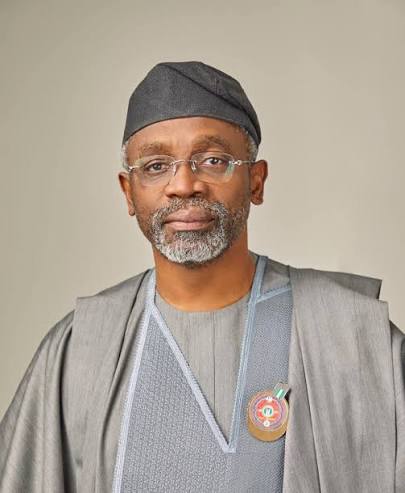
–Withdraw from panel, SDP tells Gbajabiamila
Calls for the establishment of state police got more traction on Thursday in Abuja as senior government officials, governors, lawmakers, security experts and international stakeholders converged to give a comprehensive analysis of what’s needed to give Nigeria a better policing architecture. The gathering agreed that the country’s worsening insecurity demanded it, particularly a decentralised security system fortified by legal safeguards, adequate funding, community participation and improved intelligence gathering.
The consensus came at the ARISE News and THISDAY Town Hall gathering on State Police and National Security, where participants maintained that although the proposed constitutional amendment to allow state policing was a major step towards addressing terrorism, banditry, kidnapping and violent crime, its success would depend largely on the legal, financial and institutional frameworks put in place to prevent abuse and ensure accountability.
President Bola Tinubu, two days earlier on had inaugurated the Presidential Working Group on the National Policing Bill to draft the legal framework for implementing state police following the Senate’s passage of the Constitution of the Federal Republic of Nigeria (Alteration) (State Police) Bill, 2026.
The constitutional amendment, currently before the National Assembly, seeks to move policing from the Exclusive Legislative List to the Concurrent Legislative List, thereby empowering states to establish and operate their own police services under a nationally regulated framework.
The debate over state police has intensified in recent years as Nigeria grapples with multiple security crises, including terrorism in the North-East, banditry across the North-West, mass kidnappings, farmer-herder clashes, communal violence and organised criminal activities in several parts of the country.
Supporters of the proposal argue that decentralising policing will strengthen community intelligence, improve response time and make security agencies more accountable to local communities.
Critics, however, have warned that governors could use state police against political opponents, suppress dissent voices and interfere with democratic processes. To avoid these, they advocate for adequate constitutional safeguards to be embedded in the laws guiding state police operations.
Against this backdrop, the Chief of Defence Staff, Gen. Christopher Musa (retd.), argued that while military operations remain indispensable in confronting terrorists and other violent groups, experience across the world has shown that force alone cannot guarantee lasting peace.
Speaking during one of the panel sessions, Musa said defeating terrorism required a combination of kinetic and non-kinetic strategies, stressing that military operations must be complemented with dialogue, community engagement, intelligence gathering and efforts to address the root causes of violent extremism.
“You must be able to bring the kinetic and the non kinetic working together,” he said.
The Defence Minister explained that members of the armed forces operate under clearly defined rules of engagement that regulate the circumstances under which force may be deployed during military operations.
According to him, troops undergo extensive professional training before deployment to enable them distinguish between terrorists, bandits and innocent civilians while carrying out operations.
He said, “Members of the armed forces have their rules of engagement. Once you are deployed out for an operation, you are allowed to take out the enemy using the standards.
“As professionals, we train our troops before deploying them. And once they are deployed, they are able to identify who is a bandit, who is a terrorist, and who is a civilian.”
Musa, however, acknowledged that counter-insurgency operations remained particularly difficult because terrorists often blended into local communities, making it challenging for security agencies to separate combatants from civilians.
“Asymmetric warfare is a very, very difficult operation, because the enemy is within, the enemy is just that individual that you think is your citizen, or is your brother, or is your uncle, that you are protecting, is the one that could help me,” he said.
Drawing from international experience, the Defence Chief noted that countries battling insurgencies often require years of sustained operations before recording significant success, pointing to Turkey’s decades-long campaign against the Kurdistan Workers’ Party as an example of why patience and a balanced security strategy remain essential. According to him:
“If you see worldwide, anywhere there’s asymmetric warfare, it takes a very long while before those things are coming.
“In Turkey, they’ve been dealing with the PKK for over 40 years. It is just of recent, they are beginning together, and because they had to use the kinetic and the non kinetic.”
Musa insisted that history has consistently shown that military force alone cannot end insurgency.
He argued that military operations account for only a fraction of successful counter-terrorism efforts, while dialogue, reconciliation, intelligence gathering and engagement with affected communities contribute significantly more to sustainable peace.
“No country can shoot itself to peace. The kinetic aspect is based about 25, 30%. The non kinetic, which has to do with dialogue, discussion, understanding,” he argued.
According to him, local communities remain the most critical partners in the fight against terrorism because insurgents often rely on civilian populations for concealment, logistics and intelligence.
“These terrorists live within the communities,” he said.
Musa explained that security agencies record greater success where residents cooperate by volunteering timely information, but face enormous challenges whenever criminal groups enjoy the protection or sympathy of local communities.
“If the communities are on their side, it makes it difficult for the security forces to win the battle. And if the communities are with the security forces, it makes it a lot easier.”
The Defence Chief also urged political leaders and policymakers to look beyond military responses by addressing the underlying social, economic and governance issues that fuel insecurity across the country.
Ex-Israel PM
A former Israeli Prime Minister Ehud Barak also threw his weight behind Nigeria’s push for state police, saying a decentralised policing structure could significantly improve the country’s internal security if backed by strong legislation, effective federal oversight and clear accountability mechanisms.
Barak acknowledged concerns that governors could deploy state police to intimidate political opponents, but argued that such fears should not derail reforms.
According to him, the risk of abuse exists in virtually every governance system and can be substantially minimised through carefully drafted laws that define the powers of state authorities and preserve the Federal Government’s supervisory role.
“The worry that someone might try to use the fact that he has a state police for his own political ambitions and so on is a real issue and should be addressed,” he said.
Barak argued that decentralised policing would make law enforcement more responsive to local realities because officers recruited from the communities they serve possess better knowledge of the terrain, language, customs and social dynamics than personnel deployed from distant locations.
“When you mobilise and recruit the policemen from within the community, they will be much more sensitive. They will understand the norms and the practises, the religious space, and everything that relates to the people around them. It will be much more effective.”
He maintained that any state policing framework should clearly define the relationship between state police authorities and the Federal Government to prevent jurisdictional conflicts and ensure national cohesion.
“I think that it is much easier to deal with such events through the very detailed legislation that gives certain authority to the president and to the federal government in Abuja over the governors and so on,” Barak said.
He argued that providing constitutional and legal safeguards against abuse would be more practical than attempting to police a country as large, diverse and populous as Nigeria solely from the centre.
“It’s much easier to correct this element than to activate through a vast country like Nigeria from a central place,” he added.
Barak also highlighted the operational advantages of decentralised policing, saying officers familiar with local communities could respond more rapidly to emergencies and gather intelligence more effectively than a centrally controlled force.
“Response is much faster when you’re talking about the state police. Response is much more calibrated to the nuances, subtleties of the arena in which it’s carried out,” he said.
The former Israeli leader, however, cautioned that sophisticated intelligence capabilities, particularly signal intelligence, should remain under federal control because of the enormous financial investment required and the potential national security implications if such capabilities fall into the wrong hands.
“Signal intelligence is extremely expensive, and if the capabilities of signal intelligence ended up in the hands of the wrong person or the wrong group, they can cause huge damage to the national structure and become a kind of a threat,” he warned.
To strengthen coordination between federal and state security institutions, Barak proposed the establishment of a centrally controlled rapid deployment police force that could intervene whenever state police formations encounter threats beyond their operational capacity.
He also emphasised the need for seamless intelligence sharing between state police commands and federal security agencies to ensure coordinated responses to emerging threats.
“The state should report; there should be no secrets of what happens to the police. And at the same time, the federal authorities should be sensitive to the needs,” he added.
Address funding — Bamidele
Also speaking, Senate Majority Leader Opeyemi Bamidele cautioned that creating state police without addressing funding and institutional independence could undermine the entire reform.
According to him, financial autonomy would determine whether state police emerge as effective security institutions or become vulnerable to political interference and criminal infiltration.
“If the state police is not well funded, it may as well be a highway to nowhere,” Bamidele warned.
He explained that the constitutional amendment before the National Assembly was not intended to compel every state to immediately establish its own police force but to create the constitutional framework allowing willing states to do so.
“It’s not every state that will immediately, after we finish amending this constitution, go to town to say, ‘We’re launching our state police.’ All we are trying to achieve with this constitutional amendment is to move this duty from the exclusive legislative list to the concurrent legislative list,” he said.
The Senate leader acknowledged widespread concerns that governors might misuse state police, describing those fears as legitimate and deserving of legislative attention.
“The various concerns that have been expressed from different quarters are well-founded concerns that we cannot sweep under the carpet or pretend that they are not real,” he said.
Bamidele argued that accountability must be guaranteed not only through legislation but also through sustained public vigilance and active civil society participation.
“When it comes to issues of accountability, it’s something that will have to be addressed, both at the level of legislative intervention, through the law, as well as vigilance on the part of the Nigerian people,” he added.
He further warned that poorly funded state police could become susceptible not only to political manipulation but also to undue influence from wealthy individuals, businesses and criminal organisations.
“It’s not only state actors or politicians that can abuse this. Business class, some other organisations, even criminals can abuse it, because he who pays the piper dictates the tune,” he said.
To guard against such risks, Bamidele proposed constitutional provisions guaranteeing state police access to dedicated funding independent of governors’ discretion, suggesting that a fixed percentage of state revenues could be earmarked for policing.
“We must have a situation where there will be some first-line provisions in our law. The police chief and the police service commission must have a guaranteed source of income in a way that it will not be subject to the whims and caprices of a sitting governor,” he said.
Govs back reforms
Echoing the growing consensus in support of decentralised policing, Anambra State Governor, Prof. Chukwuma Soludo, said Nigeria had moved beyond debating whether to establish state police, insisting that the real challenge now was designing a workable system capable of addressing the country’s evolving security threats while strengthening the federal structure.
Soludo argued that state policing should not be viewed as an isolated constitutional amendment but as part of broader reforms aimed at deepening true federalism, improving governance and enhancing public safety.
“The issue is no longer whether or not to have state police. I think we have gone beyond that. The issue now is how,” he said.
The former Central Bank governor commended the National Assembly for advancing the constitutional amendment process and also praised President Bola Tinubu for supporting reforms that could ultimately strengthen Nigeria’s federal arrangement.
“I see the issue of state police within the broader context of marching towards a more functional and effective federal structure,” he said.
According to Soludo, any discussion on state police should go beyond security alone to include wider constitutional reforms covering fiscal federalism, revenue allocation, judicial restructuring and clearer responsibilities between the different tiers of government.
Drawing from Anambra’s experience, the governor said effective security had been achieved through close collaboration among the military, the Nigeria Police Force, the Department of State Services, the Nigeria Security and Civil Defence Corps, local vigilante groups and community leaders.
Without dwelling extensively on operational details, Soludo said the coordinated approach had helped reclaim areas previously occupied by criminal gangs, dismantled criminal camps and restored normal economic and social activities in communities once plagued by violent crime.
Acknowledging that no security system was perfect, he maintained that decentralised policing would strengthen ongoing efforts by allowing states to respond faster to emerging threats while maintaining desired standards through federal coordination.
He stressed that effective implementation, rather than prolonged debate, should now occupy the attention of policymakers:
“We have gone beyond the debate. The conversation now should focus on designing a framework that works for Nigeria’s peculiar realities.”
Enugu State Governor, Peter Mbah, towed the line of Soludo saying that the country’s current policing arrangement was outdated and incapable of responding effectively to the more sophisticated security threats.
Mbah said the national debate over state police had effectively been settled, arguing that attention should now shift to developing an operational framework capable of delivering measurable security outcomes.
“I think that’s a settled debate. What we really should be talking about is how do we measure? How do we implement?”
In his opinion, the Constitution places responsibility for security and the welfare of citizens on governments, but it fails to provide governors with the operational authority necessary to fulfil that obligation:
“What we’re essentially saying here is, do we have the operational authority to match that responsibility?” he asked.
“The current model has not kept pace with the security threats we face today as a country.”
Using Enugu State as a practical example, Mbah recalled that his administration inherited a serious security crisis marked by widespread violent crime, the enforcement of illegal sit-at-home orders and declining economic activities.
“We had the nightlife was gone. Mondays were deserted. Schools closed, we also have our children who lost an entire year because they could not sit for external exams,” he said.
“Security became the biggest elephant in the room. We had to invest hugely in technology, we had to set up the distress response squad,” he stated.
Mbah, however, stressed that technology alone could not guarantee public safety without trained personnel capable of responding rapidly to emergencies.
“Matters of security are measured in minutes, you must be in a position where you’re able to act swiftly” which, according to him, have made the combination of technology, intelligence gathering and coordinated local response significantly to reduce violent crime across Enugu State.
“That essentially is what we did in Enugu that enabled us to drive down the violent crime by over 90 per cent.”
Also making a strong case for state police, Zamfara State Governor Dauda Lawal said governors should no longer be held responsible for insecurity in their states without being granted operational control over security agencies.
The governor, whose state has remained one of the epicentres of banditry and mass abductions, argued that security remains the primary responsibility of every government and should therefore be backed by the authority needed to discharge that obligation.
Lawal disclosed that despite being designated the state’s chief security officer, he lacked constitutional powers to direct security agencies operating within Zamfara.
“In as much as I was called or I’m being called the chief security officer of the states, however, I don’t have the command and control structure to determine what happens or give instructions to some of these security officers,” he said.
He questioned the logic of holding governors accountable for security failures while denying them operational authority over policing.
“Why is it difficult for people to understand that my primary responsibility is the protection of lives and property, and I don’t have that control? How do you hold me accountable?”
The Governor recounted his personal experience with kidnapping, revealing that he refused to pay a N300 million ransom demanded by abductors who seized his brothers in 2019.
“My own brothers were kidnapped in 2019, and these criminals were demanding at the time about 300 million. And I said, look, I’m not going to pay a dime. If you like, go and kill them.”
According to Lawal, the kidnappers eventually released his brothers after three months without receiving any ransom.
His thesis is that, paying ransom only strengthens criminal networks and encourages further abductions.
“By the time we continue to pay ransom to these people, we are encouraging them to be kidnapping people more and more.”
Maintaining that his position had not changed, the governor declared:
“I will not negotiate, and I will not pay ransom to any criminal, no matter what happens.”
Lawal said Zamfara had continued to invest heavily in security despite the constitutional limitations, disclosing that his administration currently funds more than 30 per cent of security operations in the state.
He said the government had procured over 500 operational vehicles for security agencies within three years, supplied dozens of Armoured Personnel Carriers and Mine-Resistant Ambush Protected vehicles and deployed both surveillance and attack drones to strengthen ongoing military operations.
“We bought drones, both surveillance drones and attack drones, to be able to aid the security forces in terms of fighting these criminals in their respective areas,” he said.
‘Police decentralisation necessary’
Also lending his voice to the debate, Senator Adams Oshiomhole, representing Edo North Senatorial District, argued that the constitutional designation of governors as chief security officers had become increasingly untenable without corresponding authority over the police.
The former Edo State governor said the country’s security challenges had exposed an inherent contradiction in Nigeria’s policing, where governors bear political responsibility for security but lack the operational control over the agencies expected to enforce law and order.
“My view is that there is an inherent contradiction. If you look at the provisions of the Constitution, the state governor is the chief security officer. But what is the tool for enforcing security? If a state is responsible for primary healthcare, it has a Ministry of Health to deliver that responsibility.
“Yet I am called the chief security officer, but I have no control over the police. I cannot give orders, recruit, promote or discipline officers. It is like calling me a husband when I have no wife.”
Responding to arguments that Nigeria’s policing challenges stem largely from inadequate funding, personnel shortages and logistics rather than constitutional design, Oshiomhole maintained that decentralising policing had become necessary.
He dismissed suggestions that many states might lack the financial capacity to sustain state police, insisting that funding ultimately reflects government priorities saying:
“Nobody funds what they do not believe in. Where we put money reflects our values and priorities. Every level of government must allocate resources according to what it considers important.”
Citing his experience as governor, Oshiomhole recalled that successive administrations had spent billions of naira providing operational vehicles, communication equipment and other logistics to the Nigeria Police despite having little influence over how those assets were utilised.
“I spent much more procuring vehicles and communication gadgets for the police than what the federal government provided. Unfortunately, when those assets are misused, mismanaged or even stolen by those meant to protect them, I have no legal authority beyond asking questions. I cannot enforce discipline.”
He also rejected concerns that governors would inevitably abuse state police, arguing that abuse of law enforcement powers already occurs under the existing centrally controlled policing system.
“People talk about possible abuse. But even today, Nigerians and the media know there are cases where the federal police are abused, whether by federal authorities or even by state authorities. Abuse is not peculiar to one structure.”
According to him, democratic institutions already provide mechanisms for checking excesses by elected officials:
“If a governor mistakes state police for his personal police and misuses them, then vote him out at the next election. The media also has a responsibility to expose abuse.
“Every human being has the capacity either to use power responsibly or to misuse it. What matters is accountability.”
Oshiomhole further cited incidents during his tenure in Edo State where, according to him, policing decisions taken at the state level were overridden by federal authorities, limiting the effectiveness of local security efforts.
“We had cases where the Commissioner of Police arrested criminals, only for Abuja to order their release. To my pain and helplessness, they were released.”
He also recalled the investigation into the killing of one of his aides, saying conflicting reports by different security agencies underscored the limitations governors face under the current arrangement.
“The DSS report pointed in one direction, while the report from the Nigeria Police Headquarters suggested something completely different. I could see officers committing wrongdoing, yet I could do little or nothing about it.”
Another major one he cited was a fire incident in Edo State, when the then Commissioner of Police declined to brief him despite his position as governor.
Oshiomhole concluded that if governors are to remain constitutionally recognised as chief security officers, they should also possess the authority required to discharge that responsibility effectively.
“Unless you amend the Constitution to remove the provision that governors are the chief security officers of their states, then they must be given the instruments to perform that responsibility.
“We cannot keep doing the same thing over and over again and expect remarkably different outcomes.”
Similarly, the senator representing Kogi Central, Natasha Akpoti-Uduaghan, urged lawmakers to ensure that the proposed state policing framework contains sufficient constitutional safeguards to prevent abuse and protect democratic institutions.
Speaking during the conference, she warned that decentralising policing should not create opportunities for political intimidation or executive overreach.
“State police should never become an instrument of political oppression or executive intimidation. We must build a policing system that serves the people, protects democracy and remains accountable to the rule of law,” she said.
Akpoti-Uduaghan also identified sustainable funding as a prerequisite for effective state policing, warning that creating new institutions without adequate financial backing would undermine the objectives of the reform.
“Funding is one of the most important aspects the Federal Government must address. Without adequate and sustainable financing, state police will struggle to deliver on their constitutional responsibilities,” she said.
She commended President Bola Tinubu and the Inspector-General of Police for what she described as their responsiveness to emerging security challenges.
“I commend Mr President and the current Inspector-General of Police for their prompt responses and decisive actions on security issues. Such responsiveness strengthens public confidence and reinforces our collective commitment to securing Nigeria.”
To the Secretary of the Presidential Working Group on the National Policing Bill, Dubem Moghalu, the constitutional amendment before the National Assembly represented only the first stage of the reform process.
To him, the National Policing Bill being drafted by the Presidential Working Group would provide the legal and operational framework required to establish and regulate state police across the country.
“The constitutional amendment that has passed the Senate and is progressing through the legislative process is an establishment document. It creates the constitutional pathway for state policing, but it does not expressly initiate state policing in the country,” he said.
Moghalu opined that the proposed legislation would address issues relating to recruitment, training, operational standards, cooperation between federal and state police formations and other institutional arrangements necessary for a dual policing system.
“For us to operationalise state policing, to put in place the infrastructure, establish national minimum standards for recruitment and training, and address issues relating to cooperation between the different state police services and the federal police, all of these questions will have to be resolved in the National Policing Bill that is now being drafted.”
He added that the committee was studying international best practices but would develop a model tailored to Nigeria’s unique constitutional and security realities.
“What we are trying to do is to develop our own dual policing system that reflects our realities, our concerns and the challenges we are trying to address,” he said.
SDP rejects Gbajabiamila
Meanwhile, the Social Democratic Party, SDP, has criticised President Bola Tinubu’s decision to appoint his Chief of Staff, Femi Gbajabiamila, to chair the Presidential Working Group on the National Policing Bill amid allegations linking him to the purported Presidential Foreign Intervention Promotion Council.
The party argued that Gbajabiamila should step aside pending the outcome of investigations into the allegations, saying his continued occupancy of public office could undermine public confidence in the administration.
The position was made known at the second National Executive Committee meeting of the SDP held at the party’s national secretariat in Abuja.
Speaking at the meeting, the National Chairman of the SDP, Prof. Sadiq Gombe, said public officers facing allegations of serious misconduct should temporarily relinquish their positions to allow for an independent investigation.
He said, “I think if decorum prevails, there are a lot of things that need to be done. There is no way a public officer will be accused of something of this magnitude, and he will still remain glued to his position.
“How can the President justify setting up one of the most important committees in the life of this administration and nation (state police) and announce the same person accused of this magnitude of offence against the constitution of the land to lead this committee.
“I think we need to be decorous. We need to show the world we are really ready for this democracy and ready to lead Nigeria and Africa. But the way we are going, I don’t think it is fair to Nigerians. We are a country of about 200 million Nigerians. It won’t be about one man.”
Gombe also faulted the composition of the 12-member committee, alleging regional imbalance.
“I saw the way somebody reeled out the statistics of the 12-member committee for the review of the state police; whereas among the 12 members, no matter what it takes, you have nine members of that committee coming from one part of the country.
“I don’t think it will augur well for us as a nation, especially now that we are approaching elections. People need to be sensitive to our diversity and collective commitments as a nation.
“If people are accused of a crime of this magnitude, they are supposed to lie low. There are many competent Nigerians who can handle these kinds of things. Unless we want the whole world to take us seriously with this kind of attitude,” he stated.
He maintained that Gbajabiamila should relinquish both his role as chairman of the state police implementation committee and his position as Chief of Staff.
“Gbajabiamila needs to step aside, not just as the chairman of this important committee, but also in his position as the chief of staff to the president. He represents one of the greatest institutions, which is the presidency.
“The right thing to do is for him to step aside for a proper independent probe into the allegation and let them prove beyond reasonable doubt that he is innocent,” he added.
Lagos SDP governorship candidate, Femi Olaniyi, also criticised the development but declined to comment extensively, noting that related matters were already before the courts.
The Presidency has denied the allegations referenced by the SDP and has consistently expressed confidence in Gbajabiamila’s integrity. Earlier in the week, President Tinubu publicly defended his Chief of Staff, dismissing the claims as unfounded and reaffirming his confidence in him.
The Presidential Working Group, inaugurated this week, is expected to draft the National Policing Bill that will provide the legal and operational framework for implementing state police if the ongoing constitutional amendment process is concluded.
The committee includes representatives of the Presidency, the Office of the National Security Adviser, the Attorney-General of the Federation, the Nigeria Governors’ Forum, the Nigerian Bar Association and the Nigeria Police Force.
With the Senate having passed the Constitution (Alteration) (State Police) Bill, 2026, attention is expected to shift to further legislative consideration, harmonisation with the House of Representatives and engagement with state legislature.
There is no doubt that the adopted reforms, if we’ll implemented will reshape Nigeria’s policing architecture by creating a federal and state policing system aimed at improving intelligence gathering, strengthening community policing and enhancing accountability while incorporating safeguards against abuse.







General News
Benue Bishop Shuts Schs, Hospital, Parish In Alia’s Community Says “Church Cannot … Expose Priests, Students To Danger”
By Felix Umande
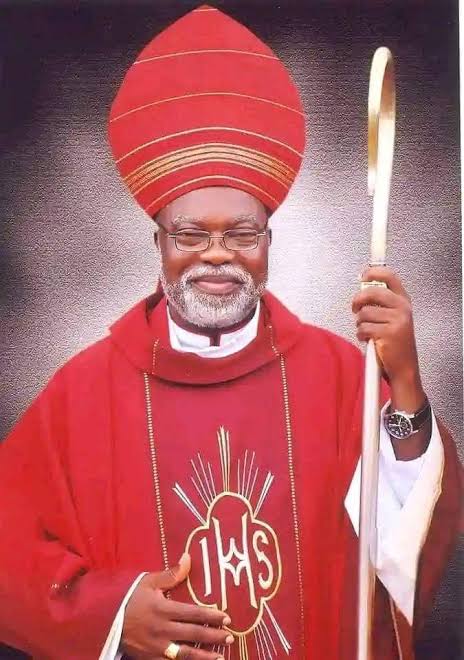
The Catholic Bishop of Gboko, Most Rev. William Avenya, has ordered the indefinite closure of four Catholic institutions in Ihugh, Benue State, and withdrawn pastoral agents following repeated attacks, arson and insecurity.
The decision, contained in a letter and decree dated October 12, takes immediate effect and affects St. Winifred Secondary School, St. Winifred Nursery and Primary School, St. Thomas Hospital, Salus Mind Care Center and St. Winifred Parish, Ihugh.
In the pastoral letter, Avenya described the withdrawal as painful but necessary to protect lives, stressing it was not motivated by anger or retaliation.
“The Church cannot, in conscience, continue to expose her Priests, Consecrated Persons, Teachers, Medical personnel, Students and Patients to danger,” he said.
The bishop cited repeated disturbances including the burning of student hostels at St. Winifred Secondary School on October 28, 2025, May 10 and 15, 2026, and October 11, 2026, recurrent burglaries at St. Winifred Parish and criminal incidents at St. Thomas Hospital. He recalled that during the reopening of the hospital on June 21, 2024, some persons displayed placards and chanted slogans demanding that Reverend Sisters leave Ihugh.
Avenya said the Diocese had engaged the host community, traditional rulers, elders and security authorities to find lasting peace, but without security guarantees.
The decree directs the withdrawal of priests, consecrated persons, catechists, pastoral workers and lay mission partners, while teaching and non-teaching staff, medical personnel and administrators are to be redeployed through appropriate diocesan offices.
It also orders safeguarding of diocesan property, transfer of parish registers and archives to the diocesan archives, and reverent removal of the Blessed Sacrament, sacred vessels and other sacred objects under supervision.
The bishop said arrangements would be made to minimise impact on students, patients and staff. Students are to be assisted to continue education in other Catholic schools in the Diocese, while patients at St. Thomas Hospital will be referred to other facilities, especially those needing urgent care. Affected staff, he said, would be treated with justice and charity.
Addressing Catholics in Ihugh, he declared:
“To our Catholic faithful in Ihugh: do not lose heart. Your Baptism is not lost with a building, nor is your faith diminished by the closing of a door.”
He appealed to community leaders, traditional rulers, youth leaders, government and security agencies to restore peace and ensure perpetrators are brought to justice, adding that return is conditional on genuine repentance, restitution and credible assurances of safety.
“This decision is a painful one, but it is not a final farewell,” he said.
Avenya called for intensified prayers for peace and designated Friday, October 23 as a day of prayer and fasting for peace and reconciliation.

Group Chief Executive Officer, NNPC Limited, Engr. Bashir Bayo Ojulari, today at the Presidential Villa in Abuja, presented the Company’s 2025 Audited Financial Statement (AFS) to President Bola Ahmed Tinubu, GCFR.
Ojulari, who was accompanied by the Company’s Group Chief Finance Officer (CFO), Dapo Segun, presented the statement, which delivered impressive results that include ₦7.2 Trillion Profit After Tax (a 33% rise compared to ₦5.4 Trillion in 2024), ₦5.8 Trillion dividend and ₦34.5 Trillion revenue.
On 29th September, 2026, NNPC Ltd announced its audited results for the year ended 31 December 2025, following its Annual General Meeting and second Earnings Call with financial and business analysts.
The results highlight the Company’s growing earnings strength and improved operational performance, laying the foundation for future growth.
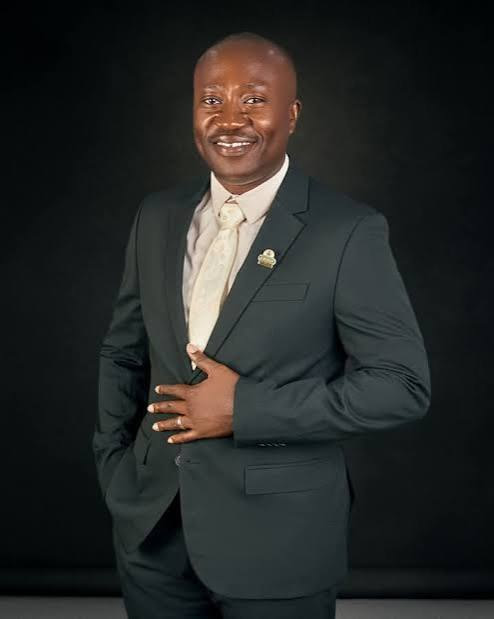
The National Chairman of the Nigerian Institution of Marine Engineers and Naval Architects (NIMENA), Dr. Eferebo Sylvanus has been honoured with the Maritime Innovation and Technology Leadership Award at the 15th Democracy Heroes Award Africa.
Eferebo received the honour at the ceremony held at the weekend at the Transcorp Hilton, Abuja, in recognition of his professional leadership and contributions to marine engineering, naval architecture and maritime technology.
The award comes amid growing calls for Nigeria to harness its maritime resources through indigenous expertise, technological advancement and research-driven industrial development.
The Democracy Heroes Award Africa, now in its 15th edition, recognises individuals making contributions across different sectors.
Eferebo’s recognition places a spotlight on a specialised but strategically important profession whose impact extends beyond engineering into industrial development and the wider blue economy.
As Nigeria continues to explore new opportunities in maritime trade, offshore energy and shipbuilding, the challenge will be ensuring that professional recognition is matched by sustained investment in research, infrastructure, training and the practical application of homegrown technology.
With more than two decades of experience in engineering consultancy and technical leadership, Eferebo leads NIMENA, a professional body committed to advancing marine engineering through research, education, technical standards and industry collaboration.
His academic background includes a Bachelor of Technology in Marine Engineering, a master’s degree in Naval Architecture and Ship Construction, and a doctorate in Naval Architecture and Shipbuilding from Rivers State University, Port Harcourt.
He is also a Fellow of the Nigerian Society of Engineers and a registered engineer with the Council for the Regulation of Engineering in Nigeria (COREN).
Beyond his professional credentials, Eferebo has built a career around developing technical solutions for Nigeria’s maritime and offshore industries.
He is the founder and chief executive officer of Somatrix Marine Limited, an engineering consultancy involved in marine consulting, ship design, marine surveys, construction management and research and development.
His leadership extends to engineering regulation and policy development, including work on maritime engineering standards and local content development.

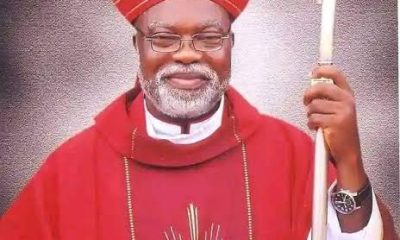

Benue Bishop Shuts Schs, Hospital, Parish In Alia’s Community Says “Church Cannot … Expose Priests, Students To Danger”
Spread the loveBy Felix Umande The Catholic Bishop of Gboko, Most Rev. William Avenya, has ordered the indefinite closure of...


President Tinubu Receives NNPC’s 2025 Audited Financial StatementBy Aliyu Musa
Spread the loveGroup Chief Executive Officer, NNPC Limited, Engr. Bashir Bayo Ojulari, today at the Presidential Villa in Abuja, presented...


NIMENA chair, Sylvanus receives tech leadership awardBy Philip NyamAbuja
Spread the loveThe National Chairman of the Nigerian Institution of Marine Engineers and Naval Architects (NIMENA), Dr. Eferebo Sylvanus has...

SDP crises: Court strikes out criminal case against Shehu Gabam
Spread the loveBy Saint Mugaga A Magistrate Court in the Federal Capital Territory (FCT), Abuja, has struck out a criminal...


Wike Orders Removal of Illegal Structures, Stops Unauthorised Commercial operations
Spread the loveBy Isa Abdul, Abuja Wike has ordered the immediate enforcement of operations against unauthorised commercial activities and illegally...


Benue Govt Closes Two Schools in Makurdi Over Textbook Sales Violation
Spread the loveBy Vincent Tyosuugh Two academic institutions, Orenda Opal Schools have been closed by the Benue State Government over...
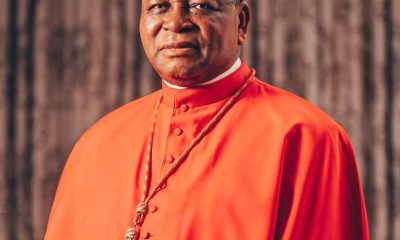

Only Deaf, Dumb, and Blind Can Tell Us He’s not Hearing the Truth About Nigerians’ Suffering –Cardinal Onaiyekan
Spread the loveBy Son Tertsea, Abuja Cardinal John Onaiyekan has explained why the reactions to his interview with Arise TV’s...


Nigeria Fighting Cervica Cancer: 18 Million Girls Vaccinated
Spread the loveBy Nick Ibe, Abuja In its intensified efforts to eliminate cervical cancer in Nigeria, the Federal Government said...

Bauchi Govt: Minimum Pension Now N32,000, Pays Gratuities To 2012, 2013 Retirees
Spread the loveBy Michael Lim As part of effort to reduce the huge backlog of gratuities, the Bauchi State government...


Nigeria’s Overall Best Teacher From Ogun Shows: Where You Start in Life Does Not Matter
Spread the loveBy Seyi Balogun, Lagos The emergence of Nigeria’s Overall Best Teacher for 2026 at the Federal Government’s President’s...