
Faith and Moral Issues
No Sermons by Catholic Women: Vatican Rules

By Michael Lim
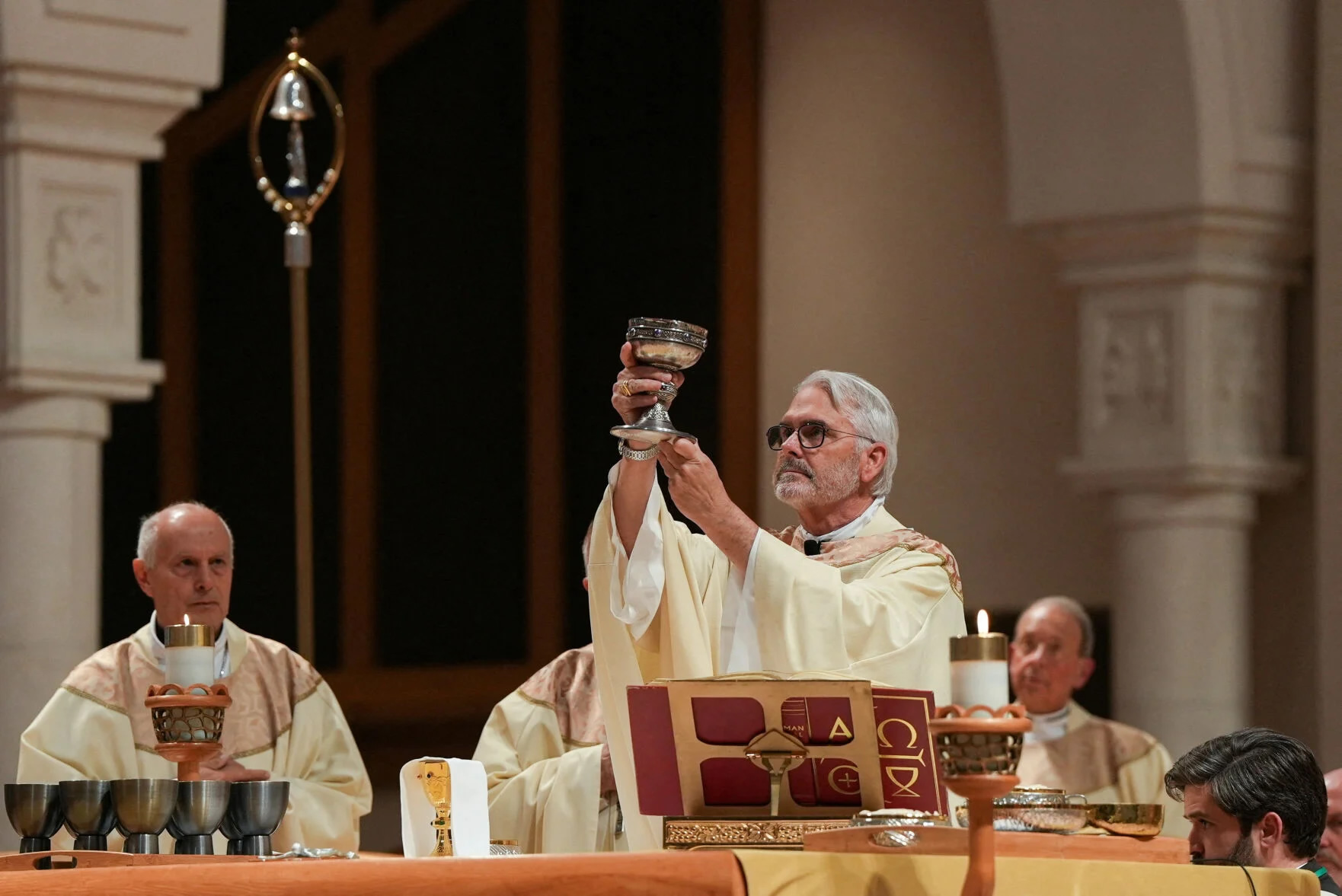
The Vatican on Tuesday stressed a long-standing rule that only an ordained priest or deacon can give a sermon at a Catholic mass, turning down German bishops’ proposal to broaden the practice and allow sermons by women or other laypeople.
Responding to the request, a release from the Vatican insisted that “The current discipline cannot be dispensed from,” said the Vatican’s Dicastery for Divine Worship and the Discipline of the Sacraments, which oversees worship by the world’s over 1.4 billion Catholics.
Catholic masses include a sermon, where a priest or a deacon offers a reflection on the day’s Bible readings. The German bishops’ conference had asked earlier this year for permission for laypeople to also offer sermons.
Sources indicate the German request echoed sentiments from many bishops in the U.S. and other European countries, who say many laypeople are as capable of preaching as priests. They often cite a desire to hear sermons from women, who cannot be ordained in the Catholic Church.
The Vatican did not provide its full response to the German bishops, only a press release summarizing its decision.
“The reservation of the homily to a priest or deacons is not a merely disciplinary norm but derives from the very nature of the liturgy,” the release said.
The Catholic Church teaches that during a mass, a priest acts “in persona Christi” (in the person of Christ), and it is God who acts through the priest during worship.
Laypeople are allowed to give sermons at prayer services outside of a mass




Faith and Moral Issues
Church’s Duty to Empower Individuals, Create Opportunities and Improve Family’s Economic Well-being
By Seyi Balogun, Lagos
The need for the Church’s commitment to empowering its members through employment opportunities, entrepreneurship and business development initiatives has been highlighted.
Lead Pastor of Victory Life Bible Church International, Apostle Lawrence Achudume, stated this in a statement issued on Monday by the church’s media office, noting that its entrepreneurship empowerment programme was designed to provide practical support to members with viable businesses and business ideas.
He said the initiative was aimed at helping beneficiaries expand their businesses, achieve financial independence and build sustainable livelihoods.
According to him, the programme goes beyond providing financial assistance, as it is designed to create a sustainable system where beneficiaries can grow their businesses and create opportunities for others. In his words:
“The church recognises entrepreneurship as an important avenue for empowering individuals, creating employment opportunities and improving the economic well-being of families.”
He commended the Church’s Entrepreneurship Support and Development Committee for identifying and supporting deserving beneficiaries.
Achudume also assured members that the church would continue to explore practical ways to help them transform their skills and business ideas into sustainable enterprises.
Meanwhile, the Chairman of the ESDC and Chief Executive Officer of Pomegranate Nigeria Limited, Wole Elusakin, said the initiative had recorded encouraging results among previous beneficiaries.
Speaking during the presentation of new beneficiaries, Elusakin said some previous beneficiaries had successfully invested the support received into their businesses, while others had repaid their financial commitments and no longer required additional assistance.
“I am happy to tell you that some of the people who previously benefited from this programme have invested in their businesses and made significant progress. Some have fully paid back, while others have grown their businesses to the extent that they no longer need to take additional loans.”
He said the progress made by previous beneficiaries had created opportunities for new entrepreneurs to benefit from the programme.
Elusakin also commended Achudume for his support for the initiative, saying it had helped members grow their businesses.
“I want to especially thank Apostle Lawrence Achudume, for his support for this project and for ensuring that some people are empowered to grow their businesses in one way or another,” he said.
According to him, millions of naira had already been approved for some of the newly presented beneficiaries, while additional funding would be considered after the review of relevant proposals.
Elusakin added that the initiative was not limited to financial support, as beneficiaries would also receive appropriate advisory assistance based on the proposals submitted.
“And beyond the grant, submitted proposals will be reviewed with advisory support,” he said.
He explained that the approach was intended to ensure that beneficiaries received both financial assistance and the guidance required to use the funds effectively and build sustainable businesses.
The ESDC chairman consequently encouraged members with viable business proposals to apply, assuring them that applications would be assessed based on their business prospects and potential impact.
Faith and Moral Issues
Akume to Religioud Leaders Make Peacebuilding Part OF National Security Ahead of 2027
By Felix Umande
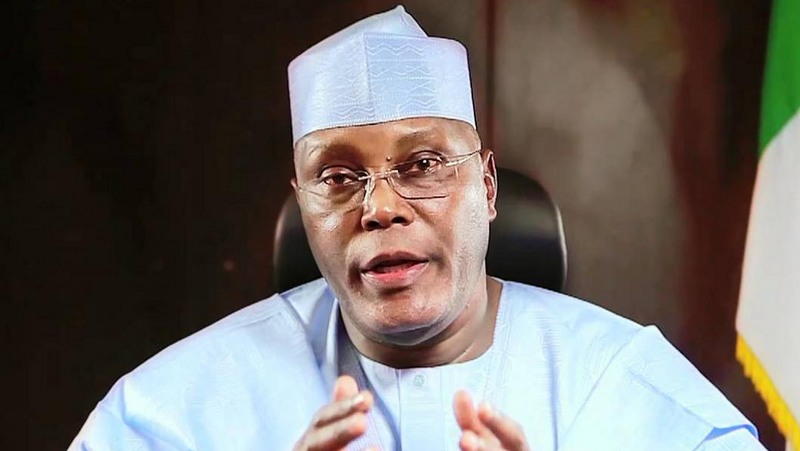
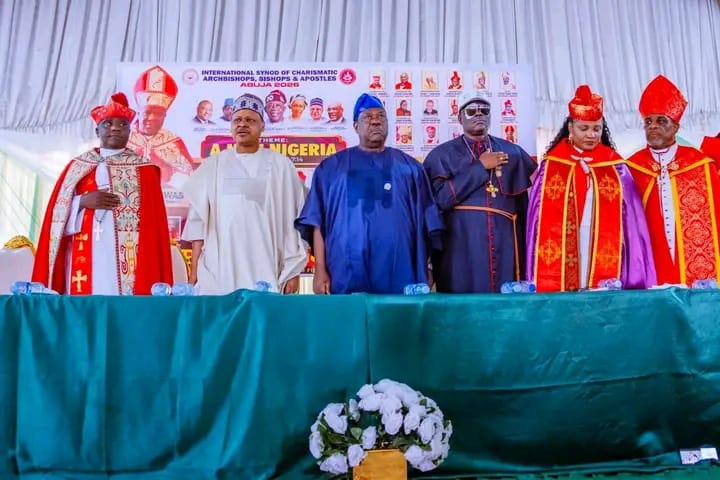
The Secretary to the Government of the Federation, Senator Dr. George Akume, CON, on Wednesday urged religious leaders to treat peacebuilding as a core component of national security and to help steer Nigerians toward unity as the country approaches the 2027 general elections.
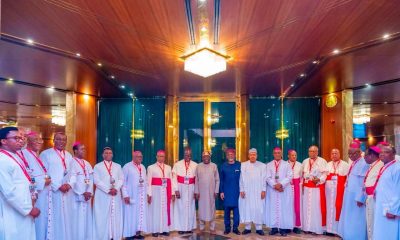
Akume spoke at the National Ecumenical Centre, Abuja, during the opening of the 12th Synod of the Charismatic Bishops Conference of Nigeria, where he represented President Bola Tinubu.
Acknowledging the hardship arising from ongoing economic reforms, the SGF said the administration understands the burden on citizens.
“Government recognises the fact that these reforms come with some inevitable pains and that Nigerians have significantly endured. We commend our citizens for their patriotism and resilience and assure them that it would never be in vain as promised by the President,” he said.
Citing World Bank reports on improved macroeconomic stability, Akume said government attention is now shifting to household recovery.
“This government is focusing on recovery of household incomes from poverty and will never relent until reform succeeds and translates to affordable food, jobs, better infrastructure, health services and dignity for the ordinary citizen. That is where the Renewed Hope Agenda truly lies,” he stated.
He explained that the agenda is “rooted in our determination to minimise hardship, create opportunities, simplify the fiscal regime and provide reliefs for vulnerable individuals and businesses,” with expanded programmes in education, health, social protection and community resilience.
On security, Akume disclosed “encouraging intelligence-led breakthroughs, including the rescue in August of 308 abducted citizens from Kwara and Niger States.”
However, he warned that terrorism, banditry, kidnapping and communal conflict “continue to wound families and communities.”
“National security cannot be the responsibility of soldiers, police officers and intelligence agencies alone. Security also begins with trust, social cohesion, early warning and responsible speech,” he said.
The SGF charged the Church to take a leading role, noting that “religious leaders occupy a very important intersection in the prevention and management of these issues because they are recognised influential social mobilisers and actors in peace building. The Church must therefore see peace building as part of national security.”
With 2027 elections approaching, Akume urged the bishops to protect the democratic process.
“Elections will come and go, but Nigeria must remain. As Charismatic Bishops and fathers of faith, you have a decisive role to play, not in determining the winner, but in helping to ensure that Nigeria does not lose,” he said.
He called on them to encourage “peaceful and conscientious participation” and to speak out against “anti-democratic practices such as vote-buying, hate speech and the weaponisation of ethnicity or religion.”
Akume also cautioned against the politicisation of religious platforms:
“I urge you to please refrain from turning the pulpit into an instrument of incitement instead of the sanctuary of conscience. An election is a contest for office; it must never become a war for survival.”
The SGF asked the Synod to deliberate on collaboration with government in youth empowerment, education, peacebuilding, civic responsibility and humanitarian service.
“Government needs the moral reach of the Church and the Church needs an enabling civic environment to thrive. Above all, Nigeria needs both, to work perfectly, for the common good,” he said.
Commending the Church for its prayers and humanitarian interventions, Akume said the President “deeply values” its contributions to peace, national cohesion and moral formation.
He concluded by declaring the 12th Synod open and praying that “God grant Nigeria peace and bless our nation.”
Faith and Moral Issues
Scientists Make Revolutionary Discovery By Opening Jesus’ Tomb For First Time In Hundreds Of Years

Modern-day Israel has some of the most revered Christian holy sites, but the Church of the Holy Sepulcher, said to be the tomb of Jesus, is the most important. After centuries of water deterioration and structural damage, scientists began a long-overdue renovation of the tomb in October 2016. Beneath a marble slab removed for the first time in hundreds of years, a never-before-seen discovery was found.
The most significant tomb in the Christian religion.
The narrations within the New Testament intricately detail the construction of Jesus’ tomb in close proximity to the site of his crucifixion, meticulously designed to enshroud both his mortal remains and the noble cross upon which he met his tragic fate.
The annals of history resound with unwavering certainty regarding the hallowed significance of the Church of the Holy Sepulcher—a revered beacon of faith and pilgrimage today.
The Quest for Christ’s Sepulcher
Commencing on a poignant quest engendered by an imperial decree, Helena, the venerable mother of Constantine, embarked upon a sacred mission to unearth the elusive resting place of Jesus—rekindling the embers of a past discovery, with the guiding light of Bishop Eusebius illuminating her path towards the venerated sepulcher.
Steeped in the annals of ancient history, around the epoch of 326 CE, the illustrious Roman Emperor Constantine the Great orchestrated the grand inauguration of the first church on the very sanctified grounds that cradled the divine mysteries of Christ’s life and resurrection, destined to serve as a sanctuary not only for his imperial majesty but also as a custodian of the profound spiritual heritage woven into the fabric of Christianity.
Initial renovations
From its inception by Emperor Constantine’s mother to the enduring impact of the Crusaders, each chapter in its narrative has contributed to the intricate tapestry of reverence that cloaks this revered sanctuary.
Over the passage of centuries, the Church of the Holy Sepulcher has stood as a timeless witness to the ebb and flow of history, bearing the indelible imprints of successive transformations that have shaped its sacred presence on the religious landscape.
Spiritual Revival
The enduring legacy of the Crusaders resonates within the very stones of the church, marking a pivotal era that left an indelible mark on its architectural form and spiritual essence.
Their influence transcends mere physical renovations, delving deep into the spiritual marrow of the structure, infusing it with layers of significance and historical gravitas that resonate to this day. Amidst the shifting tides of time, the Franciscan friars emerged as custodians of restoration, embarking on a noble quest to revive the dilapidated grandeur of the church after the poignant collapse of the bell tower in 1545. Their meticulous efforts not only breathed new life into the timeworn walls but also reaffirmed the sanctity of the edicule enshrining the sacred tomb of Jesus, underscoring their unwavering commitment to preserving this venerated place of worship for generations to come.
Spiritual Revival
The crypt was sealed
In 1555, Franciscan monks took a significant step to safeguard the sanctity of the tomb by sealing its entrance.
They sealed the crypt.
With solemn reverence, they carefully positioned a sturdy marble slab over the ancient limestone tomb, shielding it from the touch of eager pilgrims who sought a connection to the hallowed resting place of Jesus. This act of guardianship effectively closed the tomb off from direct access, preserving its sacred aura for generations to come.
Housejogger



100 Days To 2027 Polls: INEC Vows Neutrality, Says BVAS, Ballots Ready
Spread the loveBy Felix Umande The Independent National Electoral Commission, INEC, has assured Nigerians and the international community of its...


THE LAST TANGO: Tears, Tributes and A Final Goal As Messi Bows Out After 21 Years
Spread the loveBy Felix Umande Emotions ran high at the Estadio Monumental on Tuesday night as Lionel Messi signed off...

Church’s Duty to Empower Individuals, Create Opportunities and Improve Family’s Economic Well-being
Spread the loveBy Seyi Balogun, Lagos The need for the Church’s commitment to empowering its members through employment opportunities, entrepreneurship...

Taraba Explores ADR for Sustainable Peace Between Crop, Livestock Farmers
Spread the loveBy Michael Lim Conflict prevention between livestock farmers and host communities in Taraba State through the promotion of...

Financial Inclusion: Kwara Buys Dangote Refinery Shares For Female Teachers
Spread the loveBy Michael Lim Kwara State Government has announced plans to buy shares in the Dangote Refinery Initial Public...

Benue Govt Gives 2-Week Ultimatum To Owners Of Illegal Billboards, Threatens Mass Removal
Spread the loveBy Felix Umande The Benue State Government has decried the arbitrary erection of billboards across the state by...


INEC Tracking Illegal Campaign Spending
Spread the love–Tells Editors: “remain primary filter against information disorder.” By Son Tertsea, Abuja The Independent National Electoral Commission (INEC)...


Importers, Petroleum Marketers Kick Against Dangote’s Restriction of Petrol Sales
Spread the loveBy Seyi Balogun Major marketers have kicked against Dangote Petroleum Refinery’s non sale of Premium Motor Spirit (petrol)...

Jim Ovia Counsels: Nigeria must not Sacrifice Quality for Quantity in Tertiary Education
Spread the loveBy Seyi Balogun, Lagos Nigeria must not allow the size and the number of universities to come at...


Unidentified, Mutilated Corpse of Man Found Behind Pankshin Market in Plateau
Spread the loveBy Michael Lim, Jos On Tuesday morning, the corpse of an unidentified man was found behind the Monday...