
General News
Surging Terrorist Threats Shift Global Counter-terrorism Attention to Africa


–US-Nigeria military pact paying off
By Seyi Balogun, Abuja
The world’s attention to counter-terrorism effort is gradually gravitating to Africa as the burgeoning field with heightening terrorist presence and Nigeria becoming an epicentre.
United States in particular is increasingly refocusing its counter-terrorism activities from the Middle East to Africa, with Nigeria becoming a strategic partner in the expanding offensive against ISIS and Al-Qaeda affiliates operating across the Sahel and the Lake Chad Basin.
The epicentre of global terrorism hitherto in Iraq and Syria is today taking a dramatic geographic shift with ISIS leadership structures believed to have migrated into the Lake Chad region, while Al-Qaeda-linked groups have entrenched themselves across the Sahel, turning parts of West and Central Africa into one of the world’s most volatile terror corridors.
Experts believe that Burkina Faso, Mali, Niger and Nigeria have become destinations for insurgents’ migration. Worsening leadership and political instability in the region, with Burkina Faso, Mali and Niger moving away from the ECOWAS block, have deeply fractured regional cooperation and hampered coordinated responses to terrorism.
But Washington appears determined to prevent the region from slipping further into extremist hands.
The U.S. believes that Africa is becoming ideal for groups like ISIS and al-Qaeda to build bases for external operations targeting America.
But beyond security, the U.S. seeks access to critical resources, such as high-quality crude oil from the Gulf of Guinea and minerals in nearby regions, which serve as alternatives to Middle Eastern or Chinese-dominated supply chains, while equally trying to suppress Chinese and Russian interests in the region.
Security sources said the region is witnessing an unprecedented escalation of American military engagement, including sustained air operations targeting ISIS strongholds around Lake Chad.
The renewed offensive mirrors earlier American tactics used in the Middle East.
In 2019, the United States deployed a B-52 bomber to obliterate an ISIS logistics and training base hidden on an island in Iraq’s Tigris River, dropping over 36,000 kilograms of bombs and wiping the enclave off the map.
Same counter-terrorism intensity is unfolding in Africa following the recent joint U.S.-Nigeria military offensives on terrorist enclaves in Sokoto during the 2025 Christmas period and later in Metele, Borno State, where airstrikes allegedly eliminated ISIS global deputy leader, Al-Minuk.
The operations mark a major shift in Abuja’s security partnership with Washington.
Nigeria, once viewed in Washington with deep suspicion over allegations of human rights abuses and governance concerns, has gradually rebuilt diplomatic trust through intelligence sharing, strategic military cooperation and counter-terrorism coordination.
Military sources said troops recorded fresh gains against Boko Haram and ISWAP fighters in the North-East and the Lake Chad Islands, with several insurgent commanders neutralised in recent offensives.
For Nigeria, the expanding U.S. military footprint, while appearing on the surface to appease the Trump administration’s Christian evangelical base through claims that American involvement is aimed at preventing Christian persecution, also serves a broader strategic purpose. It provides Washington with a critical entry point for monitoring the evolving and adaptive insurgency landscape across the Sahel and the Lake Chad Basin, which directly threatens U.S. interests in the region and, potentially, the homeland itself.
Notwithstanding the military victories, Nigeria’s internal security crisis has continued to deepen.
Across the country, kidnappings for ransom have continued to surge alarmingly.
Schools, markets, worship centres and highways are increasingly under siege, while communal clashes, separatist agitation, banditry, herder-farmer conflicts and economic sabotage continue to destabilise several regions.
According to a Corporate Security & Risk Management Professional/Regional Security Adviser, Austen Pabor, terrorism and extremism have gone side-by-side with the same outcomes over the years, resulting in armed conflicts and extensive wreckage across the globe, with the United States playing the role it plays to restore stability in these affected countries.
“This shift in global counter-terrorism attention toward Africa reflects how threats can evolve and where the threat is evolving. For Nigeria, this presents an opportunity to strengthen intelligence sharing, regional security cooperation, and counter-terrorism capabilities, provided the country views it through this lens and takes advantage of the potential relationships.
“However, military action alone will not secure lasting stability in Nigeria. The real solution lies in combining targeted security operations with stronger border management, effective governance, disruption of terrorist financing, and the restoration of state authority in underserved communities,” he suggested, adding that terrorist groups thrive where governance is weak.
Pabor stated that sustainable security must focus on both defeating the threat and eliminating the conditions that allow it to regenerate.
He added: “I am hopeful that if the Nigerian government explores the pros of this possibility, where intelligence, surveillance, border strengthening, etc., are shared with the common goal of combating terrorism, it will certainly be a conversation on the front burner.”
Matthew Ibadin, another security expert agrees with the assessment that most of the insecurity challenges are coming from the Sahel region.
This, he attributed to porous borders saying:
“It is time for the Nigerian government to fortify our borders and dismantle the current security architecture in the country.
“This is because we are operating under a single-digit security architecture, where the police are on the exclusive list. The federal government owns the police, so we have a centralised police force. It means that the federal government owns the army, navy, air and the police.”
He argued that it would be difficult to fix the security challenges without devolving power. The way out of the quagmire to Ibadin is: “We should allow state police by taking policing from the exclusive list to the concurrent list. Let state governments be able to formulate and undertake policing tasks in their states, so we can hold state governors accountable when there are issues in their states.”
State police, to him, can combat insecurity, if properly empowered, trained, and equipped, could do the job of fighting pervasive insecurity effectively.
Relatedly, the Islamic State West Africa Province (ISWAP) has reportedly announced the closure of its ‘hijrah’ migration routes for foreign fighters, acknowledging that traditional entry corridors into Nigeria have become too dangerous due to sustained military operations by United States Africa Command (AFRICOM) and Nigerian forces.
According to an intelligence report from security analysts covering the Lake Chad region, the terrorist group reportedly said that the routes, which have historically served as vital channels for the movement of fighters, weapons, supplies, and external support into insurgent-controlled territories, are no longer accessible.
Security sources described this development as evidence of increasing pressure on the group’s logistics infrastructure. The restriction on those corridors, they said, could complicate the terrorist organisation’s recruitment, logistics, and operational planning.
The closure of migration routes is believed to be the result of the intelligence-led strikes targeting ISWAP command structures and supply chains across Borno State and the wider Lake Chad region. Experts advise this campaign to be sustained.
For a security analyst and digital communications expert, Deji Adesogan, the increasing shift of U.S. counter-terrorism efforts from the Middle East to Africa positions Nigeria as a key strategic partner in the fight against ISIS and Al-Qaeda affiliates in the Sahel and Lake Chad Basin.
This development, he said, could enhance Nigeria’s security through improved intelligence sharing, military cooperation, and access to advanced technology, helping to combat Boko Haram, ISWAP, and other extremist groups.
“Improved security could also boost economic development by attracting investment, restoring agricultural activities, and promoting regional stability. However, Nigeria may also face increased terrorist threats as extremist groups adapt to growing pressure.
“To maximise the benefits, Nigeria must complement military operations with investments in technology, innovation, education, job creation, and good governance to address the root causes of extremism and build long-term national stability,” he said.
A security expert, Abubakar Sadeeq, said, “First, before development, there must be peace. In any situation where crises take the lead, development will be very, very scarce, because how do you even develop when there is no peace?”
Sadeeq blamed insecurity in Nigeria and in the Sahel on the former colonial master. He accused them of using insecurity to exploit the resources of Africa.
“You should know that without Africa’s resources, places like France cannot survive, places like Europe cannot survive. So, there must be crises. Those are factors that are creating this insecurity.
“And Libya is just a next-door neighbour where there was a crisis. And after the crisis, there was no proper resolution to cover the movement of arms. Those arms were deployed into some parts of Africa, here, Nigeria, to be precise.
“So, those are the major factors. And until we have those factors curtailed by having a serious strategy, bringing all security experts together to draft a strategy, of course, there will not be peace.






General News
PERSPECTIVE: Tiv Leaders Must Hear This: While Akwa Ibom Asked For A Future, Tiv Leaders Fight Over A Man

By Edward Tion
I watched the presidential campaign in Akwa Ibom today with a bleeding heart.
Not because I envy Akwa Ibomites. I admire them so very much. I watched a people who understand what politics is for.
Akwa Ibom people came out unanimously. Governor, Senate President, elders, youths, market women, traditional rulers — one voice, one demand: “Give us Ibom Deep Sea Port.”
And the President heard them. On the spot, in Uyo, he approved it. Approved international status for their airport. Because they asked as one people.
That is what unity buys. That is what leadership looks like. That is what politics is supposed to deliver: a port that will open jobs, trade, industries, and a future for millions of unborn children.
Then I looked back home to my own people, the Tiv, and my heart broke.
What do we have to show for all our noise, all our education, all our numbers, all our pride?
Retrogression. Division. Character assassination.
Our educated youths, the very ones who should be building the future, are divided and deployed as foot soldiers in a war over one person’s interest. Not over a project. Not over a port. Not over security. Not over industries. Not over schools. Over one man.
We have reduced the great Tiv nation, a nation of farmers, scholars, warriors, and builders, to a battlefield of who hates who, who insults who, who controls the party structure, who gets the ticket.
What a shame!
Akwa Ibom asked for a Deep Sea Port. What are we asking for?
We are not asking for the revival of our industries. We are not asking for the return of our displaced people. We are not asking for roads that connect our farms to markets. We are not asking for water, for security, for the dualization of federal roads in the state, for anything that will outlive this election cycle.
We are asking: who is loyal to who?
This is not politics. This is psycophancy self-destruction.
Akwa Ibom has taught us a lesson today. Politics is negotiation. Unity is bargaining power. When you speak as one people, even a president listens.
Tiv people, when shall we learn?
When will our leaders sit down, drop their egos, and agree on one single demand for Benue? One project that will change our story for the next 50 years?
When will our youths refuse to be used for character assassinations and instead demand for development, vision, and results?
We cannot continue to fight ourselves while others are building for the future generations.
It is time for Tiv leadership to wake up. It is time for Tiv youths to wake up.
History will not remember who insulted who on Facebook or X. History will remember who built something.
Let us stop fighting over one person, and start fighting for one future.
Tiv Nation Deserves Better. Benue Deserves Better. Nigeria Deserves Better.
General News
Pursue Unity, Peace, Play Active Role in Nigerian Politics, Deputy Speaker, Kalu Urges Igbo Elites, Leaders
By Saint Mugaga
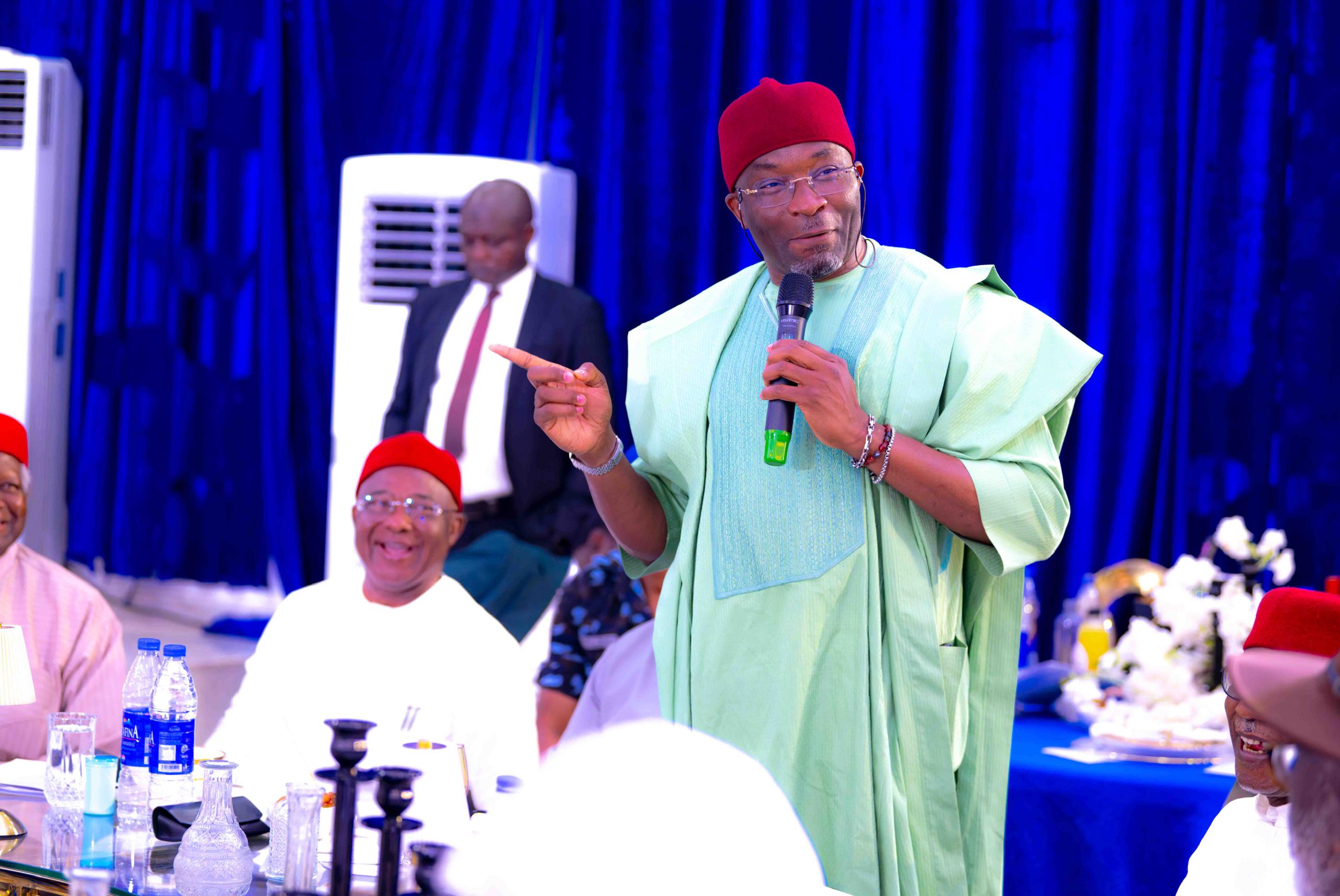
Deputy Speaker of the House of Representatives, Rt. Hon. Benjamin Kalu has called on Igbo elders, leaders and stakeholders to close ranks and speak with one voice in politics, cautioning that disunity has continued to weaken the political strength and heritage of Ndi Igbo of the South East region.
He also urged them to pay more than passive attention to socio-economic issues and get deeply involved into the national politics of Nigeria.
Kalu made the call at the South East Stakeholders’ Convergence (SESC), also described as the South East Elders and Stakeholders Meeting, convened in Owerri, the Imo State capital on Friday to discuss unity, progress and peace in Igbo land.
Addressing the gathering chaired by the former Military Governor of Imo State and Minister of Foreign Affairs, Senator (Gen) Ike Nwachukwu (Rtd), the Deputy Speaker said unity remains the foundation for development, stressing that peace in Igbo communities would only come when leaders reason together in harmony.
He said: “Unity is strength. We will achieve more when we are united. The need for unity cannot be overemphasized. Peace leads to the development of communities”.
Kalu who represents Bende Federal Constituency of Abia State at the National Assembly commended the elders for setting aside their personal engagements to attend the meeting, describing their action as patriotism and genuine love for Igbo land.
“I salute you all, my elders and stakeholders for this thoughtfulness, this great idea to come together and discuss the unity, progress and peace of Igbo land. This is patriotism. You all have what you are doing but for you to leave it and come here to discuss the development of our place, it means you love Igbo land. It shall be well with you all,” he said.
The Deputy Speaker said the upcoming and the contemporary younger generation are encouraged by the elders’ example, likening leadership to a relay race in which one generation hands the baton to the next.
“Some of us who are coming up are encouraged by this unity and patriotism you display. We are glad to see our elders sit together to discuss the future of Igbo land. This is like a relay race, where you run and later hand over the baton to the next person and the next generation. We are coming behind you so that whenever you hand us the baton, we collect it from you and continue with the race of progress and development,” he said.
Kalu however said that without unity, Ndi Igbo risk losing their direction and heritage.
“But if we are not in unity, we will miss our bearing and lose our heritage. But when we reason together in unity and harmony, we achieve greatness,” he said.
Speaking about Nigeria’s political structure, the Deputy Speaker noted that Igbo as one of the major tribes in Nigeria is not standing strong in the national politics.
He further argued that the political numbers of Ndi Igbo are not fully reflected across the five South East states because the people are scattered across the country.
To encourage active political participation, the Deputy Speaker urged a change of mindset, saying the post-war decision by many Igbo people to focus only on personal development and stay away from national politics had not served the region well.
“And it will not be good we shake and be left out in the scheme of things. Please, let’s come together. Let’s unite. When we unite, we gain more respect as a people. But when we work in isolation and silos, we lose our heritage.
“The number of votes of Ndi Igbo is not what we are getting across the five states because we are scattered around the country. If we take a position now and say, Igbo this is our agenda, this is what we want to do, I can assure you, the whole of Nigeria will feel our impact.
“But if we work in silos, every man to himself, to your tent O Israel, it is not encouraging at all. It yields no positive result. It reduces our number.
“After the war, we had believed we will work it out on our own and develop our place. We say we are not interested in politics. It is not our business. We have tried to develop on our own. It is about time we changed that mindset. The politics and governance of Nigeria should be our concern. We should get involved and play an active role because if we are not in the room, we can’t be part of the decision. We need to be part of the decision making process,” he said.
Kalu therefore called for a common position to help Ndi Igbo to deliver with one mind.
“There is no wisdom in saying we are not interested in the politics of Nigeria. It should be our business. Let us say one thing and stick to it with one mind, then, we will see the result of our togetherness. God bless you,” he said.
The stakeholders meeting held in Imo State Government House attracted the presence of Governor Hope Uzodinma as the chief host, some traditional rulers, representatives of religous leaders, women and youth groups from the five eastern States, other prominent Igbo sons and daughters in politics and governance, business, academia amongst whom are former Senate President/Secretary to the Government of the Federation (SGF), Senator Anyim Pius Anyim; immediate past Vice Chancellor of Federal University of Technology, Owerri (FUTO); Prof. Nnenna Oti; former chairman, Police Service Commission, Chief Simeon Okeke; former President-General, Ohaneze Ndigbo, Nze Ozichukwu Chukwu; Chief Tony Chukwu; Amb. Greg Mbadiwe; Prof. Osita Ogbu; Mazi Sam Ohuabunwa and Amb. Okey Emuche.
General News
2027: Amupitan Seeks Royal Support, Partnership to Discharge Mandate Peacefully, Effectively
By Isa Abdul
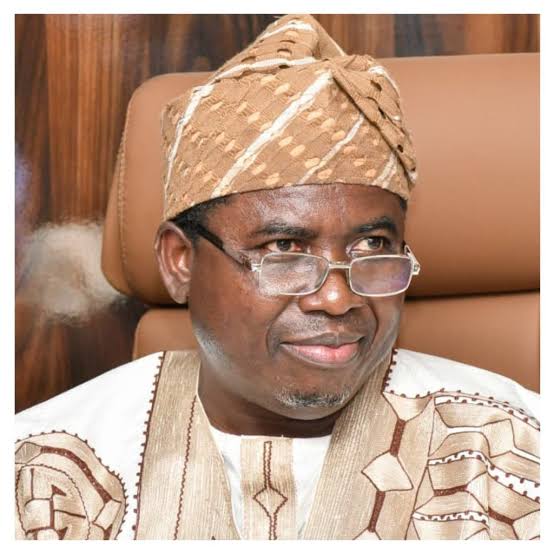
The National Chairman of the Independent National Electoral Commission (INEC), Professor Joash Amupitan, has said there is no way a successful election can be conducted without the support of traditional institutions, especially in an era bedeviled by voter apathy and thuggery.
Professor Amupitan disclosed this in Lokoja on Thursday while addressing members of the Kogi State Council of Chiefs as part of his activities to assess preparations for the 2027 elections in the North-Central geopolitical zone.
He promised that the commission would strive to organise and supervise a visible, verifiable, credible, free, and fair election in line with its mandate under Section 153 of the 1999 Constitution (as amended).
Amupitan added that the commission has embarked on an assessment tour to evaluate logistics, infrastructure, and personnel across the six geopolitical zones.
to reduce administrative bottlenecks.
The working visit to Lokoja in the North-Central zone, which comprises Benue, Kogi, Kwara, Nasarawa, Niger, Plateau and the Federal Capital Territory, Abuja, has marked the end of the evaluation tour.
He also urged the youth not to be used as instruments of violence during the election:
“I send an unequivocal message to our youth that no political aspiration is worth shedding human blood.”
The INEC chairman, further called on the royal fathers to assist in mobilising the electorate to collect their PVCs, prevail on the youth to shun thuggery and any form of violence, and support efforts to reduce misinformation and disinformation before, during, and after the election.
“The general elections will hold as scheduled in 2027. I have come to seek your support and partnership for us to discharge our mandate peacefully and effectively. INEC has no candidate; the commission is out to discharge its constitutional mandate fully,” Professor Amupitan told the traditional chiefs.
He said the commission under his watch had successfully conducted elections in Anambra, Ekiti, and Osun states and the Federal Capital Territory, Abuja, including 16 by-elections within a year, stressing his resolve to re-enact that feat in the upcoming general election.
At the event, the Kogi State Resident Electoral Commissioner (REC), Dr. Shehu Wahab, said the gathering of traditional rulers and INEC was to foster a unity of purpose that would ensure a peaceful election in 2027.
He added that an interface with custodians of culture and tradition at this crucial period in the electioneering process is essential for a free and fair election.
The Ohinoyi of Ebiraland, HRM Tijani Mohammed Anaje, while speaking on behalf of the traditional rulers, commended the INEC boss for his efforts to ensure a credible, free, and fair election in 2027.
The Ohinoyi of Ebiraland, who is the Vice Chairman of the Kogi State Council of Chiefs, expressed their readiness to support Professor Amupitan in all aspects of the electoral process for a peaceful election.


PERSPECTIVE: Tiv Leaders Must Hear This: While Akwa Ibom Asked For A Future, Tiv Leaders Fight Over A Man
Spread the loveBy Edward Tion I watched the presidential campaign in Akwa Ibom today with a bleeding heart. Not because...

Pursue Unity, Peace, Play Active Role in Nigerian Politics, Deputy Speaker, Kalu Urges Igbo Elites, Leaders
Spread the loveBy Saint Mugaga Deputy Speaker of the House of Representatives, Rt. Hon. Benjamin Kalu has called on Igbo...

2027: Amupitan Seeks Royal Support, Partnership to Discharge Mandate Peacefully, Effectively
Spread the loveBy Isa Abdul The National Chairman of the Independent National Electoral Commission (INEC), Professor Joash Amupitan, has said...


Place 7-Year Ban On Establishment Of New Tertiary Institutions– Edu Minister Begs NASS
Spread the loveBy Son Tertsea, Abuja The Federal government has appealed to the National Assembly to halt the passage of...

Gov Sule to Security Agencies: Fish Out Sponsors of VP Shettima’s Attackers in Lafia
Spread the loveSDP: attackers APC members against Wadada’s candidacy By Isa Abdul, Abuja Prominent personalities in the state planned and...

Wike’s Entry, Allocation of UniAbuja Land a Breach of Court Order– ASUU
Spread the loveBy Nick Ibe, Abuja The Federal Capital Territory Administration’s (FCTA) allocation of some hectares of land belonging to...


Alleged 4 Herbal Concoction Consumers Die in Benue
Spread the loveBy Vincent Tyosuugh After consuming a suspected poisonous herbal concoction allegedly sold to residents of Oju Local Government...

BENUE APC Split Deepens As SGF, Stakeholders Shun Alia Campaign Flag-off, Disown Campaign List
Spread the loveBy Felix Umande The crisis rocking the Benue State chapter of the All Progressives Congress (APC) deepened on...
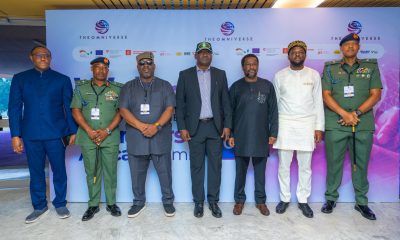

Defence Minister Invites Cybersecurity, Drone, DefenceTech Experts for Collaboration with DICN
Spread the loveBy Nick Ibe, Abuja Minister of Defence, General Christopher Musa (rtd) has called on Nigerians with expertise in...


Wike’s Rainbow Coalition Faces Storm Over Alleged Split Voting: VP Shettima, SDP, Ondo APC Reject Coalition
Spread the loveBy Son Tertsea, Abuja Nyesom Wike’s Rainbow Coalition has been identified as a split voting device according to...