
General News
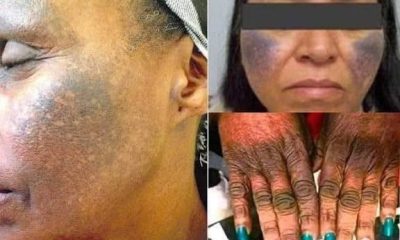
Expert Confronts Nigeria’s Skin-bleaching epidemic With New NGO


–Calls for redefinition of beauty
Amid growing concern over the widespread use of skin-lightening products in Nigeria, a leading researcher is turning academic insight into real-world action, calling for a cultural shift in how beauty and identity are defined.
Olabanke Oyinkansola Goriola knows what it means to leave home in pursuit of answers and to come back with the responsibility to act on them. A PhD Candidate in Performance Studies at Northwestern University in the United States, she is one of a rare breed: a Nigerian scholar who has dedicated her entire academic career to understanding why so many of her people are changing their skin, and what it will take to change that.
Her academic journey spans three continents and four completed degrees, with a fifth currently underway. Beginning with a First-Class Honours degree in Theatre Arts from the University of Ibadan, where she was named Best Graduating Student and Student of the Year in the Department of Theatre Arts and was awarded the prestigious 2016 National Council for Arts and Culture Prize, she went on to earn three master’s degrees. The first was completed through the European Union Erasmus Mundus Scholarship, one of the world’s most competitive international postgraduate awards, which took her across four European universities.
A second Master’s was completed at the University of Edinburgh on the prestigious Kirby Laing Foundation Scholarship.
Her third master’s degree in performance studies is from Northwestern University in the United States, where she is now completing her doctoral degree. At Northwestern, she has been inducted into the Edward Alexander Bouchet Honor Society, one of the most distinguished graduate honours in American academia and has received more than 20 competitive grants and fellowships.
After years of studying abroad, she says, the urgency of the crisis demanded direct intervention within the communities most affected.
“I spent years abroad studying why our people are harming themselves to change their skin. The research was necessary. But the answers need to be applied here, at home, where the problem lives. That is why I came back.”
Her research frames skin bleaching not as an isolated trend but as a consequence of historical and cultural forces that continue to shape perceptions of beauty. Nigeria leads all of Africa in skin-whitening product use, with 77% of Nigerian women using these products regularly, according to the World Health Organization — the highest rate on the continent.
“As I argued in my 2025 essay published in The Republic, one of Nigeria’s foremost intellectual magazines, Nigeria’s skin-bleaching epidemic is a symptom of colonial legacies, global beauty standards, and capitalist structures” She stated.
The drive to bleach one’s skin does not begin with a product. It begins with a culture that teaches people, from childhood, that their dark skin is a disadvantage.”
Goriola stressed that addressing the crisis requires more than regulating products or enforcing bans.
“That is the root we must address.” She said, emphasizing the need for deeper societal reflection and transformation.
Her work also highlights the role of media in reinforcing these harmful standards, pointing to how visual culture consistently elevates lighter skin tones as the standard of beauty and desirability.
“hrough her nonprofit, The Shade Initiative for Cultural and Social Empowerment, she is working to shift these narratives through research, education, cultural intervention, storytelling, public advocacy, community engagement and empowerment.
The organisation focuses on generating evidence, shifting public narratives, supporting communities to build more just and affirming understandings of beauty, identity, and value and challenging long-standing biases embedded in society.
Goriola believes that meaningful change must involve both policy and cultural interventions working together. She also argues that conversations around colourism must be reframed to recognise its structural nature rather than reducing it to personal choice.
She has presented her research at international conferences in the United States, United Kingdom, South Africa, Ethiopia, Ghana, and Canada, and has published in The Republic magazine, establishing herself as a leading scholarly voice on colourism and skin-bleaching practices in African contexts.
Her growing influence in academic and public spaces reflects a broader demand for solutions grounded in both research and lived realities.
As debates around identity, representation, and beauty continue to evolve, her voice stands out as a powerful call for Nigeria to rethink its values and embrace a more inclusive definition of beauty.


By Nick Ibe, Abuja
To cushion the harsh impact of rising living costs, the Federal Government has approved a N70,000 monthly transport intervention for public service workers across all levels for six months, beginning in November 2026, .
This was one of the outcomes of the conciliation meeting between the Federal Government and the leadership of the Nigeria Labour Congress, NLC, in Abuja on Tuesday, following renewed pressure from organised labour over the rising cost of living, workers’ welfare and outstanding agreements.
The government also approved the payment of peculiar allowance arrears, effective from May 1, 2026, in three equal monthly instalments beginning in November.
The parties did not agree on the effective date for implementing the national minimum wage, but agreed that the Minimum Wage Negotiation Committee would be constituted and commence meetings immediately.
The resolutions were contained in a memorandum of understanding signed at the end of the meeting by the Director-General of Budget, Timi Yakubu; NLC President, Joe Ajaero; the Permanent Secretary, Service Welfare Office, Office of the Head of the Civil Service of the Federation, Dr Garba Abdul S.U.; and the Minister of Labour and Employment, Dr Muhammad Maigari Dingyadi.
The document made public after the meeting was tagged: ‘Resolutions Reached at a Conciliation Meeting Held at Federal Ministry of Labour and Employment Between the Federal Government and the Leadership of Nigeria Labour Congress on Tuesday, 27th October, 2026’, outlined agreements on minimum wage negotiations, transport support, outstanding allowances, health workers’ remuneration, tax relief and hazard allowances for agricultural officers.
The meeting followed an earlier conciliation session held on October 22, 2026, convened by the Federal Ministry of Labour and Employment to address disagreements between the government and organised labour.
On the transport intervention, the document stated, “That transport intervention of Seventy Thousand Naira (N70,000) commencing from November 2026 would be paid across all levels for a period of six months.”
The agreement trails high transportation costs and the prices of other essential goods following the removal of the petrol subsidy in May 2023, by President Bola Ahmed Tinubu.
Organised labour has repeatedly demanded measures to ease the economic pressure on workers, including reductions in petrol prices, improved wages and the implementation of outstanding welfare agreements.
The memorandum also noted the NLC leadership’s concerns about the government’s handling of its demands.
Addressing the disagreement, it stated that the NLC leadership “expressed concern over the Federal Government’s attitude towards the above issues.”
It added that the Federal Government, in response, “stated that it fully respects the right of the Congress to advocate for improved working conditions for Nigerian workers, and is genuinely trying to address every aspect of it through a structured intervention.”
On the national minimum wage, the parties agreed that the Minimum Wage Negotiation Committee would be constituted and commence meetings immediately.
However, the effective date of implementation remained unresolved.
The document stated, “It was agreed that the Minimum Wage Negotiation Committee would be constituted and commence meeting immediately. It should however be noted that there is a disagreement on the effective date of implementation.”
The disagreement leaves a key issue outstanding despite the commitment to begin negotiations without delay.
The national minimum wage became a major issue in 2024 when the Federal Government and organised labour negotiated an increase in the statutory minimum monthly wage from N30,000 to N70,000. The new rate was subsequently enacted into law through the National Minimum Wage Act.
The latest agreement refers to further discussions and the implementation date of the national minimum wage but does not provide details of the specific proposal under consideration or when the parties expect to conclude the negotiations.
The agreement indicates that while the government has approved some financial interventions, other workers’ demands remain subject to further negotiations, administrative verification or decisions by relevant government bodies.
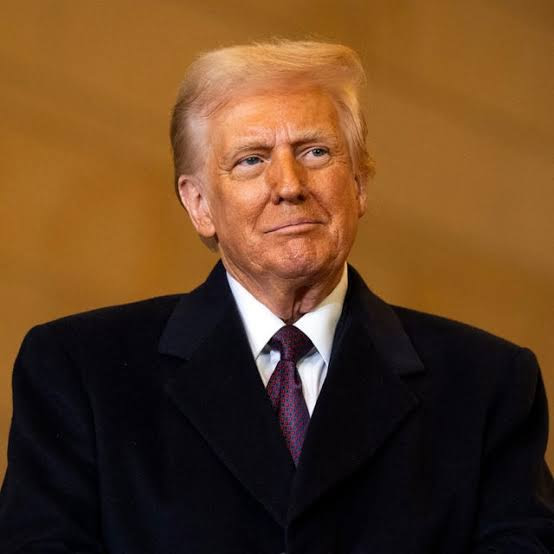
“Trump… Please bring my son back to me. I am begging you for mercy.” And what Trump did when he heard those words… may bring tears to your eyes.
Her name was Malphine. She was 95 years old. A mother who had spent years waiting. Hoping. Praying. And one day… she finally got the chance to meet Trump. And stood before him. With all the strength she had left. And spoke the only words in her heart. Please. Bring my son home.
And Trump looked at this 95-year-old mother. Held her hands. And gave her a promise. I will bring your son home.
And Malphine held on to that promise. The way only a mother of 95 can hold on to something. When hope is all she has left.
Days went by. Weeks went by. And then one morning… the news finally arrived. Her son Marc was coming home. After years away. After years inside a foreign prison. After years of a mother waking up every single day, wondering whether she would ever get to hold her child again.
He stepped off that plane. And returned home. And when Marc’s feet finally touched American soil… Trump was there. In person. To welcome him. To embrace him. To look him in the eyes and say… welcome home. America has not forgotten you.
And in that single embrace…
Trump showed the world something that no speech and no rally could ever truly express: That America cares about its people. Wholeheartedly. Unconditionally. And never gives up fighting for them.
And today… I sat thinking about that story. And remembered every harsh word I had ever spoken about this man. Every judgment. Every doubt. Every moment I chose to look away. And I felt something I can hardly describe. Deep shame.
Because Malphine trusted Trump at 95 years old. With all the hope she had left. And he helped bring her son home.
Today… this is the side of Trump that so many people may never take the time to see.
Not the Trump in the headlines. Not the Trump on the rally stage. Just a man. Who listened to a 95-year-old mother pleading for her son. Worked to help answer her prayers. And personally showed up to welcome him home.
If this story touched your heart today… let God and every American reading this feel your .
And tell me honestly, in your own words — after reading this… can you still speak badly about President Trump? Because I truly find it difficult to do so. Not anymore. Not after hearing this story.
Sons of Liberty. Maga Movement
–Calls for NSCDC reforms, compensation for victims
By Son Tertsea, Abuja
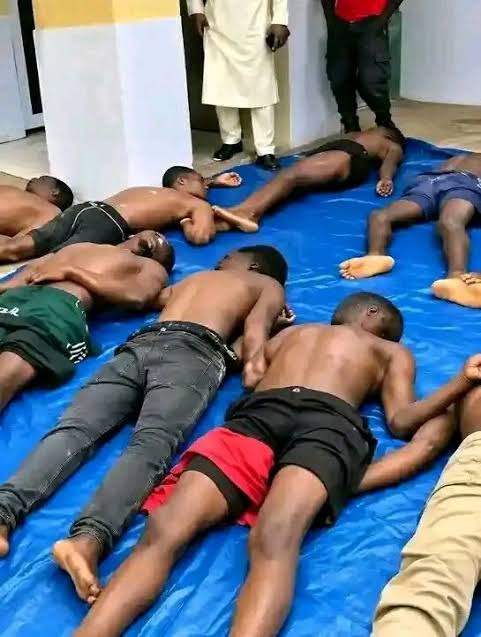
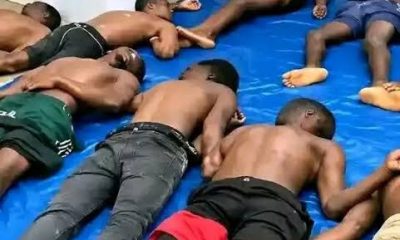
Dehydration was cause of the death of the detained miners, the panel constituted to investigate the deaths of alleged illegal miners in the custody of the Nigeria Security and Civil Defence Corps (NSCDC), Niger State Command, has stated.
The chairman of the committee, Jonathan Kure, while presenting the report to the Minister of Interior, Olubunmi Tunji-Ojo, in Abuja on Tuesday, , said the miners suffered acute respiratory failure.
He also corrected the earlier reports that 37 miners died in custódy, saying 33 miners were confirmed dead.
He said the miners collapsed after calling for water and were ignored by the personnel of the NSCDC.
He added that the detention room was overcrowded and poorly ventilated.
He said the miners were illegally arrested and detained, stressing that they were all detained beyond the legally allowed period.
Part of the panel’s report called for a total reform of the NSCDC as well as solicited compensation for the victims.


FG Gives Workers N70,000 Monthly Transport Support for Six Months
Spread the loveBy Nick Ibe, Abuja To cushion the harsh impact of rising living costs, the Federal Government has approved...

Trump and the 95-year Mother: Government That Cares for All Citizens
Spread the love“Trump… Please bring my son back to me. I am begging you for mercy.” And what Trump did...

Probe Panel Says Heat, Dehydration Killed 33 Detained Niger Miners
Spread the love–Calls for NSCDC reforms, compensation for victims By Son Tertsea, Abuja Dehydration was cause of the death of...


Tinubu Seeks Law To Bring Back Nigerians Jailed Abroad
Spread the loveBy Felix Umande President Bola Ahmed Tinubu has transmitted a bill to the Senate seeking to empower the...

Senate Says: Travel Agencies, Short-let Apartments Need Closer Scrutiny in Human Trafficking Probe
Spread the loveBy Isa Abdul, Abuja As part of efforts to dismantle trafficking networks and protect Nigerians from exploitation abroad,...


El Niño: Its Meaning, Effects and How Nigerians Should Prepare for It
Spread the loveBy Son Tertsea, Abuja Nigerians have been alerted that El Niño event would raise concerns that potentially affect...


Accusations of Data Theft: MTN Explains How Nigerians Consume Data Fast
Spread the loveBy Nick Ibe, Abuja: Engaging in high-resolution video streaming, automatic downloads, background applications, cloud backups and increased internet...


Kogi Authorities Probe Why Police Corporal Killed female Colleague, Self
Spread the loveBy Michael Lim The Kogi State Police Command has begun to probe why a police corporal, Amos Yusuf,...

WHO Declares Nigeria Ebola-Free After Evacuation of Patient to Switzerland
Spread the loveBy Nick Ibe, Abuja Dr Mohamed Janabi, the World Health Organisation’s (WHO) Regional Director for Africa, says Nigeria...

Fake Letter Lands Atiku Supporter in Court
Spread the loveBy Isa Abdul, Abuja For circulating a fake document purportedly written by President Bola Ahmed Tinubu to the...