
Judiciary
SANs Warned Against “False Claim of Nobility” through Undeserved Academic Titles


By Our Reporter
The Body of Senior Advocates of Nigeria (BOSAN) has warned its members against the use of “Dr” title in professional settings after the conferment of honorary doctorate degrees.
Olumide Sofowora Esq, secretary of BOSAN, in a letter of Tuesday, 10th March, 2026, on behalf of the body said it has been inundated with complaints that some Senior Advocates of Nigeria (SANs) are attributing “undeserved titles” to themselves.
Sofowora said some SANs have started prefixing their names with “Doctor” when announcing their appearances in court after receiving honorary doctorate degrees.
Some SANs have even gone further to address themselves as “Professors” with honorary doctorate degrees.
BOSAN echoed the National Universities Commission’s (NUC) stoppage to the wrong use of honorary doctorate degrees, adding that the recipients cannot use the degrees to practice as scholars or for administrative purposes.
The letter regretted that “Some have been reported to be prefixing ‘Doctor’ to their names when announcing their appearance in Court soon after being conferred with Honorary Doctorate Degrees.
“Last month, the National Universities Commission issued the Guidelines for the award and use of Honorary Doctorate Degrees in Nigeria and stated clearly therein in item 13 on the ‘Usage’ of the honorary titles thus:
“The recipients are at liberty to use the approved nomenclature or title of the honorary doctorate degree such as Doctor of Law (honoris Causa) or LL.D. (h.c.) or D.Litt (h.c.) after their names. However, they are not permitted to use “Dr.”, which is reserved for holders of earned degrees and medical professionals.
Additionally, they are not permitted to use the honorary doctorate degree to practise as scholars or professionals, oversee administrative units, or supervise research work.
“The above clarification by the National Universities Commission cannot be more explicit and it is expected that our members will adhere to it.
“More concerning however is the fact that some members have even gone ahead to be addressing themselves as “Professors” after being conferred with Honorary Doctorate Degrees.
“I am therefore calling on our distinguished members of BOSAN to be mindful of the above admonition so that we do not breach the provisions of the Rules of Professional Conduct for Legal Practitioners and subject ourselves to disciplinary measures should any of us be found to be according to himself or herself a title that he or she is not entitled to.
“That would amount to fraudulent misrepresentation and false claims to nobility which is a conduct incompatible with the dignity and honour of the rank of a Senior Advocate of Nigeria.
The resort to use of Dr, Prof or other titles by SANs, politicians and other members of the public, may be due to the quest for honour, recognition and or to boost one’s ego in a “Title inflation” society.
The unmerited use, wrongly gained privileges and the abuse of the titles all highlight the unfortunate pervasive perversion of all social strata including the upper middle class and, most unfortunately, among lawyers who belong to the privileged group in Nigeria called SANs. With the abuse of these titles gaining disturbing criminal traction, the urgent need to heed to the advice and admonitions of the National Universities Commission NUC to the public and BOSAN to its members cannot be overemphasized.
There is no alternative to the fact that those who cherish academic titles should take the right route to earn them.

By Nick Ibe, Abuja
Three judges have been suspended for one year over alleged judicial misconduct by the National Judicial Council (NJC, with two of them also barred from promotion for three years.
The NJC at its 112th meeting of November 3, held under the chairmanship of the Chief Justice of Nigeria (CJN), Justice Kudirat Kekere-Ekun, also placed six other judges on its watchlist and serving them warning, according to a statement released by the Deputy Director (Information) at the NJC, Kemi Babalola-Ogedengbe
It further revealed that, 24 petitions were dismissed with sundry allegations against judges across the federation. The Council also approved the appointment of 28 judicial officers and recommended four petitions for further investigation.
Those suspended, according to Babalola-Ogedengbe were Justice Hannatu Mohammed Kabir of the Nasarawa State High Court for one year without pay and barred from elevation for three years, over the unlawful detention of a litigant for 58 days without proper contempt proceedings.
“The Investigation Committee found that she ordered the litigant’s arrest and detention for alleged disobedience of court orders without the issuance and service of the mandatory Forms 48 and 49 or the institution of proper contempt proceedings.
“It held that the alleged contempt occurred outside the court’s presence and could not lawfully be summarily tried and punished. The Committee also found that the action violated the litigant’s right to fair hearing,” the statement added.
The Grand Kadi of the Jigawa State Sharia Court of Appeal, Mohammed Sani Salihu, too was suspended without pay over his involvement in reopening a judgment delivered by the FCT Upper Area Court.
The Committee found that the Grand Kadi exceeded his authority by constituting a committee to review the judgment and subsequently assigning the matter to a Higher Sharia Court Judge, who received fresh evidence and delivered another judgment.
The Committee held that the process amounted to an appeal against a valid judgment of a court of competent jurisdiction.
The new judgment was subsequently set aside by the Jigawa State High Court.
The Committee also found the act to constitute a violation of Rule 3.3.1 of the Revised Code of Conduct for Judicial Officers, 2016.
The NJC directed that the most senior Kadi of the Jigawa State Sharia Court of Appeal should perform the functions of the office of the Grand Kadi for the period of the suspension.
For his part, Justice Sobere Biambo of the Rivers State High Court was suspended, with a restriction placed on his promotion, after it was found that he issued bench warrants and imposed fines on litigants in a civil dispute without due process.
The Committee found that he ordered the arrest of the petitioners for alleged disobedience of an interim injunction and subsequently imposed a fine of N300,000 on each without instituting contempt proceedings or serving Forms 48 and 49.
It held that the alleged contempt occurred outside the court’s presence and ought not to have been summarily tried and punished.
“Hon. Justice Kayode Agunloye of the FCT High Court was cautioned in one of the petitions over his handling of post-judgment garnishee proceedings in a suit involving First Bank of Nigeria Plc.
“The Committee found that he improperly entertained and granted a fresh ex parte application for a Garnishee Order Nisi on October 22, 2025, after an earlier, similar application had been withdrawn and struck out.
“This was while other pending applications, including the bank’s application for stay of execution, had been adjourned to November 4, 2025. The Committee held that his action created room for justifiable suspicion,” the statement added.
Meanwhile, those the NJC placed on the watchlist included a judge of the FCT High Court, Justice Bello Kawu, after it found merit in a petition establishing that he granted interim bail to the immediate former Attorney-General of the Federation, Mr. Abubakar Malami, SAN, despite a subsisting remand order issued by another judge of the same court.
The NJC directed its Secretariat to formally request the Imo State Judicial Service Commission to include the name of the Acting Chief Judge, Justice Ijeoma Agugua, in the list of candidates for appointment as the substantive Chief Judge.
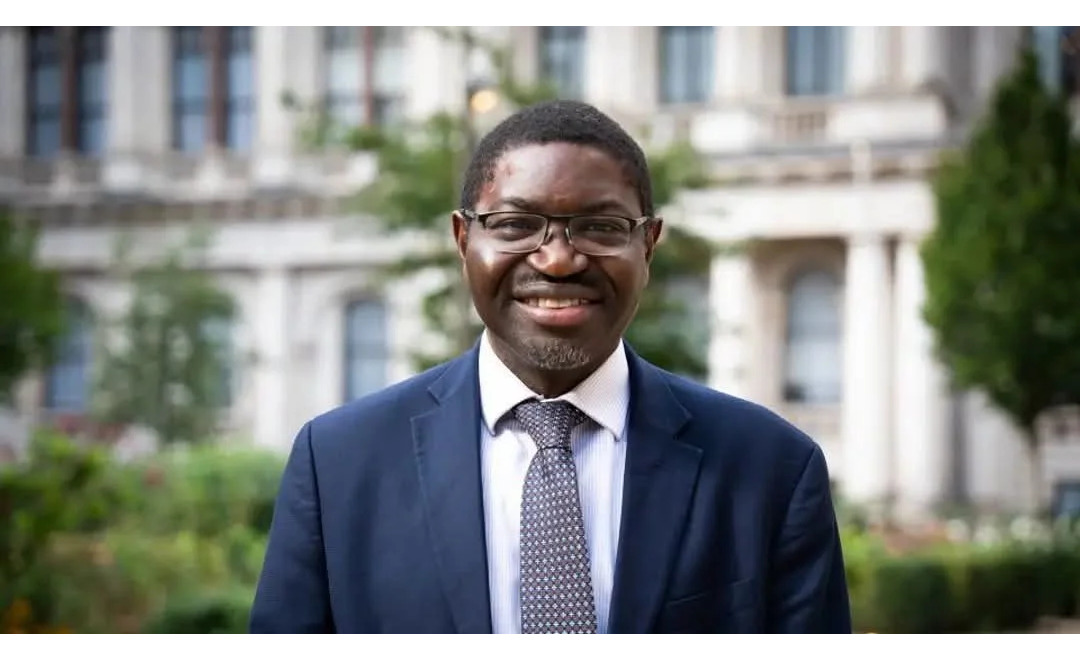
By Son Tertsea, Abuja
Nigerian-born legal scholar Professor Dapo Akande has been elected as a judge of the International Court of Justice (ICJ), marking a significant milestone in his career and a diplomatic victory for the United Kingdom.
- Barrister and Solicitor, Nigerian Law School – 1993
- LLM, London School of Economics (LSE) – 1994
- MA, University of Oxford – 2004
He is a dual UK-Nigerian national
Dapo Akande will serve a minimum nine-year term as one of the 15 judges of the United Nations’ principal judicial organ.
His election comes at a time when international law is facing increasing scrutiny, with the ICJ playing a prominent role in resolving disputes between nations and addressing major international legal questions.
Akande is an internationally recognised expert in public international law and has advised and represented parties in cases before international courts and tribunals, including the ICJ.
Following his election, he expressed gratitude to the countries that supported his candidacy, pledging to discharge his responsibilities independently and impartially.
“I am deeply honoured to be elected to the international court of justice.
“I am incredibly grateful to all the states that have put their faith in me. I pledge to serve with independence and to deciding cases on the basis of a faithful and impartial application of the law. I look forward to contributing to the ICJ’s vital work in helping to resolve disputes by peaceful means, alongside the other colleagues elected today,” he said.
Here are five things to know about the Nigerian-born professor and his new international judicial role.
1.He He was born in June 1973, raised in Ibadan, Oyo State and attended the University of Ife, Ile-Ife, now Obafemi Awolowo university, and graduated in 1992, where he obtained the LLB degree in law. before building an international reputation in public international law.
His Nigerian legal background has remained an important part of his professional journey, which has taken him to some of the most prestigious legal and academic institutions in the world.
2.He is a professor at the University of Oxford
Akande is a professor of public international law at the University of Oxford, United Kingdom.
He is also a fellow of All Souls College, Oxford, one of the university’s prestigious academic institutions.
Through his academic work, he has contributed to the study and development of international law, particularly the legal principles governing relations between countries.
3 He is a member of the UN International Law Commission
Beyond his academic career, Akande is an elected member of the United Nations International Law Commission (ILC).
The commission is responsible for promoting the progressive development and codification of international law.
His membership reflects his standing as an international legal expert and his involvement in shaping discussions around the rules governing relations between states.
4.He has represented parties before international courts, Akande has extensive experience advising and representing parties in disputes before international courts and tribunals.
He has served as counsel, adviser and expert in several international legal proceedings, including cases before the International Court of Justice.
His professional experience in international litigation is expected to contribute to his responsibilities as a member of the world’s principal judicial body.
5.His election marks a major diplomatic victory for the UK
Akande’s election is also significant for the United Kingdom, which had been without a judge on the ICJ since 2017.
That year, British judge Sir Christopher Greenwood unexpectedly lost his bid for re-election to an Indian rival, marking the first time in the court’s 71-year history that Britain had no representative among its judges.
Akande’s election restores British representation on the 15-member court and is considered an important diplomatic achievement for the country.
UK Lord Chancellor Alex Norris actively campaigned for his election, describing him as a candidate with the independence, legal rigour, judgment and breadth of perspective required by the court.
Prof. Dapo Akande* – Nigerian-born, British-Nigerian international law scholar – was elected on 3 November 2026 as a Judge of the *International Court of Justice (ICJ), the UN’s principal judicial organ in The Hague.
He will take his seat on 6 February 2027 for a nine-year term (2027-2036). He is the first UK-nominated judge on the Court in almost a decade.
Why It Matters
Akande’s election is seen as both a Nigerian success story – from OAU Ife to Oxford to The Hague – and a diplomatic win for the UK, which had campaigned for him since September 2024. As an ICJ judge, he will not represent the UK or Nigeria, but sit as an independent judge on cases between states, including major cases like South Africa v. Israel.

By Nick Ibe, Abuja
The claimants who have taken Jordan Wike, FCT minister Nyeson Wike’s son, to court over land fraud case have petitioned the Chief Judge to remove Justice Oriji from the matter, citing his alleged relationship with the family of the FCT Minister.
The case was adjourned by Justice Sylvanus Oriji for continuation of hearing on December 1.
The two firms have also petitioned the Economic and Financial Crimes Commission (EFCC) over the alleged role of Jordan Nyesom-Wike, son of the Minister of the Federal Capital Territory (FCT), in the disputed $2.1 million land transaction.
The petitioners, Safwan Garba GY and GY Global Oil & Gas Nigeria Limited, through their lawyers, raised allegations of fraud, obtaining by false pretences, criminal misappropriation and conversion.
The claimants’ counsel, Mr. Ibrahim Waru, told journalists at the Federal High Court in Abuja on Monday, that although the anti-graft agency had acknowledged receipt of the petition, it had yet to act on it.
Waru said the civil aspect of the matter is already pending before the High Court of the FCT, with the other petition filed to enable the EFCC investigate the alleged criminal elements.
He said his clients had attached to the petition a proof of evidence, including correspondence and WhatsApp exchanges, as proof that the money was allegedly handed over to Wike’s son at a house in Gwarinpa on September 26, 2025, in the presence of two witnesses.
A copy of the petition availed to the press read: “We have our client’s firm instructions to submit this petition against Jordan Nyesom-Wike for the alleged offences of fraud, obtaining by false pretence, criminal misappropriation and conversion to the tune of USD2,100,000 (Two Million, One Hundred Thousand United States Dollars) perpetrated against our client.
“Our client met Jordan Nyesom-Wike in London, following which the two developed a rapport.
“Upon returning to Nigeria about three months ago, Jordan met with our client. He promised to facilitate the acquisition of land within the Federal Capital Territory (FCT), based on his prior representations that he routinely provided such facilitation and that he had his father’s knowledge and approval, as the Honourable Minister of the FCT.
“To strengthen these representations, Jordan placed a telephone call to his father in the presence of our client, ostensibly informing him of the intended transaction.
“Jordan thereafter assured our client that he could secure 30 hectares of land in Katampe and 30 hectares in Guzape.
“Jordan demanded and received the sum of USD2,000,000 (Two Million United States Dollars) as the fee he would deliver to his father, the Honourable Minister, to facilitate the land allocation.
“Additionally, our client paid USD100,000 (One Hundred Thousand United States Dollars) to Jordan as his personal facilitation fee.
“These amounts were paid in cash, at the insistence of Jordan Nyesom-Wike, in the presence of the following witnesses: Adamu Sani and Aliyu Sarki. Jordan was accompanied by one Onor Sandy, whom he introduced as his friend and associate.
“Jordan promised to deliver the land allocations within one month. After receiving the funds, he failed to deliver on the agreement and became incommunicado.
“The UK phone number he provided is no longer reachable, and all attempts by our client, including through individuals known to the Honourable Minister, to establish contact with him have failed.
“Based on the foregoing, our client reasonably believes that Jordan Nyesom-Wike has committed offences, including but not limited to: Obtaining by False Pretence contrary to Section 1(1) of the Advance Fee Fraud and Other Related Offences Act; Fraud; Criminal Misappropriation; and Criminal Conversion of the sum of USD2,100,000 entrusted to him.
“Our client hereby requests that the Commission: commence an immediate investigation into the actions of Jordan Nyesom-Wike; arrest and interrogate Jordan Nyesom-Wike; and initiate prosecution where the investigation establishes criminal liability.
“Our client is prepared to provide all necessary help, including the witnesses and any further information that may assist the Commission.
“We trust in the professionalism and diligence of the EFCC and kindly request prompt action on this matter. Attached is the Acknowledgment of Payment signed by Jordan Wike.”
Justice Silvanus Oriji of the FCT High Court has fixed December 1 for continuation of a civil suit, marked CV/008/2026, which the claimants filed against Jordan, who has since denied the allegation.
The defendant, who insisted that he was not in the country on the date the litigants claimed they handed money to him to facilitate the allocation of land, tendered his international passport before the court to support his position.
Wike’s son told the court that he travelled out of the country with his American passport within the period the claimants said they met with him in Abuja.


ABU DSS student wins N1m prize at essay competition
Spread the loveA student of Demonstration Secondary School, Ahmadu Bello University, Adejoh Joshua Unekwu, has clinched a second position at...

Football Legend, Segun Odegbami, Attacked in Abeokuta, Escapes Death
Spread the loveBy Seyi Balogun, Lagos With no clear knowledge of the assailants or their motive, former Super Eagles captain...


FG, Chinese Firm Agree to Produce CNG Buses in Ibadan
Spread the loveBy Seyi Balogun, Lagos To introduce compressed natural gas-powered buses and establish a local assembly plant, to reduce...

JAMB UTME Free for Candidates with Disabilities, Fee Refund at Exam Centres
Spread the loveBy Isa Abdul, Abuja Special examination support has been established for candidates with disabilities, by the Joint Admissions...

Sharing Money is Digging Hole for Eco Woes, Can’t End Poverty – Fasua
Spread the loveBy Son Tertsea, Abuja A warning has been issued that distributing cash to Nigerians without addressing underlying economic...

“I conceded defeat to Buhari, a statesman that loved God, Nigeria.’ –Jonathan
Spread the loveBy Isa Abdul, Abuja The reason for conceding defeat to the late President Muhammadu Buhari in the 2015...

Secrets Behind Flamingos’ World Cup Win – Busari:
Spread the loveAfter guiding Nigeria’s Flamingos to a historic FIFA U-17 Women’s World Cup triumph, head coach Akeem Busari speaks...


Failure to Secure NNPCL GMD Job: EFCC Arraigns Woman Over N1.1 bn Fraud
Spread the loveBy Isa Abdul, Abuja One Halimat Adenike Tejuosho was Wednesday arraigned before a High Court of the Federal...

Let’s Honor All Pioneer Paramount Rulers Across Tiv and Idoma Lands.
Spread the loveBy Peters Ichull Today, the Tiv nation and the entire Benue family pause in solemn reflection to mark...
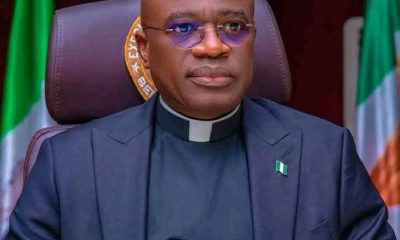

NKST Synod Says: “Alia Is A Talk-And-Do Governor”, Deserves Re-election in 2027
Spread the loveBy Felix Umande The NKST Synod has declared its support for the re-election of Benue State Governor, Rev....