
Food and Agriculture
World Rivers Day: Kogi, Kwara set to produce over 10,000 tonnes of paddy rice – LNRBA


The irrigation scheme in Kwara and Kogi state is expected to produce over 10, 000 tonnes of paddy rice.
The Managing Director of the Lower Niger River Basin Authourity (LNRBA), Mr George Olumoroti stated this on Monday September 29, 2025 in Ilorin during the commemoration of the 2025 World Rivers Day, which is celebrated in the month of September.
The theme of the 2025 World Rivers Day is “Clean Rivers, Healthy Communities”.
The LNRBA managing director explained that the Shonga irrigation scheme in Kwara was expected to produce more than 3000 tonnes of paddy rice during the forthcoming dry season.
Olumoroti also said that the Authourity intends to collaborate with the Kogi State Government in investing in the production of more than 7000 tonnes of rice in a single season.
He added that an additional 2000 tonnes is also expected from the Girinyan Irrigation Scheme in Kogi.
“The Authourity was able to provide Solar Powered Irrigation Pumps for more than 200 farmers in Kwara and Kogi States, who are benefitting from solar powered irrigation pumps,” he said.
According to him, these systems reduce reliance on fossil fuels, lower costs, and allow farmers to irrigate more land efficiently during the dry season.
Olumoroti also emphasised the need to protect the rivers as they are directly linked to the well-being of people, the prosperity of farmers, and the sustainability of our environment.
He pointed out that clean rivers provide safe drinking water, while warning against dumping waste into rivers and adopt safe sanitation practices.
Olumoroti stated that the Basin Authourity has been ensuring clean and sustainable rivers, through implementing hydrometeorological monitoring, solar powered pumps and renewable energy integration and community waste magement and pollution control among others.
He commended President Bola Tinubu, for approving the expansion of 12 River Basin Development Authority projects across the nation.
“This demonstrates strong political will to enhance irrigation farming, flood mitigation, and river basin development.
“These interventions are aligned with national programmes such as the Water for Expanded Irrigated Agriculture Programme, the Partnership for Expanded Irrigation Programme, and the broader eight point agenda of the Federal Government,” he said.
In his keynote address, the Executive Chairman, LNRBA (Kogi and Kwara), Alhaji Abdullateef Alakawa, said that the theme was apt and underscores the shared responsibility all have preserving rivers for the prosperity of present and future generations.
“Rivers are more than flowing water. They are lifelines, sustaining agriculture, enabling fisheries, providing potable water, fostering biodiversity, and shaping the cultural and spiritual identities of our communities,” he said.
Alakawa observed that the challenges confronting rivers are grave including pollution from indiscriminate waste disposal, the pressures of urbanization, the scourge of climate change, and weak practices in water resource management.
He warned that these threats, if unchecked, would erode the health of our ecosystems and the health, wealth, and wellbeing of our communities.
“A polluted river brings hunger, disease, and poverty. But a clean river guarantees food security, vibrant health, and economic resilience,” he said.
Alakawa therefore appealed to all stakeholders to safeguard the rivers in the nation, saying rivers are a shared resource, and
therefore their protection must be a shared duty.
“Each time we dispose of waste responsibly, plant a tree, join a clean-up effort, we are building cleaner rivers and healthier communities,” he said.
Also speaking, the Kwara Commissioner for Agriculture, Mr Afeez Abolore, underscored the importance of rivers to sustainable food production in the country.
He described rivers as a shared assets that needed protection, while reiterating the resolve of the State to collaborate with the Authourity on more efforts for cleaner environment and sustainable food production.
The News Agency of Nigeria (NAN) reports that highlight of the day was cleaning of waste and planting of trees on the Odo-Fomo River bank.
Source: NAN







Food and Agriculture
“Sasakawa Helped Us To Stand Again” — Benue Women Farmers Hail Foundation For Reviving Livelihoods
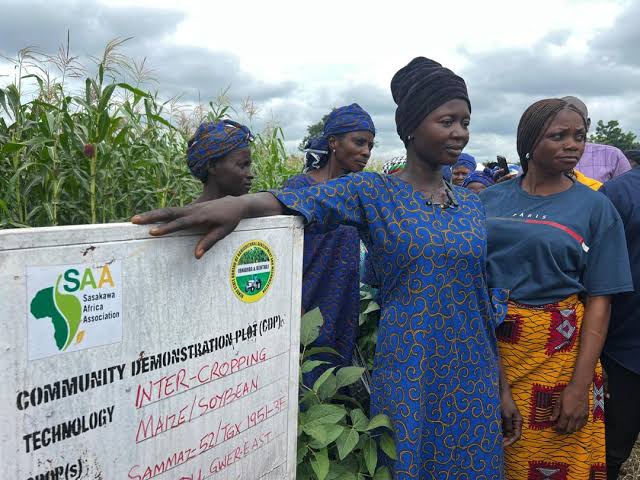
–Cooperative Credits Intervention For 58-Hectare Farm Revival, Mechanization, Improved Seeds and Training
By Felix Umande
Farmers, particularly women, in Benue State have expressed deep appreciation to the Sasakawa Africa Association, SAA, for its support that has revived their farms, processing businesses, and livelihoods.
Speaking during an interview on Tuesday, September 15, 2026 in Mbatier community, of Buruku LGA, the President of the Divine Open Doors Multipurpose Cooperative, Benue State, Mrs. Ngufan Blessing Chichi, said the intervention by Sasakawa since 2020 has been “so impactful” and has enabled women farmers to stand firmly in agriculture.
“We existed in several other local governments here in Benue State. In each and every local government, we intend to have a chapter. All our chapters have 50 women,” she said.
Mrs. Chichi said Sasakawa intervened with financial aid and donation of a power tiller to ease land preparation to encourage women who at some point got discouraged due to hardship and post-farming loses.
“The cost of doing a hectare manually was 60,000 Naira. But now, with the power tiller, we pay the boys 20,000 Naira, buy diesel 7,000 Naira, and some other services, just about 30-something thousand Naira, a hectare is finished. This has actually helped us,” she stated.
She said the support encouraged members to return to farming. Presently, the cooperative has about 58 hectares under cultivation with cassava and soybean.
Beyond cultivation, Mrs. Chichi said the cooperative now processes cassava into flour, popularly known as Akpu, which is packaged for wider distribution.
“With this product, it can go anywhere in the country, because it is not easy to travel with the raw Akpu. But with this one, it can be packaged in cartons. You just boil your water, pour inside and turn it, it’s just like pounded yam,” she explained.
She credited Sasakawa for training members on weed control, record keeping, and savings culture.
“If it is not because of their training, we wouldn’t have known about weed control. Anything record keeping, we know it because Sasakawa taught us. Anything savings, we know because Sasakawa helped us to know how to save and to use our money judiciously,” she said.
On marketing, she noted growing demand for their processed products through direct engagement. “Anytime we process, many people run to come and pick it from us. When they try, they send a message again because there is a number on it,” she said.
The cooperative operates a profit-sharing model where dividends are shared annually based on contributions, while also allocating one hectare yearly to the host community to foster goodwill and farm security.
“If it is not because of Sasakawa, we wouldn’t have been able to stand here today. Sasakawa has helped us to regroup once again. It has helped us to stand,” she said.
Another farmer, Mrs. Akombu Erdoo, listed interventions brought to her community by Sasakawa to include training, improved seed varieties, financial support, herbicides and fertilizer. She mentioned cassava varieties introduced to include 419, Dickson, Game Changer, Farmers’ Pride and Baba70, among others.
According to Mrs. Akombu, farmers in the community are now “building houses and sponsoring their family bills” from farm profits.
At Mbatsaase community of Mbaapen, farmers including Msugh Ahula and Wuese Felicia said Sasakawa’s training has transformed agriculture in their area and revived farming.
Speaking during a tour in Buruku, Dr. Engr. Moshood Sulaiman, Program Officer for Climate Resilient and Sustainable Agrifood Systems with Sasakawa Africa Association, said mechanization is key to the intervention.
“We empower local group with 18 horsepower power tiller to till the soil for them before planting. Mechanization alone can contribute like 20% in terms of farm production,” he said.
“So, we empower them with this 18 horsepower power tiller to help them to till the soil because if you look at the hectares of land they have here is very large. So, if you compare this power tiller to manual labor, it’s incomparable. The difference is widely significant. While this is, the power tiller can work like 20 to 40 times faster than what human labor can give you.”
He explained that one hectare that takes 7 to 10 days manually can be tilled in 2 to 3 hours with the power tiller, reducing drudgery and production cost.
“For sustainability, we train the operators on operation, repair, maintenance, and troubleshooting of the machine, and we are following up with that,” Dr. Sulaiman added.
The agricultural interventions of the Sasakawa Africa Association across the eight local government areas in Benue State has witnessed a widespread testimonies as residents seeks its operations in other local communities.
Food and Agriculture
“Our Cassava Is Our Crude Oil”: Green Harvest Company Launch Sparks Hope Among Benur Farmers
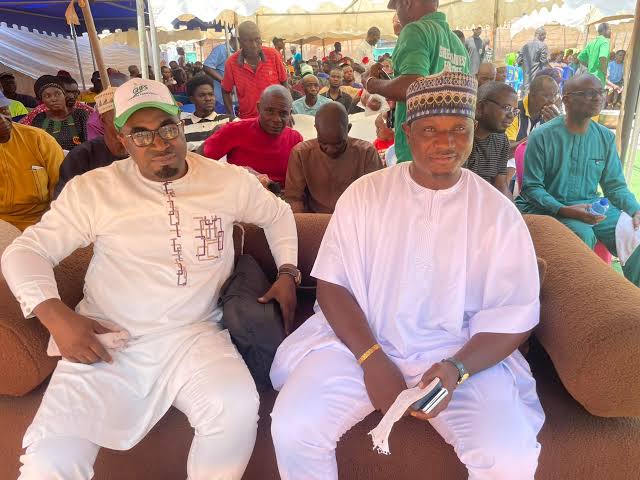
MD Prince Joshua Unveils 30-Year Agri-Industrial Vision as Farmers Hail End to Post-Harvest Losses
By Felix Umande
The CEO and Managing Director of Green Harvest Foodstuffs, Otukpo, Prince Joshua Esho Apeh, has declared that cassava holds the same transformative power for Benue and Idoma land as crude oil did for Nigeria, calling on citizens to industrialize agriculture and take charge of their economic destiny.
Speaking at the company’s launch ceremony in Otukpo, Prince Joshua said the company was birthed to build “a ray of hope” for farmers and young people, and to position Benue at the forefront of national food security.
“Seeing all of you here today gives me great joy, because I believe that when we join hands together, we will transform our land into greatness,” he said.
“This is the land that God has naturally blessed. The land that produces cassava in abundance. A land whose soil has potential to feed Nigeria. Not just West Africa, but the entire world.”
The Green Harvest MD described cassava as more than food, noting its potential for bioethanol and renewable energy.
“Our cassava is our crude oil. Just as crude oil transformed every nation, cassava can transform our people, if we are willing to invest in it, process it, add value to it, to take us to the global market.”
He urged a shift from selling raw tubers to full value-chain development:
“We must farm. We must process. We must add value. We must build industries. We must create jobs. We must export. And we must make our people prosperous.”
Prince Joshua said Green Harvest was starting a movement “for food security, for renewable energy, for farmer empowerment, for industrialization, for youth empowerment, and ultimately, a movement that will restore pride to Idoma land.”
He called on government to support the model for replication across Nigeria’s six geopolitical zones.
Farmers and community members who spoke to journalists at the event described the company’s arrival as timely, citing years of post-harvest losses and price crashes.
Mrs Comfort Okubi, a cassava and soybeans farmer from Ogulewu, Ogbadibo LGA, said access to market had been her biggest challenge.
“Ah, with this company, I really appreciate the man that brought this company to this land because at times, especially during rainy season, at times you find selling of cassava difficult due to the places where we do the farm. But with this company that just came here, we are very happy because it’s a welcome development. It will be easy for us to do our selling of cassava and other farm produce.”
Okwesi Dominic Ogbe from Otobi-Akpa, Otukpo LGA, said Green Harvest factory had eased farmers’ burdens by processing raw produce locally.
“Before Green Harvest Cooperative Society, most of us just harvest our crops, sell them raw to the market, then ship elsewhere for processing. But Green Harvest now, I think it eases our burden because they come to our place, buy or ask us to bring the raw materials, they process for us, and it adds value to what we do. The difference is far, far better, it’s incomparable. Ordinarily, I would say it’s like a 500% increase from the way it used to be, as it is now.”
Engineer Okpachu Odeh, a retired mechanical engineer and lecturer from Federal Polytechnic, Idah, now farming in Ihimini, Otukpo, described the launch as “a godsend” amid falling cassava prices.
“Since the advent of Tinubu’s administration, with cassava, we were all proud. But unfortunately, overnight, two years back, the cassava prices and garri crashed from over ₦35,000 per basin to now ₦5,000 in my community, people borrowed money to plant this cassava massively. And you can imagine the disappointment, I know of friends who are dying from payment of the loans that they took. So, this is actually a hope awakened.”
He urged the Federal Government’s Renewed Hope Agenda to protect local farmers from further price shocks.
Prince Joshua assured that with God, farmers and youth on board, Green Harvest Company was determined to succeed and make cassava a premium product for Nigeria.
By Isa Abdul, Abuja
Six locations in five states and the Federal Capital Territory, FCT, have been chosen by the Federal Government for the pilot implementation of its National Ranching Policy.
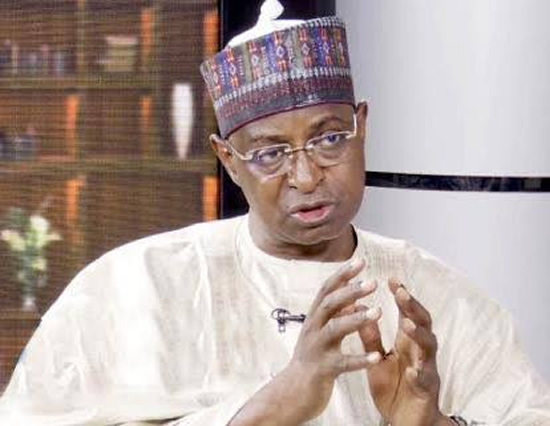
Minister of Livestock Development, Alhaji Idi Maiha, disclosed this after briefing President Bola Tinubu on the ministry’s activities at the Presidential Villa, Abuja, on Tuesday.
Maiha revealed that the pilot programme would commence at the Wase Grazing Reserve in Plateau as the model concept for the new ranching programme.
The five states identified for the pilot programme and FCT are Adamawa, Benue, Kaduna , Nasarawa and Plateau.
He said the areas were selected because they have recorded some of the highest incidences of farmer-herder conflicts in recent years. In his words:
“Our understanding is that large numbers of cattle on the move are crisis-prone because grazing routes have disappeared due to farming, urbanisation and infrastructure development.
“Nomadism, as we know it, is no longer sustainable and we need a different concept.”
The minister added that the government had engaged more than 34 pastoral organisations and would continue consultations to build support for the policy.
He said the ministry recently met pastoralist leaders under the leadership of the Sultan of Sokoto, Alhaji Muhammadu Sa’ad Abubakar III, and would hold another engagement within two weeks.
The minister said the policy would encourage pastoralists to rear animals in designated locations rather than move them over long distances in search of feed and water.
“Today, we go and fetch the grass and bring it where the animals are. Better still, grow the grass where the animals are.
“There are genetically developed grasses with all the nutritional value required to feed livestock,” he said.
Maiha said the government would provide housing, veterinary clinics, schools, primary healthcare centres, solar lighting and water infrastructure in designated ranching communities.
He added that each grazing reserve would evolve into an economic hub capable of attracting milk processors, modular abattoirs, bio-digesters and other livestock-related businesses.
“Imagine what you are going to have if you have 30,000 herds of cattle in one area. The milk collection alone will attract processors and many other investments,” he said.
The minister said the Federal Government was also implementing a nationwide livestock identification programme using radio frequency technology.
According to him, all four-legged livestock would be tagged for identification, geolocation and proof of ownership.
He said the initiative would help combat cattle rustling, recover lost animals and build a comprehensive national livestock database.
Maiha said the ministry was also promoting dairy development, commercial fodder cultivation, modern abattoirs, veterinary services and poultry production.
He disclosed that seven model veterinary clinics had been established, with plans to provide at least one model veterinary hospital in every state.
The minister added that the government was strengthening vaccine storage facilities and encouraging investments in dairy and red meat value chains.
On the ministry’s progress, Maiha said about 20 states had established similar livestock ministries or agencies, reflecting growing acceptance of the Federal Government’s livestock development agenda.
He commended Tinubu for his support and commitment to transforming the livestock sector.
He quoted the President as saying, “The value chains in the livestock sector are fantastic,” while urging Nigerians to take advantage of opportunities in the industry.
Even though five states, and the FCT have been selected for the pilot model, only Wase in plateau state has been clearly mentioned as a designated site.



Death of 37 Miners in Custody: Ajia Calls for Independent Investigation, Accountability
Spread the loveA chieftain of the All Progressives Congress (APC) and the Dan Amanan Fune Emirate of Yobe State. Alhaji...


Body Operating With Name National PTA, Unknowed to Edu Ministry
Spread the loveBy Son Tertsea, Abuja The body operating under the name National Parent-Teacher Association (PTA) of the Federal Unity...


Peter Obi Distances Self From Purported Letter to Obi of Onitsha
Spread the loveBy Nick Ibe A letter purportedly written by him to the Obi of Onitsha, Igwe Nnaemeka Achebe, against...


2027 Elections: Police Must Never Be Seen As Political Tool, Tinubu Warns
Spread the loveBy Felix Umande President Bola Ahmed Tinubu has charged the Nigeria Police Force to maintain the highest standards...

Tinubu To Return At Weekend After Extended Working Vacation In London, Paris – Presidency
Spread the loveBy Felix Umande President Bola Ahmed Tinubu will return to Nigeria at the weekend following the extension of...


Benue Govt Suspends Muslim Pilgrims Board Chairman, Secretary Over Alleged Mismanagement
Spread the loveBy Felix Umande The Benue State Executive Council has approved the suspension of the Chairman and Executive Secretary...


BUILDING A BUSINESS: He Started an eBay Side Hustle at 14 – Then Grew It Into a $92 Million
Spread the loveKey TakeawaysLior Pozin started dropshipping on eBay at 14.By age 21, he was making $6,000 per month dropshipping,...


Plateau Imposes Curfew on 3 LGAs, Bans Use Of Motorcycles
Spread the loveBy Michael Lim, Jos A dusk-to-dawn curfew on Barkin Ladi, Bokkos and Mangu Local Government Areas of Plateau...


Tinubu Praises Kaduna Gov Uba Sani’s Free CNG Mass Transit … As Benue Increases Fares for Commuters
Spread the loveBy Son Tertsea President Bola Ahmed Tinubu has praised Kaduna state government for deploying Compressed Natural Gas, CNG,...
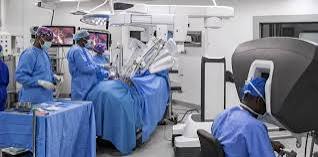

Foreign Medical Tourism to Drop as Nigeria Records First Tele-robotic Surgery Success in West Africa
Spread the loveBy Son Tertsea Nigeria’s first tele-robotic surgery on September 20, 2026 at the Redeemer’s Health Village (RHV), in...